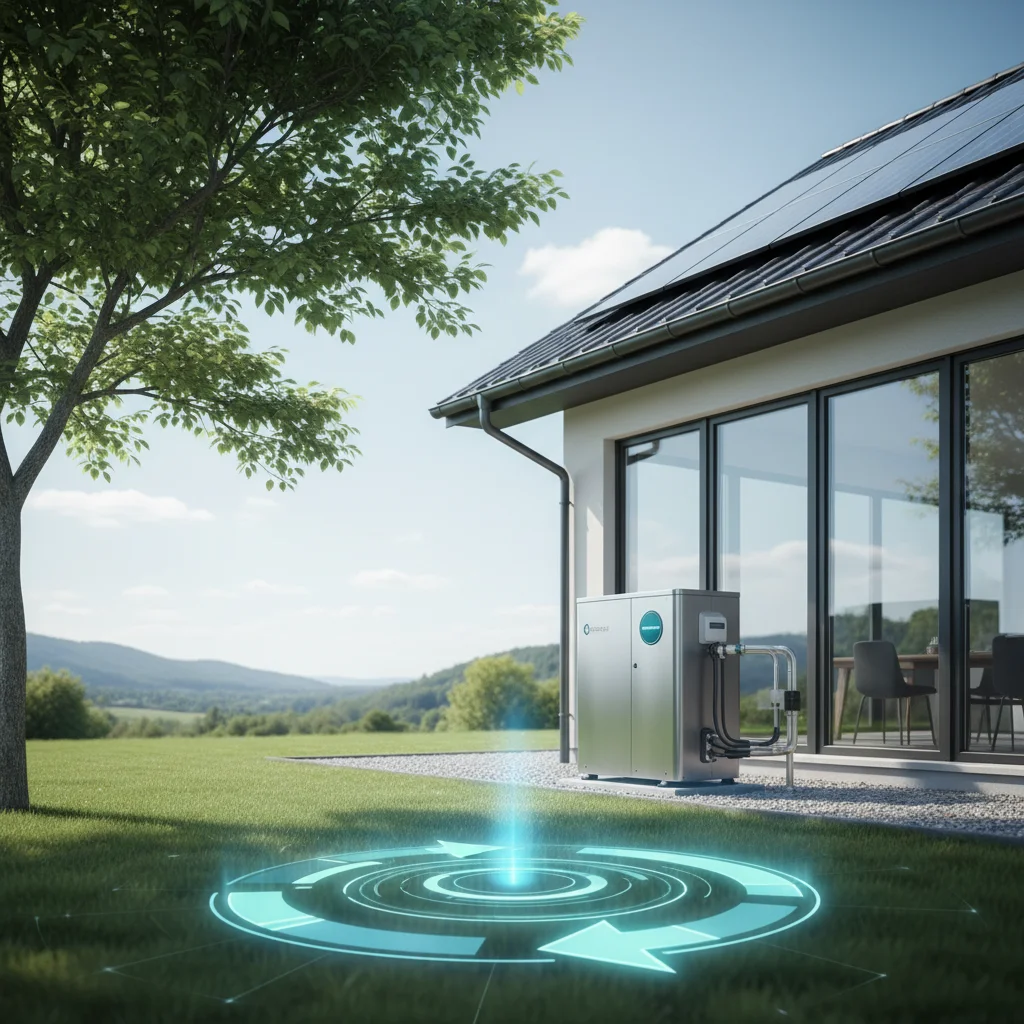
A new heat pump system costs between $4,500 and $12,000 installed in 2026, but federal tax credits and utility rebates can slash that price by up to $8,000 for qualifying California homeowners. And the price gap between budget air-source units and premium cold-climate models has narrowed by 18% since 2024, making efficient heating accessible to more households.
How Much Does a Heat Pump Replacement Actually Cost?
Heat pump replacement costs range from $4,500 to $12,000 in California in 2026, depending on system type, capacity, and installation complexity. Air-source heat pumps cost $4,500-$8,000 for standard efficiency models, while cold-climate heat pumps run $6,000-$10,000. Ground-source (geothermal) systems cost $15,000-$25,000 but qualify for larger federal credits through 2032.
Equipment accounts for 60-70% of total replacement cost, with labor making up the remainder. A 2-ton air-source unit averages $3,200 for the outdoor condenser, $1,500 for the indoor air handler, and $1,800 for installation labor. But homes requiring ductwork modifications add $2,000-$5,000 to the base price, and electrical panel upgrades for high-capacity units add another $1,200-$2,500.
System efficiency drives price variation. A 15 SEER heat pump costs $4,800 installed, while a 20 SEER cold-climate model costs $7,200—a $2,400 premium. Yet the high-efficiency unit saves $420 annually on heating costs in Sacramento's climate zone, recovering the upfront difference in 5.7 years. So efficiency upgrades pay for themselves through lower utility bills before the system reaches half its expected lifespan.
Installation complexity varies by home age and existing infrastructure. Homes built before 1990 often need air sealing ($800-$1,500) to prevent efficiency losses, while properties without existing ductwork require mini-split systems ($5,000-$9,000) or new duct installation ($3,500-$6,000). The total replacement cost depends on whether homeowners choose retrofit solutions or full system upgrades.
Our free rebate calculator shows your exact costs after federal credits and California utility rebates.
What's the ROI and Payback Period for Replacing Your Heat Pump?
Heat pump replacements deliver 12-18% annual returns through energy savings and rebates combined. California homeowners replacing gas furnaces with cold-climate heat pumps save $840-$1,400 annually on heating costs, depending on local electricity and gas rates. And that savings calculation excludes the immediate 30% federal tax credit that reduces the net installation cost by $1,800-$3,600.
Payback periods range from 3 to 8 years based on system type and displaced heating fuel. Homeowners replacing electric resistance heating see payback in 3-4 years, since heat pumps use 65% less electricity for the same heat output. Those replacing natural gas furnaces see payback in 6-8 years in California, where gas prices average $1.89 per therm in 2026. But propane and oil heating users see 4-5 year payback because those fuels cost 40-60% more per BTU than natural gas.
"Heat pumps can reduce electricity use for heating by approximately 50% compared to electric resistance heating such as furnaces and baseboard heaters." — U.S. Department of Energy
The federal Energy Efficient Home Improvement Credit (Section 25C) ended for property placed in service after December 31, 2025 (IRS FS-2025-05). Federal tax credits for this work have ended, but state, local and utility rebates may still apply; check what is available at your address with the DuloCore rebate calculator. A $7,500 heat pump installation nets a $2,250 federal credit, reducing the out-of-pocket cost to $5,250. California utility rebates add another $1,000-$3,000 for income-qualified households, pushing total incentives to $3,250-$5,250 and cutting payback periods to 2-4 years.
Property value increases add another ROI component. Homes with heat pumps sell for 2-4% more than comparable properties with gas furnaces in California's coastal markets, translating to $12,000-$24,000 on a $600,000 home. So the heat pump replacement pays for itself twice—once through energy savings and again through resale value.
How Does a Heat Pump Replacement Compare to Other Heating Alternatives?
Heat pumps cost less to install than geothermal systems but more than gas furnaces in 2026. A mid-efficiency gas furnace costs $3,200-$5,500 installed, undercutting air-source heat pumps by $1,300-$2,500. But heat pumps eliminate gas line connections ($800-$1,200) and qualify for federal credits worth $2,250-$3,600, erasing the upfront cost gap within the first year after rebates.
| System Type | Installed Cost | Annual Heating Cost | Federal Credit | Net 5-Year Cost |
|---|---|---|---|---|
| Air-Source Heat Pump | $6,500 | $720 | $1,950 (30%) | $8,150 |
| Gas Furnace (90% AFUE) | $4,200 | $1,100 | $0 | $9,700 |
| Geothermal Heat Pump | $20,000 | $480 | $6,000 (30%) | $16,400 |
Operating costs favor heat pumps over all fossil fuel systems. California's average residential electricity rate of $0.32/kWh in 2026 means heat pump heating costs $720 annually for a 1,800-square-foot home, compared to $1,100 for a 90% AFUE gas furnace at $1.89/therm. And that $380 annual savings compounds over the system's 15-year lifespan to $5,700 in total savings before accounting for fuel price inflation.
Geothermal heat pumps cost 2.5-3.5 times more upfront but deliver the lowest operating costs at $480 annually—33% less than air-source heat pumps. The $13,500 price premium over air-source systems gets reduced to $8,000 after the 30% federal credit (this federal credit ended for property placed in service after December 31, 2025), creating a 12-year payback period through energy savings alone. So geothermal makes financial sense for homeowners planning to stay in their homes for 15+ years.
Heat pumps offer cooling at no additional equipment cost, unlike furnaces that require separate air conditioner installations. A furnace plus AC costs $7,700-$11,000 combined, exceeding the $6,500 average for a heat pump that handles both functions. Learn more about available incentives at heat pump rebates.
How Long Will Your New Heat Pump Last and What's the Lifespan?
Heat pumps last 15-20 years with proper maintenance, matching gas furnace lifespans but exceeding air conditioner longevity by 3-5 years. Coastal California installations face salt air corrosion that reduces outdoor unit lifespan by 2-3 years unless homeowners install coated coils or wash outdoor units quarterly. And systems operating in heating-only mode last 18-22 years because they avoid the mechanical stress of frequent cooling-heating mode changes.
Compressor failure accounts for 70% of heat pump replacements before year 15. Compressors carry 10-year manufacturer warranties on average, with premium brands offering 12-year coverage. But warranty claims require annual professional maintenance documentation—missed cleanings void warranty coverage and push replacement costs onto homeowners. So the effective lifespan depends on maintenance compliance, not just equipment quality.
System sizing affects longevity. Undersized units run continuously during temperature extremes, wearing out compressors 30% faster than properly sized systems. Oversized units short-cycle, cycling on and off every 5-7 minutes instead of running 15-20 minute heating cycles. That frequent cycling stresses electrical components and reduces lifespan by 3-5 years. Professional load calculations during installation prevent both sizing errors.
"Proper maintenance and timely repairs can extend a heat pump's useful life beyond 20 years." — ENERGY STAR Heating and Cooling Guide
Cold-climate heat pumps last 17-19 years on average despite operating in harsher conditions, because enhanced refrigerants and variable-speed compressors reduce mechanical wear. Standard heat pumps in mild climates last 15-17 years, while budget models in cold climates fail at 12-14 years. So the 30% price premium for cold-climate models delivers 25% longer service life, making them the better 20-year value.
What Maintenance Does a Heat Pump Require After Replacement?
Annual professional maintenance costs $150-$250 and includes refrigerant level checks, electrical connection testing, and outdoor coil cleaning. DIY filter changes every 1-3 months cost $8-$15 per filter and prevent 60% of service calls related to airflow restrictions. And quarterly outdoor unit inspections to remove leaves, grass clippings, and debris maintain peak efficiency and prevent $400-$800 coil cleaning bills.
Maintenance schedules depend on system type and usage intensity. Mini-split heat pumps need filter cleaning every 2-3 weeks during heavy-use months but require professional service only once annually. Ducted systems need filter replacement monthly during heating season and bi-monthly during shoulder seasons. But homes with pets or construction dust need weekly filter checks to prevent premature system failures.
Refrigerant leaks cost $300-$800 to repair and indicate installation errors or coil corrosion. New heat pumps lose 2-3% of refrigerant charge annually through normal permeation, but losses exceeding 5% per year signal active leaks requiring immediate repair. And refrigerant undercharging reduces heating capacity by 20% while increasing energy consumption by 15%, erasing efficiency gains until technicians restore proper charge levels.
Outdoor unit coil cleaning every 3-5 years costs $200-$350 and restores 8-12% efficiency loss from dirt accumulation. Coastal homes need annual cleaning because salt spray accelerates corrosion and blocks airflow 40% faster than inland locations. So maintenance costs vary from $150 annually for simple filter changes to $550 with professional cleaning, depending on location and system type.
Warranty compliance requires documented annual maintenance by licensed HVAC technicians. Skipped maintenance voids manufacturer warranties, converting a free compressor replacement (valued at $1,800-$2,400) into a full-price repair. Check energy tax credits for additional savings opportunities on high-efficiency replacements.
What Rebates and Tax Credits Can Help Offset Your Heat Pump Replacement Costs?
The federal Energy Efficient Home Improvement Credit (Section 25C) ended for property placed in service after December 31, 2025 (IRS FS-2025-05). Ground-source geothermal heat pumps qualify for 30% credits with no annual cap, reaching $6,000-$7,500 on typical $20,000-$25,000 installations. And homeowners can claim credits for multiple qualifying improvements in the same tax year, stacking heat pump credits with insulation and window upgrade credits.
California utility rebates add $1,000-$3,000 for income-qualified households through the TECH Clean California initiative. PG&E offers $3,000 for verified low-income customers replacing gas furnaces with heat pumps, while SCE provides $2,500 for the same upgrade. But these rebates require contractor pre-enrollment and equipment pre-approval before installation—retroactive applications get rejected automatically.
| Program | Rebate Amount | Income Limit | Application Deadline |
|---|---|---|---|
| TECH Clean California | $1,000-$3,000 | 80% AMI | December 31, 2026 |
| Federal IRA Credit | Ended Dec 31, 2025 | — | Ended Dec 31, 2025 |
| PG&E Heat Pump Upgrade | $3,000 | Verified low-income | Rolling basis |
Combining incentives cuts out-of-pocket costs by 50-70% for qualifying households. A $7,500 heat pump installation qualifies for a $2,000 federal credit plus a $3,000 utility rebate, reducing net cost to $2,500—equal to a mid-efficiency gas furnace without the ongoing fuel costs. And that 67% discount applies before calculating annual energy savings of $840-$1,400.
Municipal programs add another incentive layer. Sacramento's residential electrification program offers $500 for heat pump installations in homes removing gas appliances. And Bay Area Air Quality Management District provides $3,000 for furnace-to-heat-pump conversions in disadvantaged communities. But program funding runs out mid-year most years, making early application critical.
Use our rebate calculator to find your exact savings from federal, state, and utility programs.
Official Sources
- DOE Heat Pump Systems — Federal guidance on heat pump efficiency, costs, and operation
- ENERGY STAR Heat Pumps — Efficiency ratings, product listings, and savings calculations
- DSIRE USA — Searchable database of state and utility rebate programs
Related Reading: Learn more about Mini Split Heat Pump Cost.
Frequently Asked Questions
How much does a heat pump replacement cost?
Heat pump replacement costs range from $4,500 to $12,000 installed in California in 2026. Standard air-source systems cost $4,500-$8,000, cold-climate models run $6,000-$10,000, and ground-source geothermal systems cost $15,000-$25,000. Installation complexity and home infrastructure add $0-$5,000 to base equipment costs. But federal tax credits reduce net costs by 30%, with additional utility rebates cutting another $1,000-$3,000 for qualifying households.
What rebates are available for heat pump replacement in 2026?
California homeowners qualify for 30% federal tax credits (maximum $2,000 annually) through 2032, plus utility rebates of $1,000-$3,000 through programs like TECH Clean California and PG&E's heat pump upgrade incentive. Income-qualified households receive the highest rebates—PG&E offers $3,000 for low-income customers replacing gas furnaces. And municipal programs add $500-$3,000 in select cities. Combining incentives reduces out-of-pocket costs by 50-70%.
Are heat pumps eligible for tax credits after the 25C and 25D expiration?
The federal home energy tax credits (Sections 25C and 25D) ended for projects completed after December 31, 2025 (IRS FS-2025-05). The IRA framework provides $2,000 annual caps for air-source heat pumps and uncapped credits for geothermal systems. The federal Residential Clean Energy Credit (Section 25D) ended for expenditures made after December 31, 2025, and the IRS treats an expenditure as made when installation is completed (IRS FS-2025-05). So heat pump incentives are stronger in 2026 than under the previous tax credit structure.
How long does it take to get approved for a heat pump rebate?
Form 5695 only covers qualifying work completed by December 31, 2025 and claimed on a 2025 return; the federal 25C and 25D credits ended after that date (IRS FS-2025-05). California utility rebates take 4-8 weeks after installation completion for PG&E and SCE programs, but require contractor pre-enrollment before work begins. And TECH Clean California processes applications in 6-10 weeks after submitting completion documentation. So plan for 1-3 month delays between installation and rebate payment arrival.
What's the difference between a heat pump and a traditional furnace in terms of cost?
Heat pumps cost $1,300-$2,500 more upfront than gas furnaces ($6,500 vs. $4,200 average) but qualify for $2,250-$3,600 federal tax credits that furnaces don't receive. Annual operating costs favor heat pumps by $380—$720 for heat pump heating vs. $1,100 for 90% AFUE gas furnace heating in California. And heat pumps provide cooling at no additional cost, while furnace owners need separate $3,500-$6,000 air conditioner installations. So heat pumps cost less over 5+ year ownership periods.
Ready to see how much you'll save? Use our free rebate calculator to get your personalized cost estimate with all available federal credits, state rebates, and utility incentives. Enter your zip code and system details to see your exact out-of-pocket costs in under 60 seconds.
Updated: April 14, 2026 — fact-checked by DuloCore Research. About our editorial process.
Check your California heat pump rebate eligibility — see the programs you qualify for and the dollar amounts on our California heat pump rebate finder.