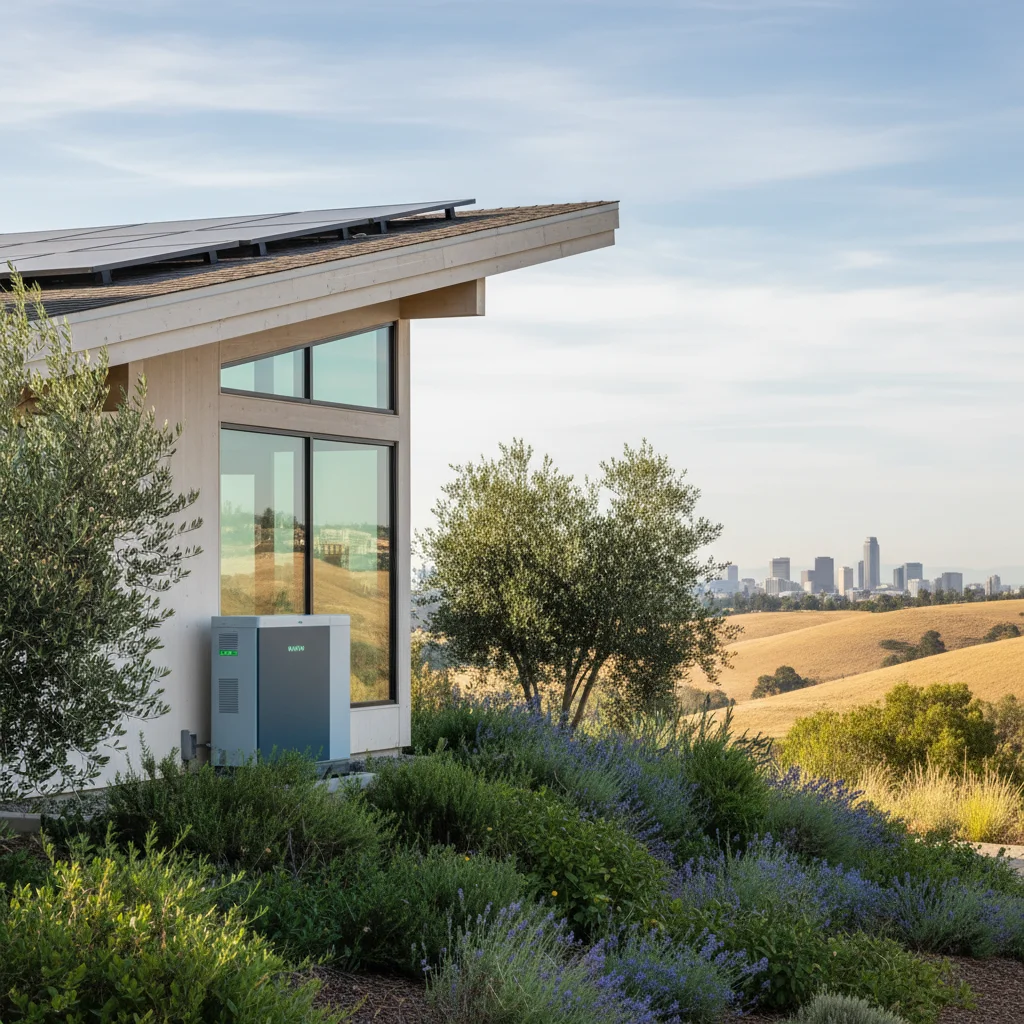
Sacramento homeowners who installed heat pumps in early 2025 missed out on $14,000 in combined rebates that expired on December 31, 2025. And the 2026 rebate landscape looks entirely different. The federal home energy tax credits (Sections 25C and 25D) ended for projects completed after December 31, 2025 (IRS FS-2025-05). Federal tax credits for this work have ended, but state, local and utility rebates may still apply; check what is available at your address with the DuloCore rebate calculator. But local utility rebates through SMUD changed their income thresholds, documentation requirements, and application deadlines. The result: some families now qualify for more money than they did last year, while others dropped out of eligibility entirely.
What Heat Pump Rebates Are Available in Sacramento Right Now?
Sacramento homeowners qualify for heat pump rebates through three distinct programs in 2026: the federal IRA High-Efficiency Electric Home Rebate (HEEHRA) worth up to $8,000, the IRA Home Efficiency Rebate (HOMES) worth up to $4,000, and SMUD's residential heat pump incentive worth $3,500 for income-qualified households. These programs don't stack directly—HEEHRA and HOMES operate under different tax frameworks—but homeowners can combine federal and utility rebates.
The HEEHRA program targets low- and moderate-income households. And the income limits shift based on household size. A family of four earning below $109,200 qualifies for 50% of project costs up to $8,000, while families earning below $72,800 receive 100% coverage. SMUD's rebate requires participation in the Energy Assistance Program Rate (EAPR), which limits eligibility to households at or below 200% of federal poverty guidelines—roughly $62,400 for a family of four in 2026.
So the federal HOMES rebate takes a different approach. It pays based on whole-home energy reduction rather than equipment type. Homeowners who achieve 20% energy savings receive $2,000, while 35% or greater savings unlock the full $4,000. But you need a certified energy auditor to verify baseline and post-retrofit consumption, and that audit costs $300-$600 upfront.
The key deadlines matter. SMUD accepts applications on a rolling basis until funds run out—typically by October each year since 2023. And HEEHRA applications open through state agencies in phases. California launched its portal in March 2026 with a first-come, first-served structure. So early applicants in Sacramento secured rebates within 45 days, while late-summer applicants face waitlists that stretch into 2027.
Want to see which programs you qualify for? Calculate your rebate calculator eligibility based on your income, home size, and current HVAC system.
How Much Can You Save With Sacramento Heat Pump Rebates in 2026?
A Sacramento homeowner installing a $12,000 heat pump system saves between $3,500 and $15,500 depending on income, existing equipment, and whether the project qualifies for multiple programs. But the final number depends on how you structure the application. SMUD's $3,500 rebate applies regardless of federal participation, so it serves as the baseline for all qualifying households.
Stack that with HEEHRA for maximum impact. And income-qualified families hit the upper end of savings. A household earning $60,000 with four members qualifies for 100% HEEHRA coverage up to $8,000, plus $3,500 from SMUD, totaling $11,500. But if the same family achieves 35% whole-home energy savings, they add $4,000 from the HOMES rebate—bringing the total to $15,500 on a $12,000 project. That structure effectively pays homeowners $3,500 to upgrade.
The math shifts for moderate-income households. Families earning $95,000 qualify for 50% HEEHRA coverage—$6,000 on a $12,000 system—plus SMUD's $3,500, totaling $9,500. So their out-of-pocket cost drops to $2,500 before factoring in the HOMES rebate. And if they hit the 35% energy reduction threshold, the HOMES program adds another $4,000, erasing the out-of-pocket cost entirely and netting them $1,500.
But households above SMUD's income threshold lose the utility rebate. They still access federal programs, so a family earning $120,000 qualifies for HEEHRA at 50% coverage ($6,000) and HOMES if they meet the energy savings target ($4,000), totaling $10,000. Their out-of-pocket cost on the $12,000 system lands at $2,000.
"The HEEHRA program provides point-of-sale rebates to reduce upfront costs for income-qualified households, with rebates available up to $8,000 for heat pump HVAC systems." — U.S. Department of Energy
One critical detail: HEEHRA rebates apply at point of sale, so contractors deduct the amount before you pay. But HOMES rebates arrive after project completion and energy verification, typically 60-90 days post-installation. So plan cash flow accordingly.
Are You Eligible for Heat Pump Rebates in Sacramento?
Eligibility pivots on three factors: household income, existing HVAC system type, and project scope. And each program sets different thresholds. HEEHRA uses area median income (AMI) adjusted annually by HUD. In 2026, Sacramento County AMI sits at $109,200 for a four-person household. Families earning 80-150% of AMI—$87,360 to $163,800—qualify for 50% rebates, while those below 80% AMI receive 100% coverage.
SMUD's requirements narrow further. Only EAPR participants qualify for the $3,500 utility rebate, and EAPR limits enrollment to households at or below 200% of federal poverty level. So a family of four earning $62,400 or less meets the threshold. But SMUD verifies income through tax returns or pay stubs, and applications require proof of EAPR enrollment before rebate approval.
The HOMES rebate ignores income entirely. And it focuses on energy performance instead. Any homeowner who achieves verified energy savings of 20% or more qualifies, regardless of earnings. But the project must include an energy audit before and after installation, and the auditor must hold BPI or RESNET certification. Sacramento has 47 certified auditors as of March 2026, and they charge $400-$600 for the dual audit requirement.
Existing equipment matters for HEEHRA and SMUD rebates. Both programs require replacing electric resistance heat, gas furnaces, or other non-heat-pump systems. So homes with existing heat pumps don't qualify unless the unit exceeds 15 years of age or fails entirely. And SMUD requires disposal documentation for the old system—proof that a licensed contractor removed and recycled the equipment.
One often-missed detail: HEEHRA prohibits combining rebates with federal tax credits on the same equipment. So homeowners can't claim the 30% IRA tax credit and HEEHRA rebate for the same heat pump (this federal credit ended for property placed in service after December 31, 2025). But they can split systems—claim the rebate for the heat pump and the tax credit for a separate upgrade like a heat pump water heater or weatherization work. (Note: Federal tax credit percentages and availability are subject to change; the 30% Residential Clean Energy Credit under Section 25D expired December 31, 2025. Verify current incentives at energy.gov.)
What Documentation Do You Need to Claim Your Heat Pump Rebate?
Sacramento heat pump rebate applications require five core documents: proof of income, contractor invoices, equipment specifications, energy audit reports (for HOMES only), and utility account verification. And each program adds unique requirements that trip up first-time applicants. SMUD demands proof of EAPR enrollment before processing the rebate, so homeowners must enroll in that program separately—often adding 2-3 weeks to the timeline.
HEEHRA applications through California's state portal require tax returns or W-2s to verify income. But the system accepts alternative documentation for self-employed applicants or those with irregular income. Bank statements covering six consecutive months, signed tax preparer affidavits, or Social Security benefit statements all satisfy the income verification step. And applicants upload documents directly to the portal in PDF format, with a 10MB file size limit per document.
Contractor invoices must include specific line items. SMUD and HEEHRA both require breakdowns showing equipment cost, labor cost, and disposal fees separately. Lump-sum invoices trigger manual review, which delays processing by 15-30 days. And the invoice must come from a licensed California C-20 (HVAC) contractor with an active CSLB number. SMUD maintains a list of pre-qualified contractors who understand the documentation requirements, and using one of these 83 approved vendors speeds up processing.
Equipment specifications matter more than most applicants expect. The heat pump must meet ENERGY STAR certification standards for the Northern California climate zone. And SMUD requires the contractor to submit the AHRI certificate number verifying the unit's SEER2 rating—typically 15.2 or higher for ducted systems, 16.0 for ductless. HEEHRA accepts the same AHRI documentation but also requires proof that the unit meets federal minimum efficiency standards under the 2023 DOE rulemaking.
HOMES rebates add the energy audit layer. The pre-installation audit establishes baseline energy use through a Home Energy Score or HERS rating. And the post-installation audit measures actual savings 30-60 days after the heat pump goes live. Both audits generate PDF reports that homeowners upload to the HOMES portal, and the auditor must submit verification directly to the program administrator. Sacramento homeowners pay $400-$600 for this dual audit, but some HOMES-approved contractors bundle the cost into the project bid.
"Heat pumps must meet ENERGY STAR Most Efficient criteria to qualify for federal rebates, which includes SEER2 ratings of 16.0 or higher and HSPF2 ratings of 9.0 or higher." — ENERGY STAR
One deadline detail: SMUD requires invoice dates within 90 days of application submission. So homeowners can't complete the installation in January and apply in June. But HEEHRA and HOMES allow retroactive applications for projects completed after January 1, 2026, as long as applicants submit within the same calendar year.
What's the Deadline to Apply for Sacramento Heat Pump Rebates?
SMUD's heat pump rebate operates on a fiscal year budget that runs dry between September and November each year based on five-year application trends. The 2026 allocation opened January 1 with $4.2 million reserved for residential heat pump upgrades, and by March 15, the program had distributed $1.8 million—a 43% depletion rate that projects full exhaustion by mid-October. So applicants who submit in the first two quarters receive approval within 30-45 days, while those who wait until fall hit waitlists or miss the funding window entirely.
HEEHRA timelines follow a different structure. California's allocation of $410 million opened in March 2026 with no published end date, but the state processes applications first-come, first-served. And early applicants in Sacramento County received approval within 45 days, while April applicants saw that timeline stretch to 70 days as volume increased. The program runs through 2031 or until funds exhaust, whichever comes first. But state administrators warned in March that demand exceeded initial projections by 38%, so the money won't last the full five-year window.
The HOMES rebate timeline depends on contractor availability and auditor schedules. The energy audit must occur before installation begins, and Sacramento's 47 certified auditors book out 3-5 weeks during peak season (March-June). So homeowners who start the process in April often can't complete installation until May or June. And the post-installation audit happens 30-60 days after the system goes live, pushing final rebate approval into late summer or fall for spring projects.
But there's a strategic deadline most homeowners miss. HEEHRA prohibits combining rebates with federal tax credits on the same equipment, but it allows claiming different programs in the same tax year for different upgrades. So a homeowner who installs a heat pump in March 2026 with HEEHRA can install a heat pump water heater in November 2026 and claim the 30% IRA tax credit on the water heater. That dual-track approach maximizes 2026 benefits before programs change in 2027.
SMUD also enforces a project completion deadline. Applications require installation dates within 90 days of submission, so homeowners can't start the project in January and apply in July. And the contractor must submit final inspection approval from Sacramento County before SMUD releases payment. That inspection typically happens 10-14 days post-installation, adding another timing layer to plan around.
For more details on how energy tax credits work alongside rebate programs, see our complete guide to stacking federal and state incentives.
How Do Sacramento Heat Pump Rebates Compare to Other HVAC Incentives?
Heat pump rebates deliver higher upfront savings than any other HVAC incentive available in Sacramento in 2026. And the gap widens for income-qualified households. SMUD offers $3,500 for heat pumps but only $150 for smart thermostats and $50 for duct sealing—equipment that pairs with heat pumps but doesn't replace core heating systems. So the heat pump rebate alone exceeds the combined value of every other SMUD HVAC incentive by a factor of 10.
Federal programs mirror that priority. HEEHRA allocates $8,000 for heat pumps but caps electric panel upgrades at $4,000 and weatherization at $1,600. The program recognizes heat pumps as the single highest-impact residential decarbonization measure, and it prices incentives accordingly. But gas furnace rebates don't exist under HEEHRA or HOMES—both programs fund electric equipment only, reflecting California's 2030 building decarbonization goals.
Tax credits tell a different story. The 30% IRA tax credit for residential clean energy applies to heat pumps, but it also covers solar (these federal credits ended for projects completed after December 31, 2025) panels, battery storage, and geothermal systems. And the credit has no dollar cap, so a homeowner installing a $40,000 solar-plus-battery system claims $12,000 in tax credits—triple the maximum HEEHRA rebate. But tax credits require sufficient tax liability to claim, while rebates arrive regardless of tax filing status. So low-income households gain more from rebates, while high earners maximize value through tax credits.
The timing gap matters too. Rebates apply at point of sale (HEEHRA, SMUD) or within 60-90 days (HOMES), cutting upfront costs immediately. Tax credits arrive 12-16 months later when homeowners file annual returns. So a family installing a heat pump in March 2026 waits until April 2027 to claim the tax credit. And if they owe less than the credit amount, the excess doesn't roll forward or refund—it disappears. HEEHRA rebates don't have that limitation.
One structural difference reshapes decisions. Heat pump rebates require replacing existing equipment, so they don't apply to new construction. But new homes in Sacramento built after January 1, 2023, must meet Title 24 energy codes that effectively mandate heat pumps or equivalent electric systems. So new construction bypasses rebates entirely but benefits from lower operating costs—$800-$1,200 annually compared to gas furnaces based on SMUD's 2026 rate structure.
And the combination rules create strategy opportunities. HEEHRA prohibits stacking with tax credits on the same equipment, but SMUD rebates stack with both. So a homeowner claims HEEHRA ($8,000) plus SMUD ($3,500) on the heat pump, then claims the 30% tax credit (this federal credit ended for property placed in service after December 31, 2025) on a separate heat pump water heater installed in the same year. That approach nets $11,500 in rebates plus $600-$900 in tax credits (30% of a $2,000-$3,000 water heater), totaling $12,100-$12,400 in 2026 incentives across two projects.
To explore how heat pump rebates compare to other incentives across California, check our statewide program comparison.
Official Sources
- U.S. Department of Energy - Save Energy, Save Money — Federal guidance on IRA rebates, tax credits, and energy efficiency programs including HEEHRA and HOMES. (note: the federal 25C and 25D credits ended for projects completed after December 31, 2025)
- ENERGY STAR Heat Pumps — Technical specifications and efficiency requirements for qualifying equipment.
- DSIRE USA — Database of state and utility incentives for renewable energy and energy efficiency, including SMUD programs.
Frequently Asked Questions
Who is eligible for heat pump rebates in Sacramento?
Sacramento homeowners qualify based on income and existing equipment. HEEHRA serves households earning below 150% of area median income—$163,800 for a family of four in 2026—with higher rebate percentages for those below 80% AMI ($87,360). SMUD's $3,500 rebate requires enrollment in the Energy Assistance Program Rate (EAPR), limiting eligibility to households at or below 200% of federal poverty level ($62,400 for four people). And all programs require replacing non-heat-pump systems like gas furnaces or electric resistance heat.
How much can you save with a heat pump rebate in Sacramento?
Total savings range from $3,500 to $15,500 depending on income and program stacking. Low-income households combine HEEHRA ($8,000 at 100% coverage), SMUD ($3,500), and HOMES ($4,000 for 35% energy savings) to reach the upper limit. Moderate-income families earning $95,000 save $9,500-$13,500 through HEEHRA at 50% coverage plus SMUD and HOMES. And households above SMUD's income threshold but within HEEHRA limits save $6,000-$10,000 from federal programs alone.
What is the application process for Sacramento heat pump rebates?
SMUD rebates require pre-approval before installation. Homeowners submit an online application with proof of EAPR enrollment, then receive approval within 10-15 days. HEEHRA applications happen after installation through California's state portal, requiring income documentation, contractor invoices, and equipment specifications. And HOMES rebates require two energy audits—one before and one after installation—with final payment arriving 60-90 days post-completion. Most contractors handle SMUD and HEEHRA paperwork as part of the installation service.
When do heat pump rebates expire in Sacramento?
SMUD's rebate operates on annual budgets that exhaust between September and November based on application volume. The 2026 allocation depleted 43% by mid-March, projecting full exhaustion by October. HEEHRA runs through 2031 or until California's $410 million allocation exhausts, but demand exceeded projections by 38% in the first month, suggesting funds won't last the full term. And HOMES continues through 2031 with no published state allocation cap, making it the most stable long-term option.
How do Sacramento heat pump rebates compare to federal tax credits?
Rebates deliver faster cash flow and don't require tax liability. HEEHRA and SMUD rebates apply at point of sale or within 90 days. The federal Energy Efficient Home Improvement Credit (Section 25C) ended for property placed in service after December 31, 2025 (IRS FS-2025-05). But tax credits have no dollar cap—a $40,000 solar project claims $12,000—while HEEHRA caps at $8,000. And rebates can't stack with tax credits on the same equipment, so homeowners choose based on income, tax liability, and project timing.
Ready to find out how much you can save? Use our free rebate calculator to estimate your total incentives based on your income, home size, and current HVAC system. Get your personalized rebate breakdown in under 60 seconds.
Last reviewed: April 14, 2026. Reviewed by DuloCore Energy Specialists. About the team.
Check your California heat pump rebate eligibility — see the programs you qualify for and the dollar amounts on our California heat pump rebate finder.