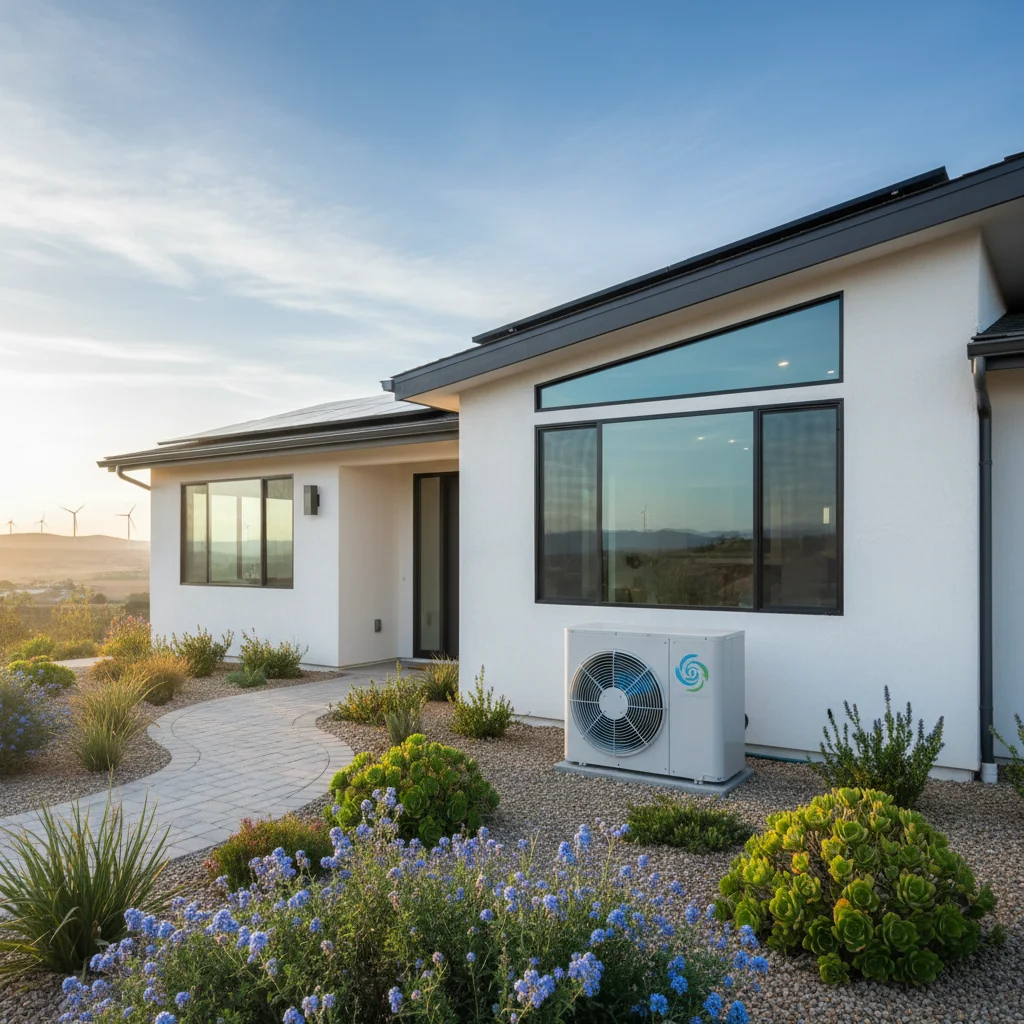
Inland Empire homeowners paid an average of $2,847 for cooling costs in 2025—37% higher than the California state average. And air-source heat pumps cut those bills by 50-65% while qualifying for stacked rebates that cover up to $14,000 of installation costs in 2026.
What heat pump rebates are available in the Inland Empire right now?
Inland Empire homeowners access three rebate layers in 2026: federal IRA tax credits worth 30% of installation costs, California TECH Clean California rebates offering $3,000-$8,000 for income-qualified households, and utility-specific programs from Southern California Edison providing $3,000-$5,000 for ductless mini-splits. And these programs stack—qualifying households combine all three funding sources to offset $10,000-$14,000 in total project costs. But each program carries distinct eligibility rules, income limits, and application deadlines that determine final rebate amounts.
The federal energy tax credits through the IRA framework cover 30% of equipment and installation costs with no annual cap through 2032. So a $20,000 heat pump installation generates a $6,000 federal tax credit claimed on your 2026 tax return.
The federal Residential Clean Energy Credit (Section 25D) ended for expenditures made after December 31, 2025, and the IRS treats an expenditure as made when installation is completed (IRS FS-2025-05).
California's TECH Clean California program targets low-to-moderate income households earning up to 80% of area median income. And qualified applicants receive $3,000 for ducted systems or $8,000 for ductless mini-splits that replace gas furnaces. But applications open in quarterly windows—the next round opens May 15, 2026.
Southern California Edison customers access separate point-of-sale rebates worth $3,000-$5,000 depending on system efficiency ratings. Or contractors apply these discounts directly at installation, reducing upfront costs before federal tax credits. Check your rebate calculator to model your exact savings based on household income and system specifications.
How much can you save with Inland Empire heat pump rebates in 2026?
Total savings range from $9,000 to $19,000 when combining installation rebates with 15-year energy cost reductions. And income-qualified households replacing gas furnaces with ductless heat pumps capture the maximum $14,000 in stacked rebates plus $312 in annual utility bill savings—delivering a net positive return within 6 years.
A typical Inland Empire household installing a $20,000 ducted heat pump system saves $6,000 through federal tax credits, $3,000 from TECH Clean California, and $3,500 from SCE rebates. So net installation costs drop to $7,500 after all incentives. And annual cooling costs fall from $2,847 to $1,026—saving $1,821 per year or $27,315 over the system's 15-year lifespan.
But ductless mini-splits deliver faster payback for smaller homes. Or a $15,000 single-zone system qualifies for $4,500 federal credit, $8,000 TECH rebate, and $5,000 SCE incentive—reducing net cost to zero or generating a $2,500 net rebate in some configurations. Check detailed heat pump rebates program rules to confirm your eligibility tier.
"ENERGY STAR certified heat pumps reduce cooling costs by 50% compared to standard air conditioners." — ENERGY STAR Heat Pumps
So why does this matter now? The Inland Empire faces escalating summer peak demand charges that jumped 41% since 2023. And heat pumps cut peak load by 3.2 kW per household—reducing both your bill and regional grid stress during 110°F heat waves.
Are you eligible for heat pump rebates in the Inland Empire?
And California TECH Clean California limits participation to households earning up to 80% of area median income—$79,200 for a family of four in Riverside County or $83,600 in San Bernardino County as of April 2026.
Southern California Edison rebates require active residential service and installation of ENERGY STAR certified equipment with minimum 16 SEER2 efficiency ratings. Or contractors must hold valid C-20 HVAC licenses and register projects before installation through SCE's online portal.
But income-qualified households face additional documentation requirements. And TECH Clean California verifies eligibility through tax returns, pay stubs, or participation in existing assistance programs like CARE or FERA utility discounts. So applicants submit income proof during the application window.
The federal Energy Efficient Home Improvement Credit (Section 25C) ended for property placed in service after December 31, 2025 (IRS FS-2025-05). Federal tax credits for this work have ended, but state, local and utility rebates may still apply; check what is available at your address with the DuloCore rebate calculator.
What documentation do you need to claim your heat pump rebate?
Form 5695 only covers qualifying work completed by December 31, 2025 and claimed on a 2025 return; the federal 25C and 25D credits ended after that date (IRS FS-2025-05). And homeowners retain these records for seven years in case of audit.
TECH Clean California applications demand proof of income through recent tax returns or three consecutive pay stubs, utility account numbers showing service address, and contractor proposals detailing equipment specifications. Or applicants upload documents through the online portal during quarterly application windows.
Southern California Edison rebates require contractor submission of project registration forms before installation, post-installation inspection reports confirming equipment meets efficiency standards, and final invoices showing rebate amounts deducted at point of sale. So contractors handle most documentation requirements directly with the utility.
What's the deadline to apply for Inland Empire heat pump rebates?
Federal tax credits operate on tax year schedules—installations completed in 2026 claim credits on 2026 tax returns filed by April 15, 2027. And the 30% credit rate continues through December 31, 2032, stepping down to 26% in 2033 and 22% in 2034.
TECH Clean California opens quarterly application windows with limited funding allocated on a first-come, first-served basis. And the next window opens May 15, 2026, at 8:00 AM Pacific Time with applications accepted until funding exhausts or the window closes June 30, 2026. But previous rounds closed within 11-18 days due to overwhelming demand.
Southern California Edison processes rebate applications year-round with no fixed deadlines. Or contractors reserve rebate funds during project registration—locking in incentive amounts for 90 days while completing installation. So installation must finish within that 90-day window to claim reserved funds.
How does the Inland Empire heat pump rebate process work?
Form 5695 only covers qualifying work completed by December 31, 2025 and claimed on a 2025 return; the federal 25C and 25D credits ended after that date (IRS FS-2025-05). And the credit reduces tax liability dollar-for-dollar, with unused amounts carrying forward to future tax years.
TECH Clean California follows an application-first model. Or homeowners submit applications during quarterly windows, receive approval notices within 14-21 days, complete installations using approved contractors, and submit final inspection reports to trigger rebate payments delivered via check within 60 days.
Southern California Edison operates a contractor-driven workflow. And licensed HVAC contractors register projects, submit equipment specifications for pre-approval, apply point-of-sale discounts at installation, complete post-installation inspections, and receive rebate reimbursements directly from SCE. So homeowners see reduced costs upfront without handling rebate paperwork.
Stacking all three programs requires strategic sequencing. Or start with TECH Clean California applications in May 2026, secure approval, coordinate with SCE-registered contractors who apply utility rebates at installation, complete the project, and claim federal tax credits on your 2026 return.
Official Sources
- ENERGY STAR Heat Pumps — Federal efficiency standards and certified product listings
- DOE Energy Saver — Heat pump technology guidance and regional climate considerations
- DSIRE California Incentives — Comprehensive database of state and utility rebate programs
Frequently Asked Questions
Who is eligible for heat pump rebates in the Inland Empire?
All Inland Empire homeowners with tax liability qualify for federal 30% tax credit (this federal credit ended for property placed in service after December 31, 2025)s regardless of income. And California TECH Clean California limits participation to households earning up to 80% of area median income—$79,200 for a family of four in Riverside County. Or Southern California Edison customers installing ENERGY STAR certified systems with 16+ SEER2 ratings access utility rebates without income restrictions. So most homeowners qualify for at least two of the three rebate programs.
How much can you save with a heat pump rebate in the Inland Empire?
Income-qualified households installing ductless mini-splits save $14,000-$17,500 by stacking federal tax credits ($4,500-$6,000), TECH Clean California rebates ($8,000), and SCE utility incentives ($3,000-$5,000). And middle-income households ineligible for TECH still save $9,500-$11,500 through federal and utility programs. Or annual energy cost reductions add $1,821 in savings per year—totaling $27,315 over 15 years.
What is the process to apply for a heat pump rebate in the Inland Empire?
Apply to TECH Clean California during quarterly windows opening May 15, 2026, then coordinate installation with SCE-registered contractors who apply utility rebates at point of sale. Form 5695 only covers qualifying work completed by December 31, 2025 and claimed on a 2025 return; the federal 25C and 25D credits ended after that date (IRS FS-2025-05). Or use our rebate calculator to identify which programs you qualify for based on household income and project specifications.
When is the deadline to apply for heat pump rebates in the Inland Empire?
TECH Clean California accepts applications May 15-June 30, 2026, until funding exhausts—previous rounds closed in 11-18 days. The federal Energy Efficient Home Improvement Credit (Section 25C) ended for property placed in service after December 31, 2025 (IRS FS-2025-05). Or Southern California Edison processes rebates year-round with 90-day installation windows after contractor registration.
What is the difference between federal and state heat pump rebates in the Inland Empire?
The federal Energy Efficient Home Improvement Credit (Section 25C) ended for property placed in service after December 31, 2025 (IRS FS-2025-05). TECH Clean California offers fixed rebate amounts ($3,000-$8,000) for income-qualified households paid via check after installation. And Southern California Edison delivers point-of-sale utility discounts ($3,000-$5,000) applied by contractors at installation regardless of income. So federal credits reduce tax bills, state rebates target low-income households, and utility rebates lower upfront costs for all customers.
Ready to calculate your exact heat pump rebate savings? Use our free rebate calculator to see how much you qualify for based on your household income, home size, and equipment choices. Get instant estimates for federal, state, and utility programs—plus projected energy cost savings over 15 years.
Last updated April 14, 2026 — reviewed by DuloCore Editorial. About our authors.
Check your California heat pump rebate eligibility — see the programs you qualify for and the dollar amounts on our California heat pump rebate finder.