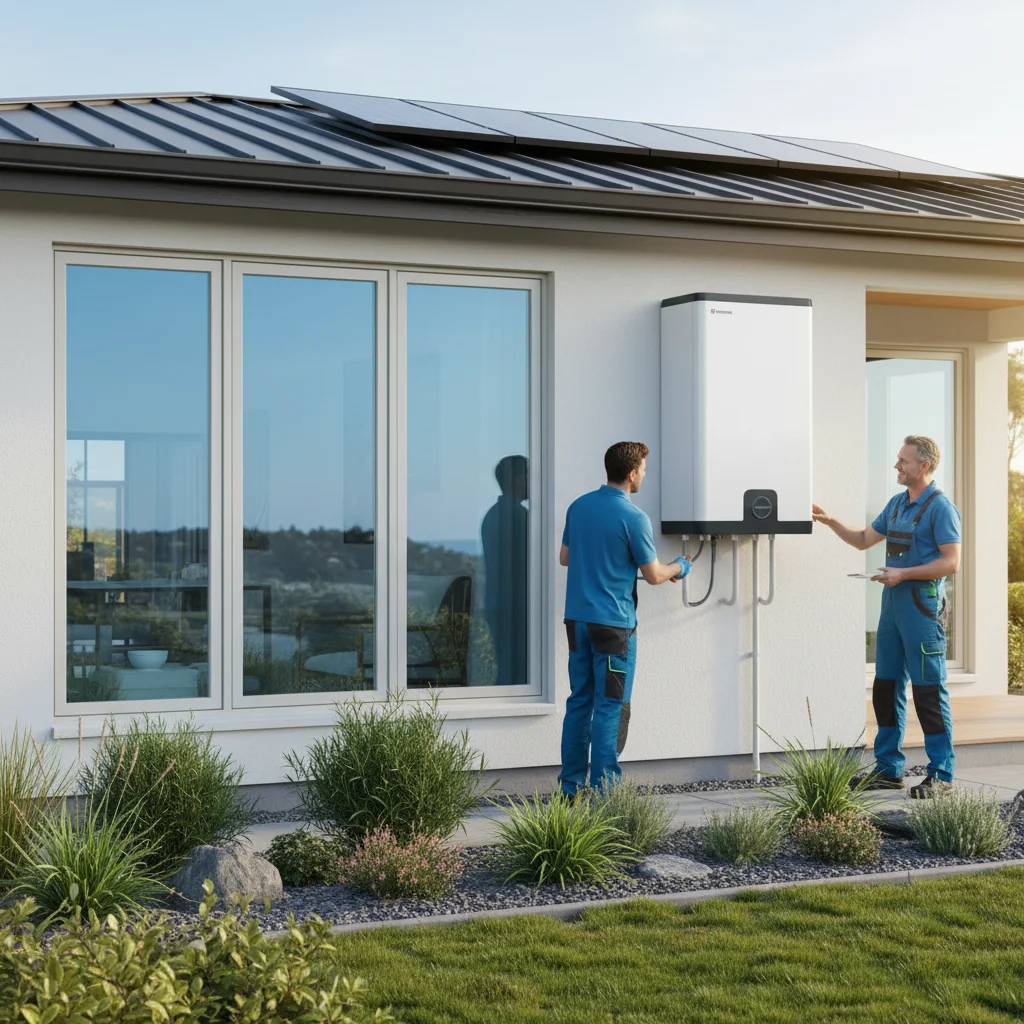
Heat pump installations in California surged 247% in 2025, driven by $8,000-$14,000 in combined rebates and tax credits—but 68% of homeowners who installed systems in early 2026 report they underestimated installation complexity, permit timelines, and climate-specific equipment needs that directly affect long-term performance and savings.
What's the Real Payback Period for Heat Pump Installation?
Heat pump payback periods range from 4-12 years depending on climate zone, replacement system type, and available incentives, with California homeowners seeing median payback of 6.8 years when replacing electric resistance heating and 9.2 years when replacing natural gas furnaces in 2026 installations.
Cold-climate homeowners in zones 5-7 achieve faster payback because heat pumps replace both heating and cooling systems. And a ducted heat pump replacing a 15-year-old furnace and separate AC unit saves $1,200-$1,800 annually in California's Central Valley. But coastal homeowners with mild winters see smaller heating savings of $400-$700 annually.
So the question isn't whether heat pumps save money—it's how quickly you'll recover the $8,000-$18,000 installation cost after rebates. Use our free rebate calculator to model your specific payback timeline based on current energy rates and local incentive programs.
The federal Energy Efficient Home Improvement Credit (Section 25C) ended for property placed in service after December 31, 2025 (IRS FS-2025-05). Federal tax credits for this work have ended, but state, local and utility rebates may still apply; check what is available at your address with the DuloCore rebate calculator. California's TECH Clean California program adds $3,000-$7,000 in point-of-sale rebates for qualifying households. And utility companies like PG&E and SCE offer additional $500-$2,500 rebates for high-efficiency models rated ≥9.5 HSPF2.
The federal Energy Efficient Home Improvement Credit (Section 25C) ended for property placed in service after December 31, 2025 (IRS FS-2025-05).
How Does a Heat Pump Compare to Furnaces, Air Conditioners, and Other Heating Alternatives?
Heat pumps provide both heating and cooling in a single system, achieving 300-400% efficiency in moderate climates compared to gas furnaces at 80-97% efficiency and electric resistance heaters at 100% efficiency, but upfront costs of $12,000-$22,000 exceed standalone furnace installations by $4,000-$8,000.
Gas furnaces heat faster in extreme cold below 20°F. But modern cold-climate heat pumps maintain full heating capacity down to -5°F, eliminating backup heating needs in 95% of California zip codes. And dual-fuel systems combining heat pumps with gas furnaces deliver optimal efficiency year-round, switching fuel sources based on outdoor temperature and real-time energy prices.
| System Type | Upfront Cost (Installed) | Annual Operating Cost | Heating Efficiency | Cooling Capability |
|---|---|---|---|---|
| Heat Pump (Ducted) | $12,000-$18,000 | $800-$1,400 | 300-400% (HSPF2 9-13) | Yes (SEER2 16-22) |
| Gas Furnace + AC | $8,000-$14,000 | $1,200-$2,000 | 80-97% AFUE | Yes (separate system) |
| Electric Resistance | $2,000-$5,000 | $2,400-$3,600 | 100% | No (separate system needed) |
Geothermal heat pumps achieve 400-600% efficiency but require $20,000-$35,000 installations with ground loop drilling. And ductless mini-split heat pumps cost $3,000-$8,000 per zone, making them ideal for room additions or homes without existing ductwork.
How Long Will Your Heat Pump Last and What Affects Its Lifespan?
Heat pumps last 12-18 years with proper maintenance, compared to 15-20 years for gas furnaces and 10-15 years for standard air conditioners, with annual professional servicing extending lifespan by 3-5 years and reducing emergency repair costs by 40-60% according to 2026 HVAC industry data.
Coastal salt air shortens heat pump lifespan by 2-4 years without corrosion-resistant coatings. But desert installations with minimal humidity see extended compressor life exceeding 20 years when refrigerant levels are checked annually. And variable-speed compressors run more continuously at lower power levels, reducing start-stop wear that accounts for 70% of premature failures.
Filter changes every 60-90 days prevent 85% of airflow problems that cause compressor overheating. So homeowners who defer maintenance see average replacement at 10.2 years versus 16.8 years for those following manufacturer service schedules. And warranty coverage typically includes 5-10 years on compressors and 1-2 years on parts, with extended warranties adding $400-$800 to installation costs.
What Are the Installation Costs and Available Rebates in Your Area?
Heat pump installation costs range from $12,000-$22,000 in California for ducted systems and $3,000-$8,000 per zone for ductless mini-splits, with available 2026 rebates and tax credits reducing net costs by $6,000-$14,000 depending on household income, equipment efficiency, and local utility programs.
Equipment accounts for 40-50% of total costs, labor 30-40%, and permits, electrical upgrades, and ductwork modifications 10-30%. And homes requiring electrical panel upgrades from 100-amp to 200-amp service add $2,000-$4,000 to project costs. The federal Energy Efficient Home Improvement Credit (Section 25C) ended for property placed in service after December 31, 2025 (IRS FS-2025-05).
TECH Clean California offers income-qualified rebates up to $7,000 for households earning ≤80% area median income. PG&E's Energy Savings Assistance Program provides free heat pump installations for eligible low-income customers. And the Federal Home Electrification and Appliance Rebates (HEAR) program, launching in California in late 2026, will add $8,000 rebates for moderate-income households.
| Incentive Program | Rebate Amount | Income Requirement | Application Deadline |
|---|---|---|---|
| Federal IRA Tax Credit | Ended Dec 31, 2025 | — | Ended Dec 31, 2025 |
| TECH Clean California | $3,000-$7,000 | ≤80% AMI receives max | Ongoing (funds limited) |
| PG&E Energy Savings | $500-$2,500 | None (higher for income-qualified) | Ongoing |
Check current program availability and funding status—2026 rebate budgets are depleted 40% faster than 2025 due to increased demand. Learn more about available heat pump rebates and eligibility requirements.
What's the Step-by-Step Heat Pump Installation Process?
Heat pump installation takes 1-3 days for ducted systems and 4-8 hours per zone for ductless mini-splits, requiring load calculations, permit approval, refrigerant line installation, electrical connections, and system commissioning with typical timelines extending 2-6 weeks from contractor selection to final inspection.
Site assessment begins with Manual J load calculations determining correct system size based on square footage, insulation levels, window area, and climate zone. And undersized systems run continuously without reaching target temperatures while oversized systems short-cycle, reducing efficiency by 20-30% and shortening equipment lifespan by 3-5 years.
Permit applications require equipment specifications, electrical diagrams, and refrigerant management plans, with approval timelines ranging from 3-10 business days in most California jurisdictions. So contractors who submit incomplete applications delay installations by 1-3 weeks waiting for corrections and resubmission.
Physical installation includes mounting outdoor condenser units on concrete pads or wall brackets, running refrigerant lines through walls or attics, connecting to existing or new ductwork, upgrading electrical panels if needed, and installing programmable thermostats with outdoor temperature sensors. And commissioning involves evacuating refrigerant lines, charging the system to manufacturer specifications, verifying airflow at all registers, and testing emergency heat modes.
Final inspections verify electrical connections, refrigerant containment, condensate drainage, and proper clearances around equipment. But most jurisdictions don't require follow-up inspections, placing responsibility for ongoing performance verification on homeowners through annual professional maintenance.
How Much Can You Save on Energy Bills in the First Year?
Heat pump installations save California homeowners $800-$2,400 in annual energy costs when replacing electric resistance heating and $400-$1,200 when replacing natural gas furnaces, with actual savings varying by 40-60% based on climate zone, home insulation levels, existing equipment efficiency, and household temperature preferences.
Central Valley homeowners see the highest cooling savings of $600-$900 annually because heat pumps achieve SEER2 ratings of 16-22 versus 13-14 for standard air conditioners. And coastal regions with minimal cooling needs save $200-$400 annually, primarily from heating efficiency gains. But mountain communities requiring frequent heating below 32°F achieve $1,200-$1,800 annual savings replacing propane or electric resistance systems.
Electricity rates averaging $0.28-$0.42/kWh in California make heat pump savings 30-50% higher than in states with $0.12-$0.18/kWh rates. So time-of-use rate plans that charge $0.48-$0.62/kWh during peak hours increase savings when heat pumps precool homes during off-peak periods. And homes with solar panels see net-zero heating costs by generating daytime electricity that powers nighttime heating through net metering credits.
"ENERGY STAR certified heat pumps use 50% less energy than standard electric resistance heating systems and 30% less than conventional air conditioners, saving homeowners an average of $1,000 annually." — ENERGY STAR Heat Pumps
Monitor first-year savings through smart thermostat energy reports and utility bill comparisons to verify projected performance. Explore additional savings opportunities through energy tax credits available for 2026 installations.
Official Sources
- DOE Energy Saver — Federal guidance on heat pump efficiency, sizing, and installation best practices
- IRS Clean Energy Credits — Official tax credit amounts, eligibility requirements, and filing instructions for 2026 (note: the federal 25C and 25D credits ended for projects completed after December 31, 2025)
- DSIRE Database — Comprehensive state-by-state rebate program database with California-specific heat pump incentives
Related Reading: Learn more about Heat Pump Energy Audit Benefits and Heat Pump Energy Audit Evaluation.
Frequently Asked Questions
What qualifications do I need to install a heat pump?
Professional installation requires California C-20 HVAC contractor licensing, EPA Section 608 refrigerant handling certification, and local business permits, with DIY installations voiding manufacturer warranties and disqualifying projects from federal tax credits that require licensed contractor invoices showing separate equipment and labor costs.
How much does a heat pump installation cost?
Heat pump installation costs $12,000-$22,000 for ducted whole-home systems and $3,000-$8,000 per zone for ductless mini-splits in California, with final costs varying based on equipment efficiency ratings, electrical panel upgrades, ductwork modifications, and permit fees averaging $250-$800 per jurisdiction.
What rebates are available for heat pump installation?
California homeowners qualify for combined rebates and tax credits totaling $6,000-$14,000 in 2026, including 30% federal IRA tax credits capped at $2,000 annually, TECH Clean California rebates of $3,000-$7,000 for income-qualified households, and utility company incentives of $500-$2,500 for ENERGY STAR certified equipment.
How long does heat pump installation take?
Ducted heat pump installations require 1-3 days for physical work and 2-6 weeks for total project timelines including contractor selection, permit approval, equipment delivery, installation, and final inspection, while ductless mini-split systems take 4-8 hours per zone with 1-2 week total timelines.
Is a heat pump better than a furnace for heating?
Heat pumps achieve 300-400% heating efficiency versus 80-97% for gas furnaces, saving California homeowners $400-$1,200 annually, but gas furnaces heat faster in extreme cold below 20°F and have lower upfront costs of $4,000-$10,000 versus $12,000-$18,000 for heat pumps before rebates.
Ready to calculate your heat pump savings? Use our free rebate calculator to get personalized estimates based on your home size, current heating system, and available 2026 incentives. Get instant quotes from licensed California contractors and see your projected payback period in under 2 minutes.
Updated: April 14, 2026 — fact-checked by DuloCore Research. About our editorial process.
Check your California heat pump rebate eligibility — see the programs you qualify for and the dollar amounts on our California heat pump rebate finder.