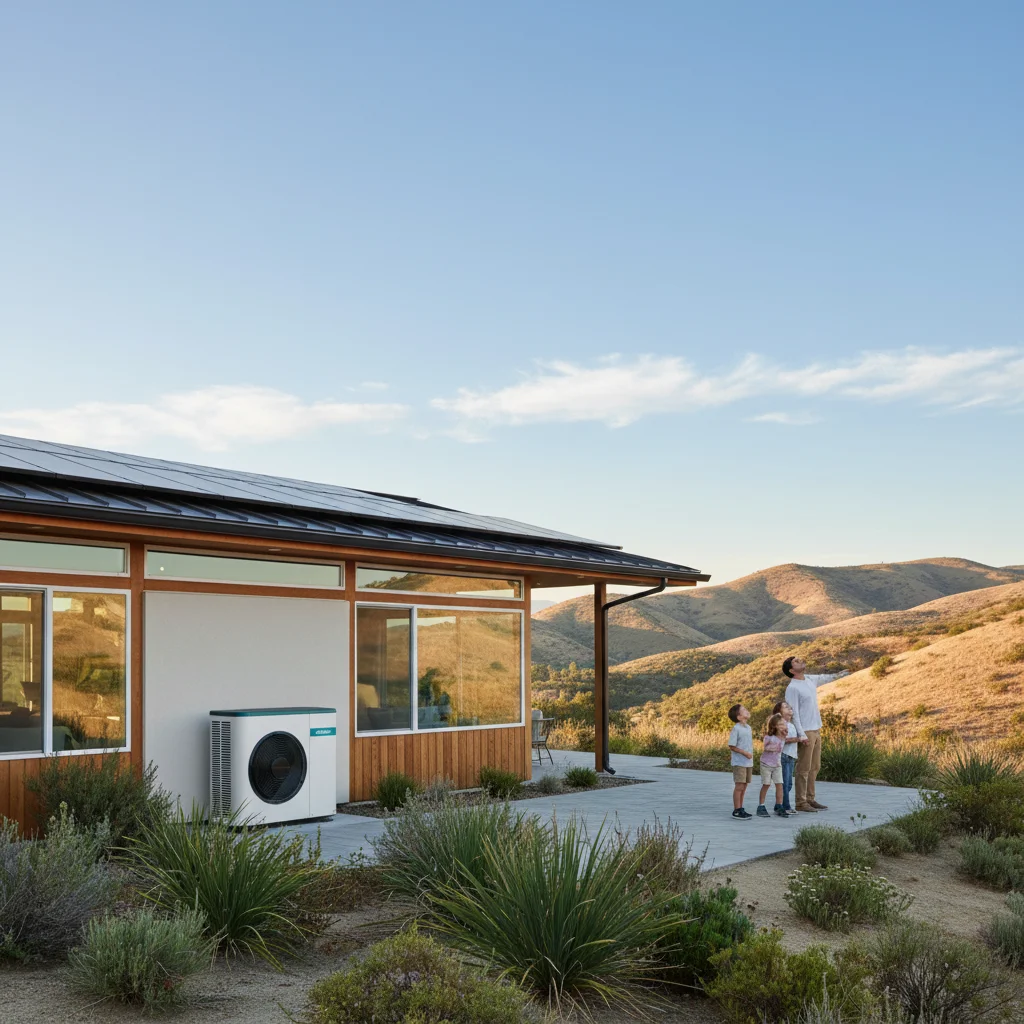
Inland Empire homeowners paid an average of $12,400 for complete heat pump installations in 2025, but 2026 federal and state rebates now slash that cost by $6,000-$10,000 for qualifying households. And with summer temperatures in Riverside and San Bernardino counties regularly hitting 105°F, efficient cooling paired with winter heating makes heat pumps the fastest-growing HVAC upgrade in Southern California.
How Much Does Heat Pump Installation Cost in the Inland Empire?
Heat pump installation costs in the Inland Empire range from $8,500 to $18,000 in 2026, depending on system size, SEER2 rating, and property square footage. Riverside and San Bernardino County contractors charge $5,500-$7,500 for equipment plus $3,000-$10,500 for labor, ductwork modifications, electrical upgrades, and permits.
A 3-ton heat pump for a 1,800-square-foot home costs $11,000-$14,000 installed. But a 5-ton unit for a 3,000-square-foot property runs $15,000-$18,000. And homes requiring 200-amp electrical panel upgrades add $1,500-$3,000 to the total.
So the final price depends on existing infrastructure. Homes built after 2005 with modern ductwork and electrical panels pay 20-30% less than older properties needing full system retrofits.
"Air-source heat pumps provide efficient heating and cooling in moderate and hot climates, delivering 1.5 to 3 times more heat energy than the electrical energy they consume." — ENERGY STAR
Contractors in Riverside charge $85-$120 per hour for licensed HVAC labor. San Bernardino rates run $80-$115 per hour. And most installations take 1-3 days depending on complexity.
What's the ROI and Payback Period for a Heat Pump in the Inland Empire?
Heat pump installations in the Inland Empire deliver 15-25% annual energy savings compared to electric resistance heating and central air conditioning, with payback periods of 6-10 years before rebates. After applying 2026 federal and California incentives, payback periods drop to 3-5 years for most households.
A typical Inland Empire home spending $2,400 annually on heating and cooling saves $360-$600 per year with a heat pump. Over a 15-year equipment lifespan, total savings reach $5,400-$9,000. And homes replacing propane or oil heating see savings of $800-$1,400 annually.
But ROI varies by climate zone. Riverside's hot summers (90+ days above 100°F) make cooling efficiency the primary driver. San Bernardino's high desert areas see faster payback from heating efficiency during 40-50°F winter nights.
The federal Energy Efficient Home Improvement Credit (Section 25C) ended for property placed in service after December 31, 2025 (IRS FS-2025-05). Federal tax credits for this work have ended, but state, local and utility rebates may still apply; check what is available at your address with the DuloCore rebate calculator. California's TECH Clean California program adds $3,000-$4,000 for all-electric upgrades. So a $13,000 installation costs $7,000-$8,000 after incentives, reducing payback to 3-4 years.
Use our free rebate calculator to estimate your exact savings and payback timeline based on your ZIP code and current energy bills.
How Does Heat Pump Installation Compare to Other Heating Alternatives?
Heat pump installations cost 30-50% more upfront than traditional furnace-and-AC systems but deliver 40-60% lower operating costs over their 15-20 year lifespan. Inland Empire homeowners pay $13,000 average for heat pumps versus $8,500 for gas furnace plus AC, but heat pumps save $500-$900 annually on energy bills.
Gas furnace and AC combinations cost $7,000-$10,000 installed but require separate heating and cooling systems. And natural gas prices in Southern California Gas territory averaged $2.09 per therm in 2025, making gas heating cheaper than electric resistance but more expensive than heat pumps.
Electric resistance heating (baseboard or wall heaters) costs just $1,200-$3,500 installed but runs 2-3 times more expensive than heat pumps for the same BTU output. So homes using electric resistance pay $3,000-$4,500 annually for heating versus $1,200-$1,800 with heat pumps.
| System Type | Upfront Cost | Annual Energy Cost | Lifespan | Total 15-Year Cost |
|---|---|---|---|---|
| Heat Pump | $13,000 | $1,500 | 15-20 years | $35,500 |
| Gas Furnace + AC | $8,500 | $2,100 | 15-18 years | $40,000 |
| Electric Resistance + AC | $4,500 | $3,200 | 10-15 years | $52,500 |
But heat pumps qualify for federal and state rebates that furnaces don't. The IRA energy tax credits cut heat pump costs by $2,000-$6,000, making total ownership costs 20-35% lower than gas systems over 15 years.
What Rebates and Incentives Can Reduce Your Heat Pump Installation Costs?
The federal Energy Efficient Home Improvement Credit (Section 25C) ended for property placed in service after December 31, 2025 (IRS FS-2025-05). California TECH Clean California rebates add $3,000-$4,000 for all-electric HVAC conversions. Combined incentives reduce a $13,000 installation to $7,000-$8,000 for most Inland Empire homeowners.
TECH Clean California targets low-to-moderate income households earning up to 80% of area median income. Riverside County AMI is $94,200 for a family of four, so households earning under $75,360 qualify for maximum rebates of $4,000 per heat pump installation.
Southern California Edison offers additional rebates of $1,500-$2,500 for residential heat pump installations through its Energy Efficiency Rebate Program. And municipal utility districts in San Bernardino County provide $500-$1,000 local incentives for high-efficiency systems rated SEER2 18 or higher.
The federal home energy tax credits (Sections 25C and 25D) ended for projects completed after December 31, 2025 (IRS FS-2025-05).
But rebate stacking rules apply. Federal tax credits combine with state and utility rebates, but two utility programs can't stack. So homeowners must choose between SCE's $2,500 rebate or municipal $1,000 rebates, not both.
Check our heat pump rebates guide for complete 2026 program details and eligibility requirements.
What's the Timeline and Process for Installing a Heat Pump?
Heat pump installations in the Inland Empire take 1-3 days for equipment installation plus 2-6 weeks for permitting and rebate processing. Riverside and San Bernardino counties require HVAC permits costing $200-$400, with 5-10 business day approval times for standard residential installations.
The installation process follows five stages. First, contractors perform load calculations to size the system correctly—undersized units can't handle 105°F summer peaks, while oversized systems short-cycle and waste energy. Second, electricians upgrade panels and circuits if needed, adding 1-2 days to the timeline.
Third, HVAC crews remove old equipment and install the outdoor condenser, indoor air handler, and refrigerant lines. Most installations finish in 6-12 hours for straightforward replacements. But ductwork modifications or full system retrofits take 2-3 days.
Fourth, inspectors verify electrical and refrigerant connections meet California Title 24 standards. And fifth, contractors submit rebate applications to TECH Clean California, SCE, or municipal programs within 30 days of completion.
Rebate payments arrive 4-8 weeks after approval. So homeowners should budget for full upfront costs and treat rebates as reimbursements, not point-of-sale discounts.
Are You Eligible for Federal Tax Credits or State Incentives?
The federal Energy Efficient Home Improvement Credit (Section 25C) ended for property placed in service after December 31, 2025 (IRS FS-2025-05). California TECH Clean California rebates target households earning 80% or less of area median income in Riverside and San Bernardino counties.
Income eligibility for maximum rebates varies by household size. Riverside County 2026 limits are $75,360 for four-person households and $66,150 for two-person households. San Bernardino County limits are $72,800 for four-person households and $63,950 for two-person households.
But partial rebates extend to 120% AMI in some programs. And all California residents qualify for federal tax credits regardless of income, making the $2,000 IRA credit universally available for qualifying heat pump installations.
Property requirements include primary residences only—rental properties owned by landlords don't qualify for TECH rebates but do qualify for federal credits. And installations must be performed by licensed C-20 HVAC contractors with active California State License Board registrations.
Calculate your specific eligibility using our rebate calculator, which checks income limits, property type, and contractor qualifications for all available 2026 programs.
Official Sources
- U.S. Department of Energy - Energy Saver — Federal guidance on energy efficiency rebates and tax credits under the Inflation Reduction Act (note: the federal 25C and 25D credits ended for projects completed after December 31, 2025)
- ENERGY STAR Heat Pumps — Efficiency standards and certified product listings for residential heat pump systems
- DSIRE USA California Programs — Comprehensive database of state, local, and utility energy incentives and rebate programs
Frequently Asked Questions
How much does a heat pump installation cost in the Inland Empire?
Heat pump installations in Riverside and San Bernardino counties cost $8,500-$18,000 in 2026, with average installations running $11,000-$14,000 for 3-ton systems serving 1,800-2,200 square foot homes. Costs include equipment ($5,500-$7,500), labor ($2,000-$4,000), electrical upgrades ($1,500-$3,000), permits ($200-$400), and ductwork modifications ($1,000-$3,000). Homes with modern electrical panels and existing ductwork pay 20-30% less than older properties requiring full retrofits.
What rebates and incentives are available for heat pump installation in Inland Empire?
The federal Energy Efficient Home Improvement Credit (Section 25C) ended for property placed in service after December 31, 2025 (IRS FS-2025-05). California TECH Clean California adds $3,000-$4,000 for qualifying low-to-moderate income households. Southern California Edison offers $1,500-$2,500 additional rebates, and San Bernardino municipal utilities provide $500-$1,000 local incentives. Combined incentives reduce a $13,000 installation to $7,000-$8,000 for eligible homeowners, delivering payback periods of 3-5 years instead of 6-10 years without rebates.
Am I eligible for heat pump rebates in Riverside or San Bernardino County?
Riverside County households earning up to $75,360 (family of four) or $66,150 (two-person) qualify for maximum TECH Clean California rebates in 2026, representing 80% of area median income. San Bernardino County limits are $72,800 and $63,950 respectively. Federal IRA credits have no income restrictions and cover all primary residence installations meeting ENERGY STAR SEER2 16 and HSPF2 8.1 minimum ratings. Rental properties qualify for federal credits but not TECH rebates.
How long does it take to get a heat pump rebate in the Inland Empire?
Rebate processing takes 4-8 weeks after contractors submit applications following installation completion and inspection approval. TECH Clean California payments arrive 6-8 weeks post-approval, while utility rebates from Southern California Edison process in 4-6 weeks. Federal IRA tax credits apply when filing annual returns, delivering benefits 3-15 months after installation depending on filing date. So homeowners should budget for full upfront costs and treat rebates as reimbursements, not point-of-sale discounts.
What's the difference between heat pump costs and traditional HVAC systems in Inland Empire?
Heat pumps cost 30-50% more upfront ($13,000 average) than gas furnace plus AC combinations ($8,500 average) but deliver 40-60% lower operating costs over 15-20 year lifespans. Annual energy bills run $1,500 for heat pumps versus $2,100 for gas systems in typical Inland Empire homes, saving $500-$900 yearly. And federal rebates cut heat pump net costs to $7,000-$8,000, making total 15-year ownership costs 20-35% lower than traditional HVAC despite higher upfront prices.
Ready to find out how much you'll save with a heat pump installation? Use our rebate calculator to get your personalized estimate for federal tax credits, California TECH rebates, and utility incentives based on your Inland Empire location and income. Get your savings breakdown in under 60 seconds.
Updated on April 14, 2026. Fact-checked by DuloCore Editors. About our research team.
Check your California heat pump rebate eligibility — see the programs you qualify for and the dollar amounts on our California heat pump rebate finder.