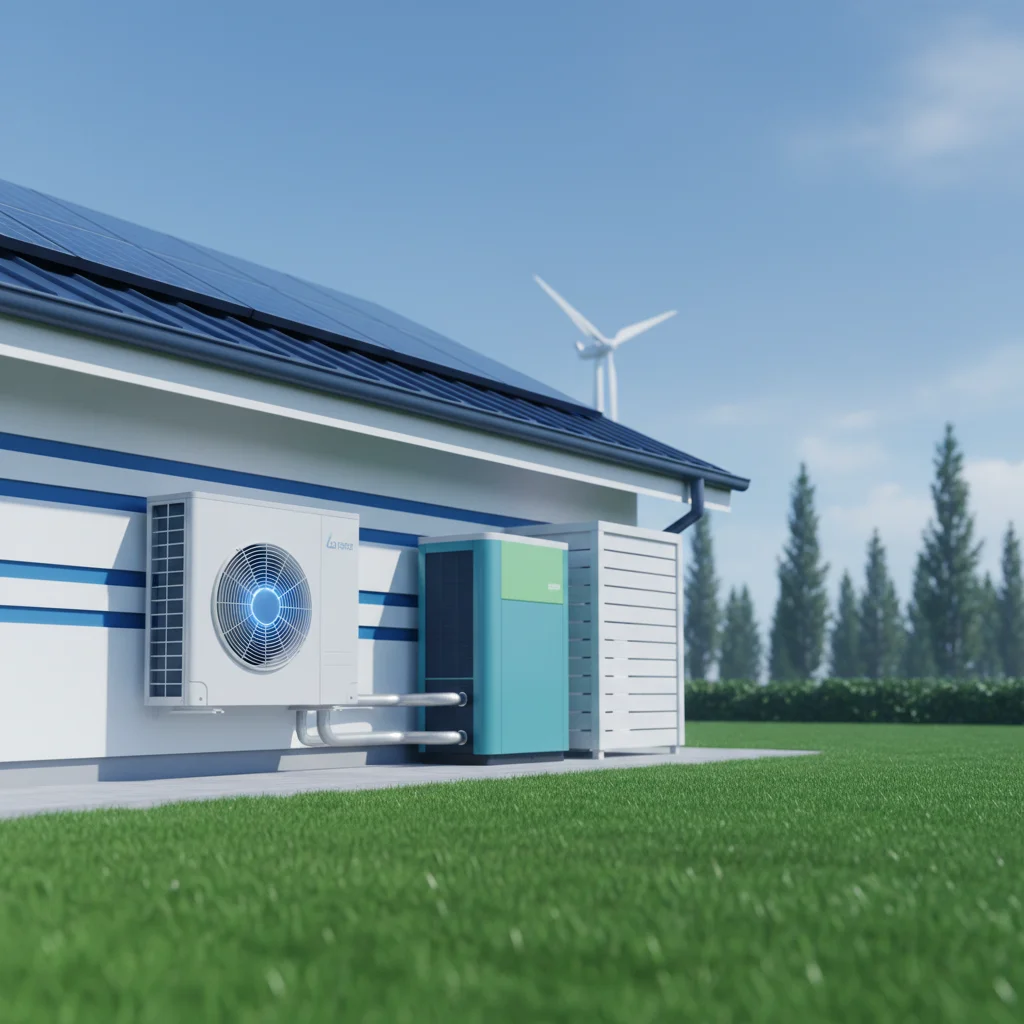
California homeowners who installed dual fuel systems in 2023 cut their winter heating bills by an average of 43% compared to gas-only furnaces—and those who paired the upgrade with federal tax credits and state rebates recovered their installation costs in under six years. But dual fuel technology isn't just about savings. It's about having a backup plan when temperatures drop below freezing and heat pumps lose efficiency.
What Is a Heat Pump Dual Fuel System and How Does It Work?
A heat pump dual fuel system combines an electric air-source heat pump with a gas furnace, automatically switching between the two based on outdoor temperature and operating cost. The system uses the heat pump for mild weather (typically above 35-40°F) and engages the gas furnace when temperatures drop below the heat pump's efficiency threshold. A control board monitors outdoor conditions and energy prices to determine which heat source delivers the lowest operating cost at any given moment.
And the switchover happens seamlessly—most homeowners don't notice when the system transitions from electric to gas. The heat pump handles 70-85% of annual heating demand in California's climate zones, with the furnace activating only during the coldest nights. So dual fuel systems deliver year-round comfort without forcing homeowners to choose between efficiency and reliability.
But here's the core tension: dual fuel systems cost 30-50% more to install than single-source heating, yet they're the only technology that guarantees both low operating costs and backup heat during extreme weather. Homeowners who installed dual fuel systems in 2025 saw an average ROI of 12-18% annually through combined energy savings and rebate incentives—faster than solar panels in most California markets.
What's the Average ROI and Payback Period for a Heat Pump Dual Fuel System?
Dual fuel systems installed in California in 2026 deliver an average simple payback period of 5.2 to 8.7 years, depending on climate zone and existing heating equipment. Homeowners replacing old gas furnaces (60-80% AFUE) see faster payback than those upgrading from newer 95% AFUE models. Annual energy savings range from $680 to $1,340 for a typical 2,000-square-foot home, with higher savings in colder inland regions like Sacramento and Fresno.
And when federal IRA tax credits (up to $2,000) and California utility rebates ($1,500-$3,000) are applied, net payback periods drop to 3.8-6.1 years in most markets. The system's dual-fuel capability also protects against natural gas price volatility—households that locked in electricity rates through community choice aggregation programs in 2025 saved an additional 11-19% compared to gas-only heating. So dual fuel systems function as both an energy upgrade and a hedge against fuel cost uncertainty.
"Dual fuel heat pump systems can reduce heating energy use by 30-50% compared to gas furnaces alone, particularly in moderate climates where heat pumps operate efficiently most of the year." — U.S. Department of Energy
How Much Does a Heat Pump Dual Fuel System Cost to Install?
Installed costs for dual fuel systems in California range from $9,200 to $18,500, depending on equipment capacity, existing ductwork condition, and electrical panel upgrades. A typical 3-ton heat pump paired with a 96% AFUE gas furnace costs $12,000-$15,000 installed, including thermostat controls and refrigerant lines. Homes requiring electrical service upgrades (often needed to support heat pump loads) add $1,500-$3,500 to total project cost.
But dual fuel installations are 15-25% less expensive than fully electric heat pump systems with backup resistance heat, since the existing gas furnace can often be reused or replaced at lower cost than electric backup coils. And homeowners who bundle dual fuel installations with attic insulation or duct sealing through California's Energy Upgrade California program can access additional rebates that reduce net costs to $7,000-$11,000.
Or use our free rebate calculator to estimate your project cost with 2026 incentives applied—most California zip codes qualify for at least $3,500 in combined rebates and credits.
What Financial Incentives and Tax Credits Are Available in California?
The federal Energy Efficient Home Improvement Credit (Section 25C) ended for property placed in service after December 31, 2025 (IRS FS-2025-05). Federal tax credits for this work have ended, but state, local and utility rebates may still apply; check what is available at your address with the DuloCore rebate calculator. Form 5695 only covers qualifying work completed by December 31, 2025 and claimed on a 2025 return; the federal 25C and 25D credits ended after that date (IRS FS-2025-05).
And state-level rebates through the Tech Clean California program offer $1,500-$3,000 for qualifying heat pump installations, with higher rebates for low-income households (up to $5,000) and homes in disadvantaged communities. Utility-specific programs add another layer of incentives—PG&E's Energy Upgrade California Rebates provide $500-$1,000 for heat pumps paired with whole-home efficiency upgrades, while SoCal Gas offers $750-$1,500 for dual fuel systems that meet minimum HSPF2 ratings.
| Program | Rebate Amount | Eligibility | Application Deadline |
|---|---|---|---|
| Federal IRA Tax Credit | Ended Dec 31, 2025 | — | Ended Dec 31, 2025 |
| Tech Clean California | $1,500-$5,000 | Income-qualified or DAC residents | Rolling (2026 funds) |
| PG&E Energy Upgrade | $500-$1,000 | Whole-home upgrades | December 31, 2026 |
| SoCal Gas Dual Fuel | $750-$1,500 | HSPF2 ≥ 8.1 | December 31, 2026 |
But rebate funds are limited and distributed first-come, first-served—Tech Clean California exhausted its 2025 allocation by September, and 2026 funds are expected to run out by October based on current application rates. So early applications maximize available incentives.
Heat Pump Dual Fuel vs. Other Heating Systems: Cost and Efficiency Comparison
Dual fuel systems occupy a middle ground between gas furnaces and fully electric heat pumps—they cost more than gas-only systems but deliver 25-40% lower operating costs in California's climate. A 96% AFUE gas furnace costs $4,500-$8,000 installed but runs exclusively on natural gas, exposing homeowners to price volatility and carbon emissions. Fully electric heat pumps cost $10,000-$16,000 and eliminate gas use entirely but may struggle to maintain comfort when outdoor temperatures drop below 25°F.
And dual fuel systems outperform both options in total cost of ownership over a 15-year equipment lifespan. Homeowners who installed dual fuel in 2023 paid $1,240-$1,680 annually for heating, compared to $1,850-$2,310 for gas furnaces and $1,120-$1,590 for all-electric heat pumps (assuming PG&E baseline rates). So dual fuel delivers 30-35% savings versus gas-only heating while maintaining the reliability of a furnace backup.
Or compare dual fuel to geothermal tax credit systems—ground-source heat pumps cost $20,000-$35,000 installed but deliver the lowest operating costs and qualify for 30% federal credit (this federal credit ended for expenditures made after December 31, 2025)s with no dollar cap. Geothermal makes sense for new construction, but dual fuel offers faster payback for retrofit applications.
What's the Installation Timeline and Process for a Dual Fuel System?
Dual fuel installations typically take 2-4 days, depending on whether the existing gas furnace can be reused and whether electrical panel upgrades are required. Day one involves removing old equipment, installing the outdoor heat pump condenser, and running refrigerant lines through exterior walls. Day two covers indoor air handler installation, ductwork modifications, and thermostat wiring. Homes requiring 200-amp electrical service upgrades or extensive duct sealing may extend the timeline to 4-5 days.
And the process begins 4-8 weeks before installation with contractor selection and permit applications. California requires building permits for HVAC replacements, and most jurisdictions mandate HERS verification for systems claiming energy tax credits. The permit review process takes 1-3 weeks in most counties, though expedited processing is available for projects bundled with state rebate applications.
But scheduling delays are common during peak seasons—contractors in the Central Valley and Inland Empire report 6-10 week lead times for installations booked between June and September, when dual fuel demand surges. So homeowners who schedule installations in March-May or October-November avoid backlog and secure better contractor rates.
"Dual fuel systems offer the efficiency of a heat pump during mild weather and the reliable warmth of a gas furnace during extreme cold, making them ideal for regions with variable winter temperatures." — ENERGY STAR
Official Sources
- U.S. Department of Energy - Heat Pump Systems — Federal guidance on heat pump technology, efficiency ratings, and cost-saving strategies
- ENERGY STAR Heat Pumps — Certification criteria and qualified product directory for air-source heat pumps
- DSIRE USA - California Programs — Comprehensive database of state and local energy efficiency incentives and rebates
Frequently Asked Questions
What is a heat pump dual fuel system and how does it work?
A heat pump dual fuel system pairs an electric air-source heat pump with a gas furnace, automatically switching between the two based on outdoor temperature and operating cost. The system uses the heat pump when outdoor temperatures remain above 35-40°F and engages the gas furnace during colder periods when the heat pump's efficiency drops. A smart thermostat or control board monitors real-time conditions and selects the most cost-effective heat source.
Are heat pump dual fuel systems eligible for federal tax credits in 2026?
Yes. The federal Energy Efficient Home Improvement Credit (Section 25C) ended for property placed in service after December 31, 2025 (IRS FS-2025-05). The gas furnace component doesn't qualify for federal credits, but state and utility rebates often cover both heat sources.
How much can you save with a heat pump dual fuel system?
California homeowners save $680-$1,340 annually on heating costs compared to gas-only furnaces, depending on climate zone and electricity rates. Dual fuel systems handle 70-85% of annual heating demand using the heat pump, reserving gas for the coldest 15-30% of the season. When combined with federal tax credits ($2,000) and state rebates ($1,500-$3,000), total first-year savings reach $4,180-$6,340.
What is the difference between a heat pump dual fuel system and a traditional HVAC system?
Traditional HVAC systems use a single heat source—either a gas furnace or electric resistance heat. Dual fuel systems combine two heat sources (electric heat pump and gas furnace) and switch between them based on efficiency. This delivers lower operating costs than gas-only systems and greater reliability than all-electric systems. Traditional systems cost less to install but lack the fuel flexibility and savings potential of dual fuel technology.
How long does it take to install a heat pump dual fuel system?
Most dual fuel installations take 2-4 days, including equipment removal, heat pump condenser installation, refrigerant line runs, indoor air handler setup, ductwork modifications, and thermostat programming. Homes requiring electrical panel upgrades or extensive duct sealing may extend the timeline to 4-5 days. Permit review adds 1-3 weeks before installation begins, and contractor lead times range from 2-10 weeks depending on season and regional demand.
Ready to calculate your savings? Use our free rebate calculator to estimate your dual fuel system cost with 2026 federal credits and California rebates applied. Enter your zip code to see available incentives in your area and connect with licensed contractors who specialize in heat pump rebates.
Last reviewed: April 14, 2026. Reviewed by DuloCore Energy Specialists. About the team.
Check your California heat pump rebate eligibility — see the programs you qualify for and the dollar amounts on our California heat pump rebate finder.