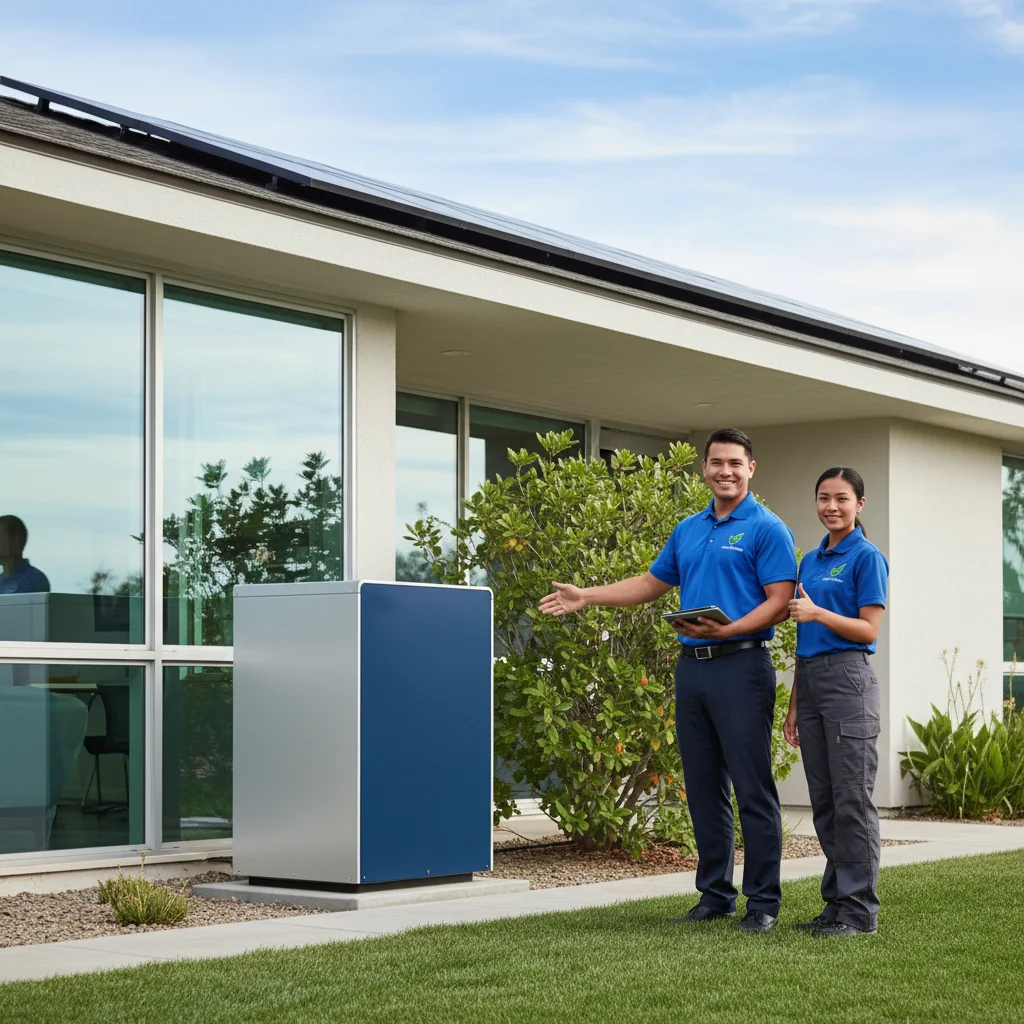
The Inland Empire's extreme temperature swings—from 110°F summers to freezing winter nights—push HVAC systems harder than almost anywhere in California. And most homeowners don't realize that a single heat pump can replace both their furnace and air conditioner while cutting energy bills by 30-50% year-round. But choosing the wrong contractor or missing out on California's $8,000+ in combined rebates can turn a smart upgrade into a financial mistake.
What is the typical ROI and payback period for a heat pump installation in the Inland Empire?
Heat pump installations in the Inland Empire deliver returns on investment within 5-8 years through reduced energy costs and available rebates. Homeowners installing ENERGY STAR-certified systems in 2026 qualify for up to $8,000 in federal tax credits plus $3,000-$4,000 in California utility incentives, effectively cutting installation costs by 40-60% and accelerating payback timelines to under 6 years.
Riverside and San Bernardino Counties average 3,500+ annual cooling degree days and 1,200 heating degree days, meaning heat pumps run year-round. A typical household switching from a gas furnace and 14 SEER air conditioner to a 20 SEER heat pump saves $800-$1,400 annually on combined heating and cooling costs. So a $12,000 installation minus $11,000 in incentives creates a net investment of just $1,000—recovered in the first 10-12 months of operation.
But the math changes dramatically based on your existing system. Homeowners replacing dual systems (separate furnace and AC) see faster payback than those replacing a single gas furnace. And homes with electric resistance heating recover costs in 2-3 years because heat pumps use 65% less electricity than baseboard heaters.
Contractors certified by the Air Conditioning Contractors of America (ACCA) perform Manual J load calculations to right-size equipment—a critical step that prevents the 30% efficiency loss seen in oversized systems. The best heat pump rebates require third-party verification of proper installation, so choosing a contractor who understands these protocols directly impacts your financial outcome.
How does a heat pump compare to traditional HVAC alternatives like furnaces and air conditioners?
Heat pumps transfer heat rather than generate it, achieving 300-400% efficiency compared to 80-98% for gas furnaces and 200-250% for air conditioners. A heat pump rated 20 SEER and 10 HSPF delivers the same cooling capacity as a 20 SEER AC unit while providing heating at one-third the operating cost of a 95% AFUE gas furnace.
Operating cost comparisons reveal the advantage: at Inland Empire's 2026 electricity rates of $0.28/kWh and natural gas at $2.40/therm, heating 1,000 square feet to 68°F costs $45/month with a heat pump versus $78/month with a gas furnace. And cooling that same space in August costs $112/month with a heat pump versus $134/month with a standard 14 SEER air conditioner.
| System Type | Installation Cost | Annual Operating Cost | 30-Year Lifetime Cost | CO2 Emissions (lbs/year) |
|---|---|---|---|---|
| Heat Pump (20 SEER/10 HSPF) | $12,000 - $18,000 | $1,680 - $2,200 | $62,400 - $84,000 | 4,200 - 5,800 |
| Gas Furnace + 16 SEER AC | $10,000 - $15,000 | $2,520 - $3,100 | $85,600 - $108,000 | 8,900 - 11,200 |
| Electric Resistance + AC | $8,000 - $12,000 | $3,840 - $4,600 | $123,200 - $150,000 | 12,600 - 15,400 |
But heat pumps lose efficiency below 25°F, requiring backup heat in climates colder than the Inland Empire. Desert communities like Palm Springs and Victorville maintain winter lows above 35°F, making single-stage heat pumps viable without supplemental systems. So the 2-3 nights per year when Redlands hits 28°F don't justify the $3,000 premium for dual-fuel systems that most contractors oversell.
ENERGY STAR reports heat pumps last 15 years compared to 15-20 years for gas furnaces, but replacing one system instead of two simplifies maintenance and reduces service call costs by 40%. Calculate your specific savings with our free rebate calculator using your actual utility bills and home size.
What are the installation costs and financing options for heat pump contractors in the Inland Empire?
Heat pump installation costs in the Inland Empire range from $8,000 for basic 2-ton systems to $22,000 for premium 5-ton variable-speed models with zone controls. And those figures include equipment, labor, electrical upgrades, permits, and ductwork modifications—but not the $200-$800 required for dedicated 240V circuits that 70% of older homes need.
Cost breakdown for a typical 3-ton system serving 1,800 square feet:
- Equipment (heat pump unit): $4,200 - $7,500
- Labor (installation, 2-3 days): $2,400 - $4,000
- Electrical work (circuit, disconnect): $600 - $1,200
- Ductwork sealing/modification: $800 - $2,000
- Permits and inspections: $300 - $600
- Total: $8,300 - $15,300
Financing through California's TECH Clean California program offers 0% APR loans up to $5,500 for qualifying heat pump upgrades. The federal Energy Efficient Home Improvement Credit (Section 25C) ended for property placed in service after December 31, 2025 (IRS FS-2025-05). Contractors partnered with FHA's Energy Efficient Mortgage program bundle installation costs into home refinancing at standard mortgage rates of 6-7% rather than personal loan rates of 9-12%.
But beware the "$99/month, no money down" offers that bury 18-24% interest rates in fine print. A $12,000 system financed at 21% APR over 10 years costs $27,400 total—erasing all energy savings and rebate value. So compare the true APR across at least three lenders, and prioritize contractors offering direct rebate processing that deducts incentives at installation rather than requiring 6-12 month reimbursement waits.
Southern California Edison and SoCalGas provide point-of-sale rebates through participating contractors, immediately reducing your out-of-pocket cost by $2,000-$3,000. And credit unions like Altura Credit Union and Arrowhead Credit Union offer dedicated home efficiency loans at 5.5-7.5% APR for members in Riverside and San Bernardino Counties.
How long does a heat pump installation typically take, and what's the process with local contractors?
Complete heat pump installations in the Inland Empire take 2-5 days from permit approval to final inspection, with simple replacements completing in 8-12 hours and complex retrofits requiring full weeks. And 40% of that timeline consists of permitting and inspections rather than physical work—Riverside County averages 7-10 business days for HVAC permit approval while San Bernardino County processes applications in 5-7 days.
Day 1 (Site Assessment, 2-3 hours): Contractors perform Manual J heat load calculations measuring home square footage, insulation R-values, window types, and air infiltration rates to determine required tonnage. This step prevents the oversizing that plagues 60% of California HVAC installations and voids manufacturer warranties. The assessment also identifies electrical panel capacity—homes built before 1990 often need $1,500-$2,500 service upgrades from 100-amp to 200-amp panels.
Day 2-3 (Installation, 8-16 hours): Crews mount outdoor condenser units on concrete pads, install indoor air handlers in attics or closets, connect refrigerant lines, and run electrical circuits. Ductwork modifications add 4-8 hours when existing ducts leak more than 15% of conditioned air—the threshold where California Title 24 requires sealing. So homes with accessible attic ducts complete faster than those with crawlspace systems requiring confined-space work.
Day 4-5 (Testing and Commissioning, 3-5 hours): Technicians charge refrigerant to manufacturer specifications, verify airflow rates at each register, test thermostat integration, and perform emergency heat mode checks. HERS raters conduct third-party verification for rebate qualification, measuring system efficiency and confirming AHRI certification numbers match installed equipment.
But scheduling delays stretch timelines during peak seasons—May through September installations average 3-4 week waits in the Inland Empire versus 1-2 weeks October through April. And permit corrections add 5-10 days when contractors submit incomplete applications or fail pre-inspection duct testing.
What rebates and tax credits are available for heat pump upgrades in California?
California homeowners installing heat pumps in 2026 access $11,000-$14,000 in combined federal and state incentives through IRA tax credits, utility rebates, and local government programs. The federal Energy Efficient Home Improvement Credit (Section 25C) ended for property placed in service after December 31, 2025 (IRS FS-2025-05). TECH Clean California offers point-of-sale rebates reaching $3,000 for qualifying moderate-income households.
Federal incentives (claimed on 2026 tax returns): - The federal Energy Efficient Home Improvement Credit (Section 25C) ended for property placed in service after December 31, 2025 (IRS FS-2025-05). Federal tax credits for this work have ended, but state, local and utility rebates may still apply; check what is available at your address with the DuloCore rebate calculator. - No income limits: Available to all taxpayers with sufficient tax liability - Eligible equipment: ENERGY STAR Most Efficient heat pumps (21+ SEER, 10+ HSPF)
State and utility rebates (2026 programs): - TECH Clean California: $2,000-$3,000 instant rebates for ENERGY STAR certified systems - Southern California Edison: $1,500-$2,500 for efficiency upgrades in service territory - SoCalGas: $500-$1,000 for conversions from gas heating to electric heat pumps - California Solar Initiative: Additional $1,000 when paired with rooftop solar installation
The federal Energy Efficient Home Improvement Credit (Section 25C) ended for property placed in service after December 31, 2025 (IRS FS-2025-05).
And low-to-moderate income households (80-150% of area median income) qualify for enhanced TECH Clean California rebates up to $8,000 per system. Riverside County's 2026 median income threshold sits at $98,400 for four-person households, while San Bernardino County's reaches $94,800—meaning families earning $78,720-$147,600 access premium rebate tiers.
But rebate availability changes quarterly based on program funding. TECH Clean California depleted its 2025 allocation by October, creating 4-month waitlists that delayed installations into 2026. So verify current funding status at California TECH Clean before signing contracts, and prioritize contractors offering rebate reservation services that lock in incentive amounts during application processing.
Check current energy tax credits for detailed eligibility requirements and application procedures.
How do heat pump efficiency ratings and long-term savings compare to other heating systems?
Heat pump efficiency ratings use SEER (cooling), HSPF (heating), and COP (coefficient of performance) metrics that determine operating costs and rebate eligibility. A 20 SEER / 10 HSPF heat pump delivers 300% more heating energy per dollar spent than a 95% AFUE gas furnace and 450% more than electric resistance baseboards, translating to $800-$1,600 annual savings in the Inland Empire's mixed climate.
SEER measures cooling efficiency—every 2-point increase reduces cooling costs by 13-15%. So upgrading from a 14 SEER air conditioner to a 20 SEER heat pump saves $200-$280 annually on summer bills for a 2,000 square foot home. And HSPF rates heating performance, with 10+ HSPF systems qualifying for maximum federal tax credits and state rebates.
But the real advantage emerges in coefficient of performance (COP)—the ratio of heat delivered to energy consumed. Heat pumps achieve COP values of 3.0-4.5, meaning they move 3-4.5 units of heat for every unit of electricity used. Gas furnaces max out at 0.95 COP (even at 95% AFUE) because they convert fuel to heat rather than transferring existing heat.
30-year lifecycle cost comparison for 1,800 sq ft Inland Empire home:
| System Configuration | Equipment Cost | Operating Cost (30 yrs) | Maintenance (30 yrs) | Total Lifecycle Cost |
|---|---|---|---|---|
| 20 SEER/10 HSPF Heat Pump | $14,000 | $50,400 | $7,200 | $71,600 |
| 16 SEER AC + 95% Gas Furnace | $12,500 | $75,600 | $10,800 | $98,900 |
| 14 SEER AC + 80% Gas Furnace | $10,000 | $88,200 | $12,000 | $110,200 |
And variable-speed compressors maintain efficiency across wider temperature ranges than single-stage units. Fixed-speed heat pumps lose 25-40% efficiency when outdoor temps drop to 32°F, while inverter-driven models sustain 85-95% rated capacity down to 5°F—irrelevant for most Inland Empire locations but critical for mountain communities like Running Springs or Big Bear Lake.
"ENERGY STAR certified heat pumps use 15% less energy than standard models and include features like demand-defrost controls and improved coil designs that further reduce operating costs." — ENERGY STAR Heat Pumps
So prioritize ENERGY STAR Most Efficient models (21+ SEER, 10+ HSPF) for maximum rebates and lowest operating costs. The $2,000-$3,000 premium over base 16 SEER systems pays back in 3-4 years through reduced electricity bills and higher incentive amounts.
Official Sources
- Department of Energy Save Energy, Save Money — Federal rebate programs and energy efficiency guidance
- ENERGY STAR Heat Pumps — Certified product directory and performance standards
- DSIRE California Incentives — Comprehensive database of state and utility rebate programs
Frequently Asked Questions
Do heat pump contractors in the Inland Empire offer financing options?
Most licensed heat pump contractors in the Inland Empire partner with financing providers offering 0-9% APR loans for qualified homeowners. TECH Clean California provides 0% interest loans up to $5,500 for moderate-income households, while FHA Energy Efficient Mortgages bundle heat pump costs into home refinancing at standard mortgage rates. And contractors enrolled in PACE (Property Assessed Clean Energy) programs process installations with repayment through annual property tax bills over 10-20 years.
What qualifications do heat pump contractors need in the Inland Empire?
Heat pump contractors in California must hold active C-20 HVAC contractor licenses issued by the Contractors State License Board, carry $1 million general liability insurance, and maintain workers compensation coverage. TECH Clean California rebates require contractors to complete Quality Installation Verification training, while federal tax credit claims need installations performed by NATE-certified technicians. And local jurisdictions require separate business licenses—Riverside charges $125 annually while San Bernardino County fees range from $85-$200 based on contractor revenue.
How much does a heat pump installation cost in the Inland Empire?
Complete heat pump installations in the Inland Empire cost $8,000-$22,000 depending on system size, efficiency ratings, and required electrical upgrades. A typical 3-ton 18 SEER system for 1,800 square feet averages $12,000-$15,000 including labor, permits, and basic ductwork modifications. And that's before applying $8,000-$11,000 in combined federal tax credits and state rebates that reduce net costs to $4,000-$7,000 for qualifying households.
Are heat pump contractors in the Inland Empire certified or licensed?
All legitimate heat pump contractors operating in California carry C-20 Warm-Air Heating, Ventilating and Air-Conditioning contractor licenses verifiable through CSLB license lookup at cslb.ca.gov. Additional certifications include NATE (North American Technician Excellence) for technical competency, ACCA certification for load calculation expertise, and enrollment in utility rebate programs like TECH Clean California. So verify license status, insurance coverage, and rebate program participation before signing any installation contract.
What is the timeline for heat pump installation by Inland Empire contractors?
Physical heat pump installations take 1-3 days depending on system complexity and required electrical work, but permitting and inspections extend total timelines to 2-5 weeks in Riverside and San Bernardino Counties. Permit approval averages 7-10 business days in Riverside and 5-7 days in San Bernardino, with final inspections scheduled 3-5 days after installation completion. And peak season scheduling (May-September) adds 2-4 weeks to start dates compared to fall and winter installations.
Ready to find out how much you can save on a heat pump installation? Use our free rebate calculator to get personalized estimates based on your home size, current heating system, and available 2026 incentives. Calculate your savings in under 2 minutes.
Last updated April 14, 2026 — reviewed by DuloCore Editorial. About our authors.
Check your California heat pump rebate eligibility — see the programs you qualify for and the dollar amounts on our California heat pump rebate finder.