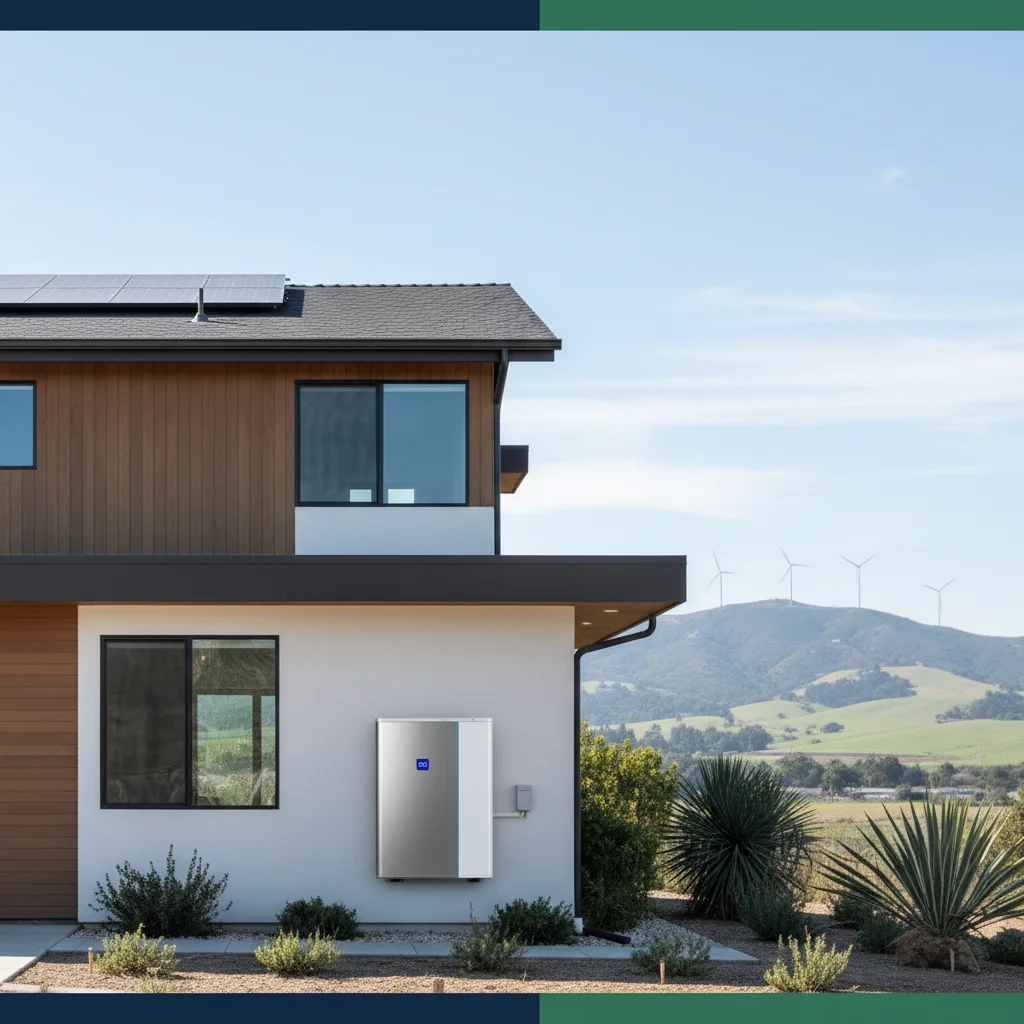
California's Central Valley sees summer highs of 105°F and winter lows of 35°F, creating the perfect climate trap—homeowners pay twice for comfort, running air conditioning six months and heating the other six. But a single heat pump system handles both heating and cooling with 300-400% efficiency, cutting energy costs by $800-$1,500 annually compared to traditional furnace-and-AC combinations.
What's the ROI and Payback Period for Heat Pumps in the Central Valley?
Heat pump installations in California's Central Valley deliver return on investment through utility bill reductions of $800-$1,500 per year, with typical payback periods of 5-8 years depending on system size, existing equipment, and electricity rates. Homeowners replacing both furnace and air conditioning see faster payback than those replacing only one system.
And the economics get better with incentives. The federal Energy Efficient Home Improvement Credit (Section 25C) ended for property placed in service after December 31, 2025 (IRS FS-2025-05). California's Tech Clean California program offers rebates up to $3,000 for qualifying income-eligible households. So a $12,000 installation drops to $8,400 after federal credits, reducing payback to 4-6 years in most Central Valley zip codes.
PG&E customers in the Central Valley pay an average of $0.32 per kWh during peak summer months. Heat pumps use 50-70% less electricity than resistance heating and traditional AC combinations. A 3-ton heat pump serving a 1,800-square-foot home typically saves $115-$145 monthly during peak cooling season, May through September.
Or consider this: the average Central Valley home spends $2,400 annually on heating and cooling with conventional systems. Heat pumps cut that to $1,100-$1,600, creating $900-$1,300 in annual savings that compound over the system's 15-20 year lifespan.
How Do Heat Pumps Compare to Furnaces, Air Conditioners, and Other Alternatives?
Heat pumps deliver both heating and cooling through a single system with 300-400% efficiency, measured as Coefficient of Performance (COP), compared to natural gas furnaces at 80-98% efficiency and traditional air conditioners at 200-300% efficiency. California's Central Valley climate maximizes heat pump advantages since outdoor temperatures rarely drop below 25°F.
But the comparison requires examining total system costs. Installing separate furnace and AC units costs $8,000-$14,000 combined, while a complete heat pump system runs $10,000-$18,000 depending on capacity and efficiency ratings. The higher upfront cost pays back through lower operating costs—heat pumps cost $0.08-$0.12 per therm-equivalent for heating versus $0.18-$0.25 for natural gas furnaces when electricity rates average $0.30 per kWh.
| System Type | Upfront Cost | Annual Operating Cost | Lifespan | 2026 Federal Credit |
|---|---|---|---|---|
| Heat Pump (full replacement) | $10,000-$18,000 | $1,100-$1,600 | 15-20 years | 30% up to $2,000 |
| Furnace + AC (separate) | $8,000-$14,000 | $2,000-$2,800 | 15-18 years | AC only: 30% up to $600 |
| Ductless Mini-Split Heat Pump | $3,500-$7,500 per zone | $600-$1,200 per zone | 20-25 years | 30% up to $2,000 |
And Central Valley homeowners gain climate-specific advantages. Heat pumps maintain efficiency down to 25°F outdoor temperature, covering 99% of winter days in Fresno, Modesto, and Stockton. So supplemental heating remains unnecessary except during rare freeze events.
"Air-source heat pumps can provide efficient heating and cooling for your home. When properly installed, an air-source heat pump can deliver one-and-a-half to three times more heat energy to a home than the electrical energy it consumes." — ENERGY STAR Heat Pumps
How Long Do Heat Pumps Last and What's the Typical Lifespan in Central Valley Climate?
Heat pump systems installed in California's Central Valley last 15-20 years with proper maintenance, matching or exceeding the 15-18 year lifespan of traditional furnace-and-AC combinations. Central Valley climate extends heat pump longevity compared to extreme cold regions since units avoid the stress of heating-mode operation below 15°F outdoor temperature.
Lifespan depends heavily on maintenance frequency and installation quality. Heat pumps serviced annually by certified HVAC technicians reach 18-20 years, while neglected systems fail at 12-15 years. And the Central Valley's dust and agricultural particulates require quarterly filter changes versus biannual changes in coastal regions.
But component warranties reveal manufacturer confidence. Compressor warranties run 10 years on premium models from Carrier, Trane, and Lennox, while parts warranties cover 5-7 years. Labor warranties from licensed contractors add 1-2 years. So total coverage reaches 12 years on high-end installations.
Ductless mini-split heat pumps outlast ducted systems by 3-5 years, averaging 20-25 years in Central Valley installations. Mini-splits eliminate duct leakage that forces systems to work harder, reducing component wear. Or think of it this way: every percentage point of efficiency loss from leaky ducts subtracts 6-8 months from system lifespan.
Check your rebate calculator to see how equipment efficiency ratings affect both incentive amounts and long-term savings.
What Are the Upfront Costs and Financing Options for Heat Pump Installation?
Heat pump installation costs in California's Central Valley range from $10,000 to $18,000 for whole-home ducted systems, with ductless mini-split systems starting at $3,500 per indoor zone. Costs vary based on system capacity (measured in tons), efficiency ratings (SEER2 and HSPF2), and whether existing ductwork requires modification or replacement.
And that $10,000-$18,000 range breaks down into specific components. Equipment costs run $4,500-$9,000 for the outdoor unit and air handler, while installation labor adds $3,000-$5,500 depending on complexity. Duct modifications or electrical panel upgrades add $1,200-$3,500. So a straightforward replacement in a home with compatible electrical service and ducts sits at the low end.
But upfront costs drop significantly with available financing. California's TECH Clean California program offers zero-interest financing up to $8,000 for income-qualified households. And contractor-arranged financing through Synchrony, GreenSky, or Service Finance typically runs 5.99-8.99% APR for 60-84 month terms, dropping monthly payments to $180-$280 for a $12,000 installation.
PG&E's Energy Efficiency Financing program provides on-bill financing at 0% interest for 12 months on qualifying heat pump installations. Or homeowners tap home equity lines of credit (HELOCs) averaging 7.5-9.5% APR in 2026, still lower than credit card rates of 18-24% that some contractors accept.
The federal Energy Efficient Home Improvement Credit (Section 25C) ended for property placed in service after December 31, 2025 (IRS FS-2025-05).
What Rebates and Tax Credits Are Available for Central Valley Homeowners?
California Central Valley homeowners installing heat pumps in 2026 qualify for federal tax credits covering 30% of installation costs up to $2,000 annually through the Inflation Reduction Act, plus state and utility rebates ranging from $500 to $3,000 depending on income and system efficiency. These incentives stack, reducing net installation costs by $3,500-$7,000 on typical projects.
Form 5695 only covers qualifying work completed by December 31, 2025 and claimed on a 2025 return; the federal 25C and 25D credits ended after that date (IRS FS-2025-05). Federal tax credits for this work have ended, but state, local and utility rebates may still apply; check what is available at your address with the DuloCore rebate calculator.
California's TECH Clean California program delivers point-of-sale rebates up to $3,000 for income-qualified households, applied directly at installation to reduce upfront costs. Eligibility requires household income below 80% of Area Median Income—$74,200 for a family of four in Fresno County or $89,600 in San Joaquin County as of 2026.
| Incentive Program | Amount | Eligibility | Application Process |
|---|---|---|---|
| Federal IRA Tax Credit | Ended Dec 31, 2025 | — | — |
| TECH Clean California | $500-$3,000 | Income ≤80% AMI | Contractor applies at point of sale |
| PG&E Energy Savings Assistance | $1,000-$1,500 | Income ≤200% federal poverty level | Pre-qualification required |
But rebate availability changes annually based on program funding. And some programs require pre-approval before installation begins. So homeowners contact their utility provider or visit California's rebate database to verify current 2026 program details.
Learn more about qualifying equipment and income thresholds in our guide to heat pump rebates.
How to Choose the Right Heat Pump Contractor in the Central Valley
Qualified heat pump contractors in California's Central Valley hold active C-20 HVAC licenses from the California Contractors State License Board, carry minimum liability insurance of $1 million, and maintain manufacturer certifications from brands like Carrier, Trane, Lennox, or Mitsubishi. Homeowners verify license status at cslb.ca.gov using the contractor's license number before signing any agreement.
And manufacturer certification matters for warranty protection. Carrier Factory Authorized Dealers and Trane Comfort Specialists receive extended parts warranties and access to technical support that unlicensed installers can't provide. So installations by certified technicians qualify for 10-year compressor warranties versus 5-year warranties from non-certified contractors.
But certification alone doesn't guarantee quality installation. Request Manual J load calculations that determine proper system sizing based on home square footage, insulation levels, window area, and orientation. Oversized systems short-cycle and fail prematurely, while undersized systems run continuously without reaching target temperatures. So proper sizing extends equipment life by 3-5 years and maintains manufacturer warranty coverage.
Experience with local building codes and utility rebate programs saves time and money. Contractors familiar with PG&E and SMUD rebate applications complete paperwork correctly on first submission, avoiding 4-8 week delays from rejected applications. Or they identify opportunities to combine multiple incentive programs that homeowners researching independently miss.
References from recent Central Valley installations reveal contractor reliability. Request three references from projects completed in the past 12 months, then verify system performance and contractor responsiveness to warranty calls. And online reviews on Google, Yelp, and Better Business Bureau show patterns of customer satisfaction or complaints.
Compare detailed written estimates from three contractors before deciding. Estimates should itemize equipment model numbers with efficiency ratings, labor costs, permit fees, and electrical upgrades. So apples-to-apples comparison becomes possible when one contractor quotes a 16 SEER2 system and another proposes 18 SEER2 equipment.
For detailed cost breakdowns and savings estimates, explore our energy tax credits guide.
Official Sources
- U.S. Department of Energy - SAVE — Federal tax credits and energy efficiency guidance for homeowners (note: the federal 25C and 25D credits ended for projects completed after December 31, 2025)
- ENERGY STAR Heat Pumps — Equipment certification standards and qualified product listings
- DSIRE USA California Programs — Comprehensive database of state and utility rebate programs
Related Reading: Learn more about Heat Pump Rebates Central Valley.
Frequently Asked Questions
How do I find a qualified heat pump contractor in the Central Valley?
Start with the California Contractors State License Board website at cslb.ca.gov to verify active C-20 HVAC licenses and check complaint history. Then request referrals from neighbors who recently installed heat pumps, or search manufacturer dealer locators on Carrier, Trane, and Lennox websites for factory-certified contractors. And compare written estimates from three contractors, verifying each includes Manual J load calculations, equipment specifications with SEER2/HSPF2 ratings, and itemized costs for labor, permits, and electrical upgrades.
What certifications should a heat pump contractor have?
California heat pump contractors must hold an active C-20 HVAC license from the Contractors State License Board, plus manufacturer certifications from equipment brands they install. North American Technician Excellence (NATE) certification demonstrates advanced HVAC knowledge, while ENERGY STAR Partner certification indicates familiarity with federal tax credit requirements. And contractors participating in TECH Clean California rebate programs complete additional training on income-qualified incentive applications. Liability insurance of $1 million minimum and workers' compensation coverage protect homeowners from installation accidents.
How much does a heat pump installation cost in the Central Valley?
Complete heat pump installations in California's Central Valley cost $10,000-$18,000 for ducted whole-home systems or $3,500-$7,500 per zone for ductless mini-splits. Costs include equipment ($4,500-$9,000), installation labor ($3,000-$5,500), permits ($150-$400), and potential electrical upgrades ($800-$2,500). And final costs depend on system capacity, efficiency ratings, existing ductwork condition, and electrical panel capacity. Federal tax credits reduce net costs by 30% up to $2,000, while California rebates add $500-$3,000 for income-qualified households.
Are heat pump contractors eligible for rebates in California?
Homeowners receive heat pump rebates, not contractors, but contractors facilitate rebate applications through programs like TECH Clean California and PG&E Energy Savings Assistance. Contractors enrolled as TECH Clean California participating dealers apply point-of-sale rebates directly at installation, reducing customer upfront costs by $500-$3,000. And contractors familiar with utility rebate requirements ensure installations meet minimum efficiency standards—typically 16 SEER2 and 9.0 HSPF2—that qualify equipment for both state and federal incentives.
What is the difference between a heat pump and a traditional air conditioning system?
Heat pumps provide both heating and cooling by reversing refrigerant flow, while traditional air conditioners only cool and require separate furnaces for heating. Both systems use similar refrigeration cycles during cooling mode, but heat pumps add a reversing valve that switches operation to extract heat from outdoor air and pump it indoors during winter. And efficiency differences matter—heat pumps deliver 300-400% efficiency in heating mode versus 80-98% for gas furnaces, saving $800-$1,500 annually in Central Valley climate zones.
Ready to calculate your heat pump savings and available rebates? Use our free rebate calculator to get personalized estimates based on your home's location, size, and current heating system. Get your results in 60 seconds.
Last updated: April 14, 2026. Reviewed by the DuloCore Editorial Team. About our authors.
Check your California heat pump rebate eligibility — see the programs you qualify for and the dollar amounts on our California heat pump rebate finder.