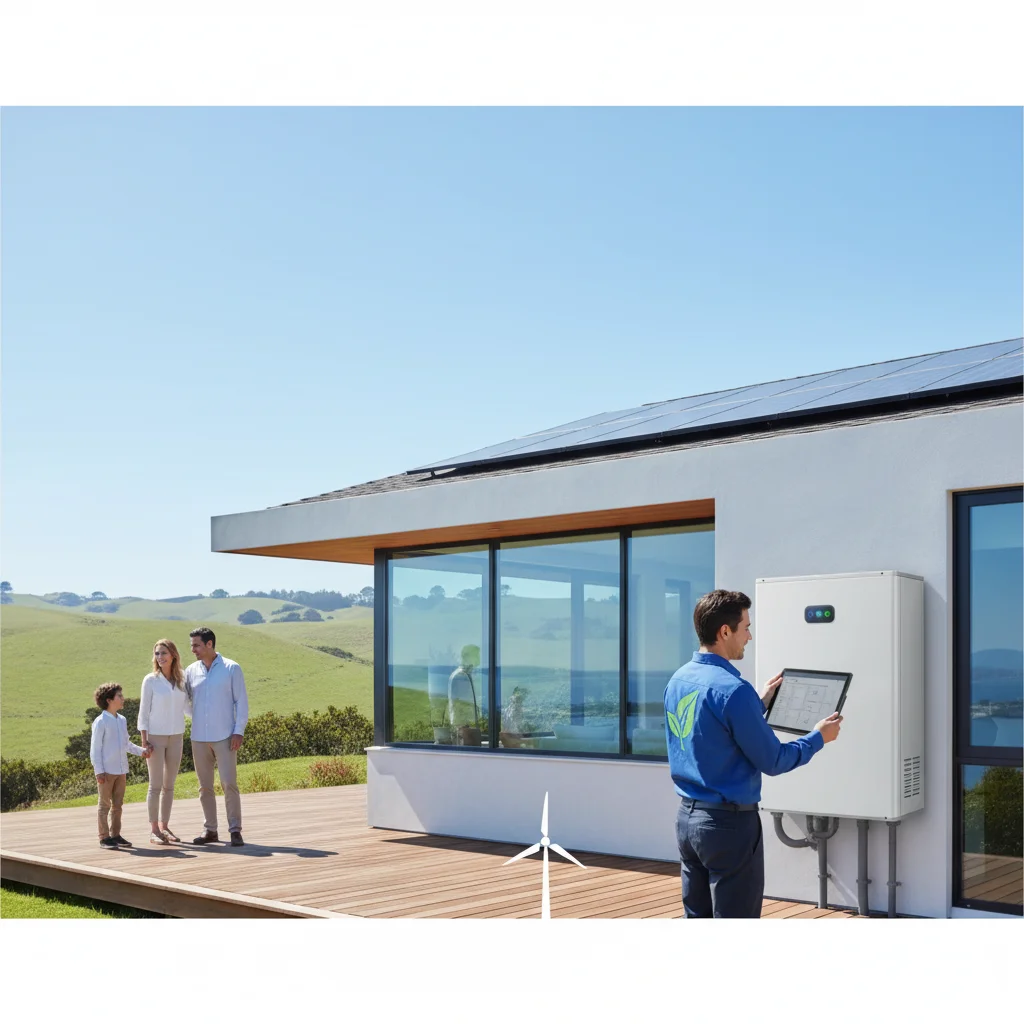
Bay Area homeowners spend an average of $18,000 annually on heating and cooling — nearly double the national average — yet most still rely on decades-old gas furnaces that waste 30-40% of the energy they consume. The region's mild winters and rising natural gas prices make 2026 the inflection point where heat pumps deliver faster payback than anywhere else in California.
How Much Does a Heat Pump Installation Cost in the Bay Area?
Heat pump installations in the Bay Area range from $8,000 to $25,000 depending on system type, home size, and existing infrastructure. Air-source heat pumps average $12,000-$18,000 for a 2,000-square-foot home, while ground-source (geothermal) systems cost $20,000-$35,000. Installation complexity adds $2,000-$5,000 if ductwork modifications or electrical panel upgrades are required. These figures reflect 2026 labor rates in San Francisco, Oakland, and San Jose metro areas.
The federal Energy Efficient Home Improvement Credit (Section 25C) ended for property placed in service after December 31, 2025 (IRS FS-2025-05). Federal tax credits for this work have ended, but state, local and utility rebates may still apply; check what is available at your address with the DuloCore rebate calculator. So a $15,000 air-source installation drops to $10,500 after federal incentives. But regional utility rebates from PG&E and Peninsula Clean Energy stack on top of federal credits, reducing net costs by an additional $3,000-$5,000 depending on income eligibility.
Material costs account for 40-50% of total installation expenses. Labor runs $75-$150 per hour depending on contractor expertise and project complexity. Permits cost $300-$800 across Bay Area jurisdictions. And post-installation commissioning — verifying refrigerant charge, airflow, and thermostat calibration — adds $200-$400 but ensures optimal efficiency.
Contractors typically break costs into equipment (compressor, air handler, refrigerant lines), labor (installation, ductwork, electrical), and ancillary fees (permits, disposal of old equipment, warranty registration). Financing through Property Assessed Clean Energy (PACE) programs spreads costs over 10-20 years through property tax bills at 5-8% interest rates.
What Are the Main Alternatives to Heat Pumps for Bay Area Homes?
Gas furnaces paired with central air conditioning remain the default configuration for 62% of Bay Area homes, costing $6,000-$12,000 for equipment and installation. Natural gas rates in the region averaged $2.89 per therm in early 2026 — 47% higher than the 2020-2024 average — making gas heating increasingly expensive relative to electric heat pumps.
Ductless mini-split systems serve as the middle ground, costing $3,000-$6,000 per zone and requiring no ductwork. Multi-zone configurations for whole-home comfort run $12,000-$18,000 for three to four zones. Mini-splits deliver 90-95% efficiency but can't provide whole-home heating as seamlessly as ducted systems.
Resistance electric heaters — baseboard units or wall-mounted panels — cost $100-$500 per room but operate at 100% efficiency with no heat multiplication. So every dollar spent on electricity produces exactly one dollar of heat, while heat pumps generate $2-$4 of heat per dollar through refrigerant compression cycles.
| System Type | Upfront Cost | Annual Operating Cost | Lifespan | 2026 Incentives Available |
|---|---|---|---|---|
| Air-Source Heat Pump | $12,000-$18,000 | $800-$1,200 | 15-20 years | 30% federal credit (this federal credit ended for property placed in service after December 31, 2025) + $3,000-$5,000 utility rebates |
| Gas Furnace + AC | $8,000-$14,000 | $1,400-$2,100 | 15-18 years | Limited (gas appliances phased out) |
| Ductless Mini-Split | $9,000-$15,000 (3 zones) | $900-$1,300 | 15-20 years | 30% federal credit + limited utility rebates |
| Electric Resistance | $600-$2,000 | $2,200-$3,500 | 20-30 years | None |
And Bay Area climate data shows 180-210 heating degree days annually — far fewer than the 4,000-5,000 days in cold climates. So heat pumps operate in their most efficient temperature range (above 40°F) for 95% of the heating season.
How Do Heat Pumps Compare to Gas Furnaces and Air Conditioners?
Heat pumps transfer heat rather than generate it, achieving 300-400% efficiency (Coefficient of Performance 3-4) compared to 80-95% for gas furnaces. A gas furnace rated at 95% AFUE still loses 5% of fuel energy up the flue, while heat pumps lose only 60-75% to electricity generation and transmission inefficiencies — but multiply that remaining energy 3-4 times through the refrigeration cycle.
Operating costs for a 2,000-square-foot Bay Area home average $1,000-$1,400 annually for heat pumps versus $1,600-$2,200 for gas furnaces with AC, based on 2026 PG&E electric rates of $0.34-$0.42 per kWh and gas at $2.89 per therm. And savings increase 8-12% annually as electricity rates from renewable sources stabilize while natural gas prices track volatile commodity markets.
Dual-fuel systems — heat pumps with gas furnace backup — cost $15,000-$22,000 installed but optimize efficiency by switching to gas only when outdoor temperatures drop below 35°F. But Bay Area temperatures rarely fall below 40°F, so dual-fuel configurations make more sense in Sacramento or the Central Valley than in San Francisco or San Jose.
Maintenance costs for heat pumps run $150-$250 annually for filter changes and refrigerant checks, comparable to gas furnaces at $120-$200 for annual tune-ups. But heat pumps eliminate the safety risks and carbon monoxide concerns of combustion appliances.
And heat pumps provide both heating and cooling in a single system, eliminating the need for separate AC units. Gas furnace homes require $4,000-$8,000 in additional AC equipment, while heat pumps handle both functions with one outdoor compressor and one indoor air handler.
What Rebates and Tax Credits Are Available for Bay Area Heat Pump Installations?
The federal Residential Clean Energy Credit (Section 25D) ended for expenditures made after December 31, 2025, and the IRS treats an expenditure as made when installation is completed (IRS FS-2025-05). A $15,000 heat pump installation generates a $4,500 tax credit claimed on Form 5695. And the credit covers equipment, labor, permitting, and ductwork modifications required for installation.
PG&E's Energy Savings Assistance Program offers $3,000-$6,000 rebates for income-qualified households (below 200% of federal poverty level) installing heat pumps in 2026. Peninsula Clean Energy provides $2,000-$4,000 rebates for all customers, with higher amounts for all-electric conversions.
BayREN (Bay Area Regional Energy Network) administers $3,000 rebates for heat pump water heater installations paired with space heating upgrades. And TECH Clean California offers point-of-sale rebates up to $3,000 for contractors who pre-qualify projects, reducing customer upfront costs immediately rather than waiting for tax season.
| Program | Amount | Eligibility | Application Process | 2026 Funding Status |
|---|---|---|---|---|
| Federal Tax Credit | Ended Dec 31, 2025 | — | — | Ended Dec 31, 2025 |
| PG&E Energy Savings Assistance | $3,000-$6,000 | Income ≤ 200% poverty level | Apply through PG&E contractor | $85 million allocated |
| Peninsula Clean Energy | $2,000-$4,000 | All PCE customers | Online application + contractor verification | $12 million remaining |
| BayREN | $3,000 | Combined heat pump + water heater | Through participating contractors | Limited funding (first-come basis) |
| TECH Clean California | Up to $3,000 | All homeowners | Contractor applies at point of sale | $120 million statewide |
Incentives stack — homeowners routinely combine federal credits with utility rebates to reduce net costs by 50-60%. So a $16,000 installation costs $6,400-$8,000 out of pocket after a $4,800 federal credit and $3,200 utility rebate.
And income-qualified households access additional programs: the California Alternate Rates for Energy (CARE) program reduces electric rates by 20-35%, lowering heat pump operating costs by $180-$280 annually. Use our free rebate calculator to estimate combined federal and local incentives for your specific project.
What's the Process for Hiring a Heat Pump Contractor in the Bay Area?
Start by verifying California contractor license status through the Contractors State License Board (CSLB) at cslb.ca.gov — active C-20 (Warm-Air Heating, Ventilation, and Air-Conditioning) licenses indicate legal authority to perform heat pump installations. And confirm liability insurance coverage of at least $1 million and workers' compensation insurance to protect against on-site injuries.
Request three to five written quotes specifying equipment brands and model numbers, SEER2/HSPF2 efficiency ratings, warranty terms (typically 5-10 years parts, 1-2 years labor), and project timelines. Compare load calculations — the Manual J analysis determining required heating and cooling capacity — to ensure proper system sizing. Oversized systems cycle frequently and waste energy, while undersized units can't maintain comfort.
Check references from recent installations (last 6-12 months) and review online ratings on platforms like Yelp, Google Business, and Better Business Bureau. And verify participation in utility rebate programs — contractors enrolled in TECH Clean California or BayREN can process incentive paperwork directly, reducing administrative burden.
Schedule on-site assessments with top two to three candidates. Qualified contractors measure existing ductwork, inspect electrical panels for 200-amp service (minimum for most heat pumps), evaluate insulation and air sealing needs, and discuss equipment options across price tiers.
Contracts should itemize all costs (equipment, labor, permits, disposal fees), specify start and completion dates, outline payment schedules (typically 10% deposit, 40% at rough-in, 50% at completion), and include lien waivers from subcontractors. And confirm post-installation services: commissioning, thermostat programming, homeowner training, and maintenance plans.
North American Technician Excellence (NATE) certification indicates technician competency in heat pump installation and service. And manufacturers like Mitsubishi, Daikin, and Carrier maintain approved contractor networks with additional training requirements.
How Long Does a Heat Pump Installation Take?
Straightforward replacements — swapping existing ducted AC and furnace for a heat pump in homes with adequate electrical service and no ductwork modifications — take one to two days for a crew of two to three technicians. Day one covers equipment removal, mounting the outdoor compressor, installing the indoor air handler, and running refrigerant lines. Day two involves electrical connections, thermostat installation, system startup, and commissioning.
Complex installations requiring electrical panel upgrades (60-amp to 200-amp service) add two to three days for utility coordination and inspection approvals. Ductwork modifications — sealing leaks, adding return air paths, or reconfiguring supply vents — extend timelines by one to three days depending on accessibility and scope.
Ground-source (geothermal) installations take one to two weeks due to drilling or trenching requirements. Vertical bore systems drill 150-400 feet deep and require specialized equipment and geological surveys. Horizontal loop fields need excavation across 1,500-3,000 square feet of yard space at 6-8 feet depth.
| Installation Scenario | Typical Duration | Variables Affecting Timeline |
|---|---|---|
| Simple replacement (existing ducts, adequate electrical) | 1-2 days | Weather delays, permit processing |
| Electrical panel upgrade required | 3-4 days | Utility scheduling, inspection availability |
| Minor ductwork modifications | 2-3 days | Access limitations (attic/crawlspace), duct complexity |
| Major ductwork overhaul | 4-6 days | Home layout, asbestos testing (pre-1980 homes) |
| Ground-source (geothermal) | 7-14 days | Soil conditions, lot size, drilling permits |
Permitting adds one to three weeks to project timelines depending on jurisdiction. San Francisco requires virtual plan checks taking 10-15 business days, while smaller cities like San Mateo or Fremont process permits in three to five days.
And scheduling availability varies seasonally — contractors book out two to four weeks during spring and fall (peak HVAC seasons) but offer one to two-week lead times in winter. Bay Area labor shortages mean experienced C-20 contractors stay busy year-round.
Official Sources
- DOE Energy Saver: Heat Pumps — Federal guidance on heat pump types, efficiency ratings, and selection criteria
- ENERGY STAR Heat Pump Specifications — Minimum efficiency requirements for federal tax credit eligibility (note: the federal 25C and 25D credits ended for projects completed after December 31, 2025)
- DSIRE California Incentives — Comprehensive database of state and utility rebates updated monthly
Frequently Asked Questions
What qualifications should a heat pump contractor have in the Bay Area?
Bay Area heat pump contractors must hold an active California C-20 (Warm-Air Heating, Ventilation, and Air-Conditioning) license verified through the Contractors State License Board at cslb.ca.gov. Liability insurance coverage of at least $1 million and workers' compensation insurance protect homeowners from on-site accidents. North American Technician Excellence (NATE) certification demonstrates technician expertise in heat pump installation and service. And enrollment in utility rebate programs like TECH Clean California or BayREN streamlines incentive processing and confirms contractor participation in quality installation standards.
How much does a heat pump installation cost in the Bay Area?
Air-source heat pump installations cost $12,000-$18,000 for typical 2,000-square-foot Bay Area homes, including equipment, labor, permits, and commissioning. Ground-source (geothermal) systems range from $20,000-$35,000 due to drilling or trenching requirements. Electrical panel upgrades add $2,000-$3,500 when existing service falls below 200 amps. And ductwork modifications cost $1,500-$4,000 depending on accessibility and scope. Federal tax credits (30% of total costs) and utility rebates ($3,000-$5,000) reduce net costs by 50-60% for income-qualified households.
Are there rebates available for heat pump installation in the Bay Area?
The federal Energy Efficient Home Improvement Credit (Section 25C) ended for property placed in service after December 31, 2025 (IRS FS-2025-05). PG&E offers $3,000-$6,000 rebates for income-qualified households (below 200% of federal poverty level). Peninsula Clean Energy provides $2,000-$4,000 rebates for all customers. BayREN adds $3,000 for combined heat pump and water heater installations. And TECH Clean California offers point-of-sale rebates up to $3,000 processed directly by participating contractors. Incentives stack — combining federal credits with utility rebates reduces net costs by 50-60%.
How long does it take to install a heat pump in the Bay Area?
Straightforward replacements take one to two days for homes with existing ductwork and adequate electrical service. Electrical panel upgrades extend timelines by two to three days for utility coordination and inspections. Ductwork modifications add one to three days depending on complexity and accessibility. Ground-source (geothermal) systems require one to two weeks for drilling or trenching. And permitting adds one to three weeks — San Francisco processes virtual plan checks in 10-15 business days, while smaller jurisdictions like San Mateo approve permits in three to five days.
What is the difference between air source and ground source heat pumps for Bay Area homes?
Air-source heat pumps extract heat from outdoor air and cost $12,000-$18,000 installed, operating at 300-400% efficiency year-round in the Bay Area's mild climate. Ground-source (geothermal) systems extract heat from stable 55-60°F underground temperatures via buried pipes, costing $20,000-$35,000 but achieving 400-500% efficiency. Air-source systems work for 95% of Bay Area homes without yard excavation. Ground-source systems make sense for new construction on large lots or homes with challenging ductwork access. The federal Energy Efficient Home Improvement Credit (Section 25C) ended for property placed in service after December 31, 2025 (IRS FS-2025-05).
Ready to switch to a heat pump? Use our free rebate calculator to estimate your total costs after federal credits and Bay Area utility rebates. Get your personalized savings breakdown in under 60 seconds. (Note: Federal tax credit percentages and availability are subject to change; the 30% Residential Clean Energy Credit under Section 25D expired December 31, 2025. Verify current incentives at energy.gov.)
Last updated April 14, 2026 — reviewed by DuloCore Editorial. About our authors.
Check your California heat pump rebate eligibility — see the programs you qualify for and the dollar amounts on our California heat pump rebate finder.