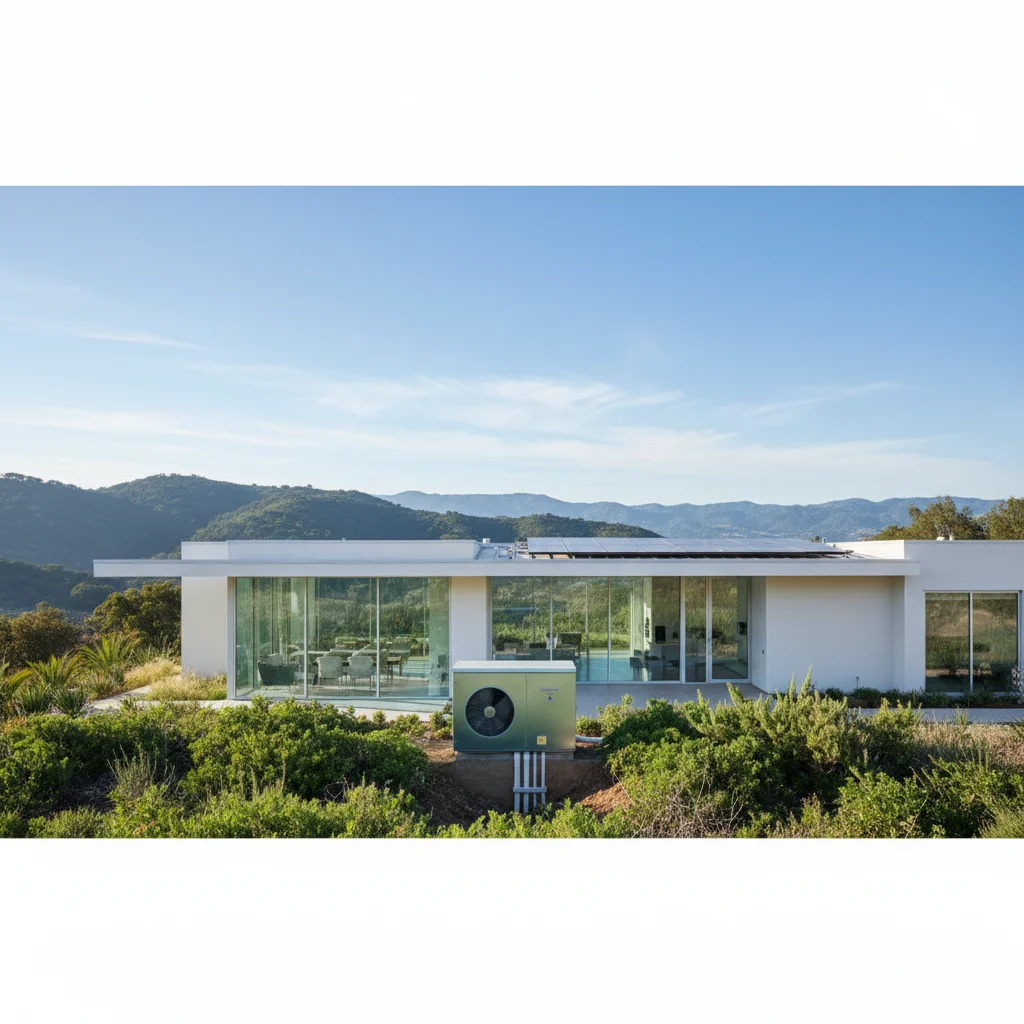
Geothermal Permit Requirements California
Geothermal Permit Requirements California: everything you need to know about eligibility, amounts, and the application process.
California homeowners installing geothermal heat pumps in 2026 face a multi-layered permitting process that costs $500-$2,500 and takes 4-12 weeks to complete. And that's before breaking ground. The state requires building permits, electrical permits, and well permits for closed-loop systems—each issued by different agencies with separate fee structures and inspection timelines.
What Are the Specific Permit Requirements for Geothermal Systems in California?
California geothermal systems require three mandatory permits in 2026: a building permit from local jurisdictions, an electrical permit for grid connection, and a well permit for closed-loop installations issued by county environmental health departments. Vertical loop systems exceeding 100 feet trigger additional state water board review.
Building permits cost $300-$800 depending on system size and jurisdiction. So San Francisco charges $650 for residential geothermal installations under 5 tons, while Sacramento County charges $420 for similar systems. Electrical permits add $150-$400 to cover HVAC integration and panel upgrades. But well permits vary dramatically—$200 in rural counties, $1,200 in coastal jurisdictions with strict groundwater protections.
"Geothermal heat pump systems must comply with the California Plumbing Code, California Electrical Code, and local well construction standards." — California Energy Commission
And vertical closed-loop systems require soil boring logs and thermal conductivity tests before permit approval. Open-loop systems pulling from aquifers need water quality testing and discharge permits from regional water quality control boards. So total permitting costs reach $2,500 for complex installations in environmentally sensitive areas.
Which Geothermal Specs Qualify You for California Rebates and Tax Credits?
California geothermal systems qualify for 2026 IRA federal tax credits when ENERGY STAR certified with minimum 3.3 COP heating and 4.1 EER cooling ratings. Systems must use EPA-approved refrigerants and include desuperheaters for water heating to maximize the 30% federal credit capped at $2,000 annually through 2032.
TECH Clean California offers $3,000-$5,000 rebates for income-qualified households installing geothermal systems rated 17 SEER2 or higher. And the state's Self-Generation Incentive Program provides $0.50 per watt for battery storage paired with geothermal installations, covering up to 40% of battery costs. But rebates require pre-approval before permit applications—retroactive claims get rejected.
Bay Area Air Quality Management District adds $500-$1,500 for replacing natural gas furnaces with geothermal heat pumps in its jurisdiction. So a qualifying 4-ton system with battery backup generates $8,000-$12,000 in combined federal and state incentives. Check the rebate calculator to estimate your total savings based on system specs and household income.
How Much Can You Save? Understanding ROI and Payback Periods for California Geothermal
California geothermal systems cost $20,000-$35,000 installed but save $1,200-$2,400 annually on heating and cooling compared to natural gas furnaces and central air conditioning. Average payback periods range from 8-14 years without incentives, dropping to 5-9 years after applying 2026 federal tax credits and state rebates.
Cooling-dominated climates like Sacramento see faster payback—7 years with incentives—because geothermal systems achieve 400% efficiency moving heat versus 95% efficiency burning gas. And electricity rates matter. So PG&E customers paying $0.38/kWh see $2,100 annual savings, while SCE customers at $0.29/kWh save $1,600. Systems paired with solar panels accelerate ROI by eliminating summertime peak electric costs.
"Geothermal heat pumps save homeowners 30-60% on heating and 20-50% on cooling costs compared to conventional systems." — U.S. Department of Energy
But installation costs vary by soil conditions. Rocky terrain requiring directional boring adds $8,000-$12,000 versus sandy soils permitting vertical drilling. So total installed costs range from $22,000 for horizontal loops in rural areas to $38,000 for vertical systems in urban lots with limited excavation space.
How Do Geothermal Permits Compare to Air Source Heat Pump and Traditional HVAC Requirements?
Geothermal permits require well construction approvals and environmental assessments that air source heat pumps skip entirely. Air source systems need only building and electrical permits costing $200-$600 total, while geothermal permitting reaches $500-$2,500 with 4-12 week approval timelines versus 2-4 weeks for air source installations.
Traditional gas furnace replacements require mechanical permits ($150-$400) and gas line inspections, but avoid well permits and groundwater testing. And permit costs scale with system complexity. So a ductless mini-split heat pump gets approved in 10 days for $250, while a 5-ton geothermal system with horizontal loops takes 8 weeks and $1,800 in permitting fees.
But geothermal systems qualify for higher heat pump rebates—$3,000-$5,000 versus $1,500-$3,000 for air source models under TECH Clean California 2026 programs. And geothermal installations avoid gas line decommissioning costs ($800-$1,500) required when converting gas furnaces to electric heat pumps in some jurisdictions.
How Long Will Your Geothermal System Last, and What's the True Lifespan in California's Climate?
Geothermal ground loops last 50-100 years in California's stable soil conditions, while indoor heat pump components require replacement every 20-25 years. Annual maintenance costs $150-$300 for filter changes and refrigerant checks, compared to $200-$400 for traditional HVAC systems requiring combustion safety testing.
California's mild winters reduce thermal cycling stress that shortens equipment life in extreme climates. So Sacramento geothermal systems average 24 years before compressor replacement, versus 18 years for identical units in Minnesota. And ground loop warranties span 25-50 years, reflecting manufacturer confidence in long-term durability.
Coastal installations face minimal corrosion compared to salt-air exposure affecting air source heat pumps. But hard water regions like Riverside County require water treatment systems ($800-$1,200) to prevent mineral buildup in open-loop configurations. So closed-loop systems dominate California installations, avoiding groundwater chemistry issues entirely.
What's the Complete Timeline and Cost for Getting Geothermal Permits Approved in California?
California geothermal permitting takes 4-12 weeks from application to final inspection, costing $500-$2,500 depending on system type and jurisdiction. Building permit review requires 2-4 weeks, electrical permits take 1-2 weeks, and well permits in coastal counties reach 6-8 weeks due to environmental health department backlogs.
San Diego County processes residential geothermal permits in 6 weeks on average, charging $1,100 for combined building, electrical, and well approvals. But Los Angeles County takes 10 weeks and $1,850 for identical applications due to stricter groundwater protection ordinances. And rural counties like Lassen process permits in 4 weeks for $650 total.
Expedited review costs 25-50% more but cuts timelines by 30%. So Sacramento offers 3-week expedited processing for $975 versus 6 weeks at $650 standard rate. Systems requiring California Coastal Commission review add 4-8 weeks—beachfront properties face the longest approval timelines in the state, reaching 16 weeks for complex installations.
Plan submissions need engineered drawings showing loop field layout, depth specifications, and thermal load calculations. And inspections occur at three stages: excavation before loop installation, electrical rough-in before drywall, and final system commissioning. Missing any inspection triggers re-application fees of $150-$300.
Official Sources
- U.S. Department of Energy Geothermal Heat Pumps — Federal guidance on geothermal system design, efficiency ratings, and cost comparisons
- DSIRE California — Database of state incentives for renewable energy including current 2026 rebate programs and tax credits
- California Energy Commission — State building codes, permit requirements, and energy efficiency standards for geothermal installations
Related Reading: Learn more about Landlord Energy Audit Requirements.
Frequently Asked Questions
What permits do I need for a geothermal system in California?
California requires three core permits: a building permit from your local building department ($300-$800), an electrical permit for HVAC connection ($150-$400), and a well permit from county environmental health for closed-loop systems ($200-$1,200). Coastal properties and systems exceeding 100 feet depth trigger additional state review adding 4-8 weeks to approval timelines.
How long does it take to get a geothermal permit in California?
Geothermal permits take 4-12 weeks for approval depending on jurisdiction and system complexity. Rural counties process applications in 4-6 weeks, while coastal jurisdictions with groundwater protections require 8-12 weeks. Expedited review cuts timelines by 30% for an additional 25-50% fee, reducing Sacramento County processing from 6 weeks to 3 weeks for $975 versus $650 standard rate.
Do I need a permit for geothermal heat pump installation?
All California geothermal installations require permits—no exceptions. Building departments classify geothermal systems as major mechanical alterations requiring engineered drawings, soil analysis, and staged inspections. Unpermitted installations void manufacturer warranties, disqualify systems from energy tax credits, and trigger code enforcement penalties of $500-$2,500 plus mandatory permitting and re-inspection costs.
What is the cost of a geothermal permit in California?
Geothermal permit costs range from $500 in rural counties to $2,500 in coastal jurisdictions with strict environmental review. Building permits cost $300-$800, electrical permits add $150-$400, and well permits vary from $200 to $1,200 depending on groundwater protection requirements. Los Angeles County charges $1,850 for combined permits, while Lassen County charges $650 for identical systems.
Can I install a geothermal system without a permit in California?
No. California building code section 105.1 requires permits for all geothermal installations. Unpermitted work voids equipment warranties, disqualifies systems from the 30% federal IRA tax credit and state rebates totaling $3,000-$5,000, and triggers code enforcement fines. And home sales require disclosure of unpermitted work, reducing property values by $10,000-$30,000 according to California Association of Realtors data.
Ready to calculate your geothermal savings? Use our free rebate calculator to estimate your 2026 federal tax credits, state rebates, and long-term energy savings based on your home's location and system size. Get your personalized estimate in under 2 minutes.
Last updated: April 14, 2026. Reviewed by the DuloCore Editorial Team. About our authors.
Find Your Rebates
Use our calculator to see how much you can save on your home improvement project.
Calculate My Savings