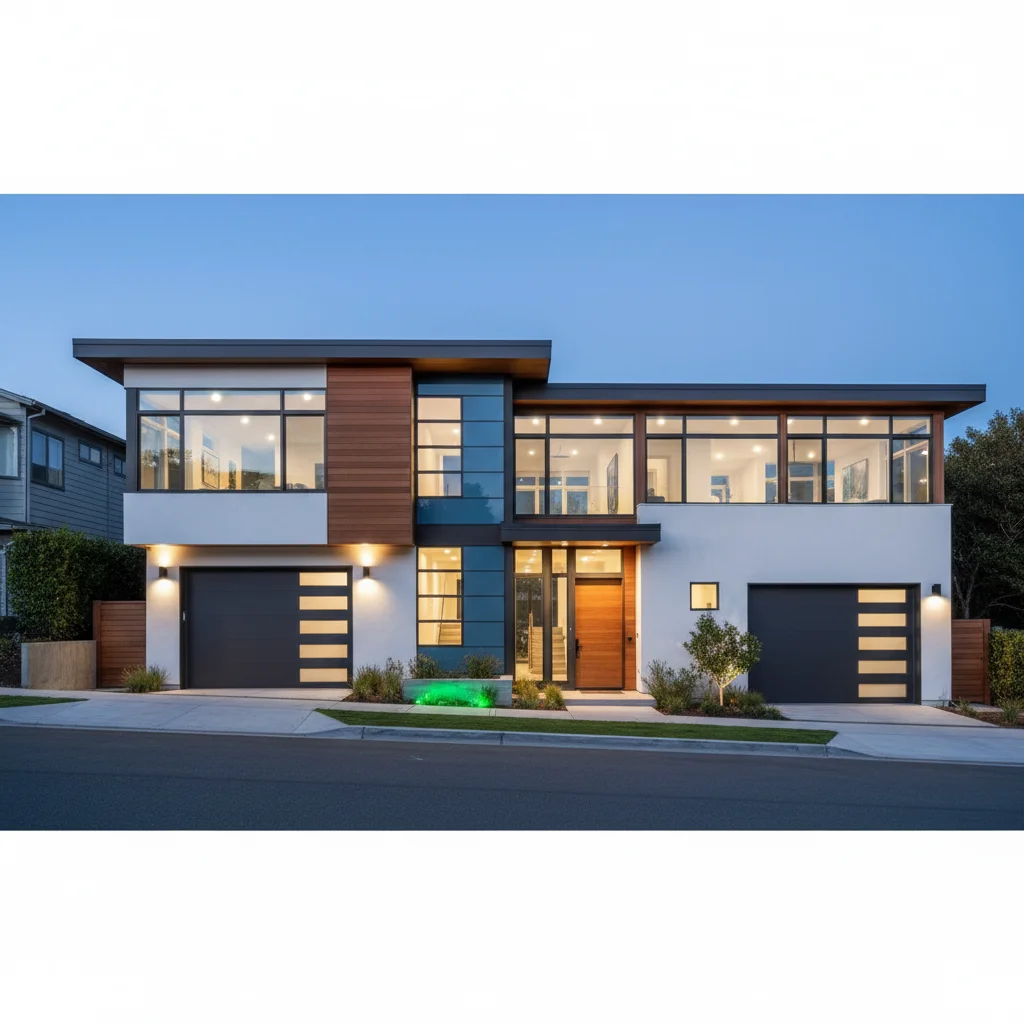
San Francisco homeowners installing geothermal heat pump systems in 2026 pay $25,000-$45,000 before incentives—but federal and California programs cut that by up to $18,000, making total net costs lower than conventional HVAC replacements in homes with moderate heating loads. And the city's Mediterranean climate delivers 2.5-3.5 times more heat per kilowatt than resistance heating, driving payback periods below seven years for properties with existing ductwork.
Geothermal installation in San Francisco costs $25,000-$45,000 for a 3-5 ton system before rebates. The federal Residential Clean Energy Credit (Section 25D) ended for expenditures made after December 31, 2025, and the IRS treats an expenditure as made when installation is completed (IRS FS-2025-05). California's TECH Clean program adds $3,000-$5,000. Net costs after incentives range $15,000-$28,000 for qualified homeowners.
But the city's geological complexity adds $3,000-$8,000 to drilling costs compared to suburbs, and permitting timelines stretch 8-12 weeks for most residential projects. So homeowners replacing aging furnaces face a decision: accept 15-20 year equipment lifespans with conventional systems, or invest in geothermal infrastructure rated for 50+ years of ground loop operation.
How Much Does Geothermal Installation Cost in San Francisco?
Residential geothermal systems in San Francisco run $25,000-$45,000 for complete installations, with 3-ton systems averaging $28,000 and 5-ton systems reaching $42,000. Costs break down to $15,000-$22,000 for equipment and indoor components, $8,000-$18,000 for ground loop installation, and $2,000-$5,000 for permits and engineering. Urban lot constraints push 68% of San Francisco installations toward vertical drilling, adding $2,500-$6,000 compared to horizontal loops common in suburban markets.
And labor rates in the Bay Area exceed national averages by 22-35%, with certified geothermal installers charging $95-$140 per hour. But the city's compact soil layers allow 300-400 foot vertical boreholes instead of the 500+ foot depths required in rocky terrain, reducing drilling time by 30-40%.
"Geothermal heat pumps can reduce energy use by 30-60% compared to conventional heating and cooling systems." — U.S. Department of Energy
What Rebates and Tax Credits Qualify for Geothermal Systems in San Francisco?
The federal Residential Clean Energy Credit (Section 25D) ended for expenditures made after December 31, 2025, and the IRS treats an expenditure as made when installation is completed (IRS FS-2025-05). Federal tax credits for this work have ended, but state, local and utility rebates may still apply; check what is available at your address with the DuloCore rebate calculator. California's TECH Clean California program adds $3,000-$5,000 for qualifying heat pump systems, while PG&E's Energy Efficiency Rebate Program contributes up to $2,000 for high-efficiency models. Combined incentives reduce net installation costs by $11,000-$18,000 for systems meeting ENERGY STAR certification requirements.
And San Francisco's Property Assessed Clean Energy (PACE) financing allows homeowners to finance remaining costs through property tax assessments over 20-year terms at 5.5-7.5% interest. But TECH Clean rebates require household income below 80% of Area Median Income ($92,000 for single-person households in 2026), restricting access for higher earners who still qualify for federal credits.
| Program | Amount | Eligibility | Application Deadline |
|---|---|---|---|
| Federal IRA Credit (25D) | Ended Dec 31, 2025 | — | Ended Dec 31, 2025 |
| TECH Clean California | $3,000-$5,000 | Income ≤80% AMI | Ongoing (funding limited) |
| PG&E Energy Efficiency | Up to $2,000 | ENERGY STAR certified systems | December 31, 2026 |
Check current program availability through the rebate calculator for real-time funding status.
How Long Does It Take to Recoup Your Geothermal Investment Through Energy Savings?
San Francisco geothermal systems deliver 6-9 year payback periods for homes replacing electric resistance heating, and 10-14 years for natural gas furnace replacements. A typical 4-ton system saves $1,800-$2,800 annually on combined heating and cooling costs, with coefficient of performance ratings of 3.5-4.2 in the city's climate zone delivering $0.42-$0.58 worth of heat per $0.10 of electricity consumed.
And PG&E's tiered residential rates—rising to $0.51 per kWh above 400% baseline usage in 2026—accelerate savings for high-consumption households by 35-50%. So homes with existing electric heating see net payback in 5.5-7.5 years after federal credits, while natural gas customers face longer timelines due to California's comparatively low gas rates of $1.85-$2.20 per therm.
"Ground source heat pumps are recognized by the EPA as the most energy-efficient, environmentally clean, and cost-effective space conditioning systems available." — U.S. Environmental Protection Agency
But maintenance costs average $150-$300 annually for filter changes and refrigerant checks, compared to $200-$450 for conventional HVAC systems, adding $50-$150 in annual savings beyond energy reductions.
Which Geothermal Brands and Models Qualify for San Francisco Incentives?
ENERGY STAR Most Efficient certified systems from ClimateMaster, WaterFurnace, and Bosch qualify for maximum federal and state rebates in 2026. ClimateMaster Tranquility 27 series units achieve 41 EER cooling and 5.3 COP heating ratings, exceeding the 21.1 EER minimum for ENERGY STAR certification by 94%. WaterFurnace 7 Series models deliver variable-speed operation with EER ratings to 45, while Bosch Greensource CDi series offers compact footprints for San Francisco's smaller mechanical rooms.
And all three manufacturers maintain Bay Area service networks with certified technicians, reducing maintenance response times to 24-48 hours for warranty-covered repairs. But equipment costs vary by $2,000-$4,500 between brands, with WaterFurnace commanding premium pricing for enhanced efficiency ratings that deliver $180-$340 in additional annual savings.
Federal geothermal tax credits apply to equipment, installation labor, and ground loop drilling costs without brand restrictions, though state programs like TECH Clean require third-party efficiency verification. So homeowners maximize incentives by selecting models certified for California's Title 24 compliance, documented through HERS testing at $300-$500 per property.
How Does Geothermal Compare to Heat Pumps and Traditional HVAC in the Bay Area?
Geothermal systems cost $15,000-$25,000 more than air-source heat pumps for San Francisco installations, but deliver 30-40% higher seasonal efficiency in heating mode and eliminate outdoor condenser noise restricted by the city's residential zoning codes. Air-source units average 10-12 HSPF heating performance, while geothermal systems achieve 14-18 HSPF through stable 55-58°F ground temperatures year-round.
And conventional natural gas furnaces with central air conditioning cost $12,000-$18,000 installed—40-55% less than geothermal—but carry operating costs $1,400-$2,200 higher annually at current PG&E rates. So geothermal's premium upfront investment pays back in 7-11 years through energy savings, while air-source heat pumps require 9-13 years to match conventional system costs.
| System Type | Installation Cost | Annual Operating Cost | 15-Year Total Cost |
|---|---|---|---|
| Geothermal (4-ton) | $32,000 ($20,400 after credits) | $850-$1,200 | $33,150-$38,400 |
| Air-Source Heat Pump | $16,000 ($12,800 after credits) | $1,100-$1,600 | $29,300-$36,800 |
| Gas Furnace + AC | $14,000 | $2,400-$3,000 | $50,000-$59,000 |
But geothermal ground loops last 50+ years compared to 15-20 year air-source compressor lifespans, deferring replacement costs by three decades.
What's the Lifespan and Maintenance Cost of a Geothermal System?
Geothermal heat pumps operate 20-25 years for indoor components and 50+ years for underground loop fields, exceeding conventional HVAC lifespans by 40-60%. Annual maintenance runs $150-$300 for filter replacements, refrigerant level checks, and circulation pump inspections—30-40% below the $220-$450 typical for gas furnace and air conditioning combinations. And closed-loop systems using food-grade antifreeze require fluid replacement every 10-15 years at $400-$800 per service.
San Francisco's mild climate reduces compressor cycling by 25-35% compared to extreme temperature zones, extending equipment life by 2-4 years beyond manufacturer ratings. But the city's corrosive marine air accelerates outdoor component degradation for hybrid systems combining geothermal with supplemental air-source equipment, raising 15-year maintenance costs by $800-$1,400.
Learn more about maximizing system efficiency through available energy tax credits and explore additional heat pump rebates for hybrid configurations.
Ground Loop Material Specifications
High-density polyethylene (HDPE) tubing rated for 200 PSI operating pressure qualifies for California Title 24 compliance. Vertical loops require 0.75-1.0 inch diameter pipe with fusion-welded joints tested to 150 PSI for 30 minutes before backfilling. Horizontal installations use 0.75-inch SDR-11 pipe in 4-6 foot deep trenches with 10-foot spacing between parallel runs.Use our free rebate calculator to estimate total savings from federal credits, state programs, and utility incentives based on your home's specifications.
Official Sources
- U.S. Department of Energy - Geothermal Heat Pumps — Federal guidance on system types, efficiency ratings, and installation best practices
- ENERGY STAR Geothermal Heat Pump Specifications — Certification requirements and qualified product directory for federal tax credit eligibility (note: the federal 25C and 25D credits ended for projects completed after December 31, 2025)
- DSIRE - Database of State Incentives for Renewables & Efficiency — Comprehensive catalog of federal, state, and utility rebate programs by location
Frequently Asked Questions
How much does geothermal installation cost in San Francisco?
Geothermal systems cost $25,000-$45,000 before incentives in San Francisco, with 3-ton residential installations averaging $28,000 and 5-ton systems reaching $42,000. Federal tax credits reduce net costs by 30% through 2032, while California's TECH Clean program adds $3,000-$5,000 for income-qualified households. Combined incentives lower total investment to $15,000-$28,000 for most properties.
What rebates are available for geothermal systems in San Francisco?
San Francisco homeowners access three primary incentives: federal Section 25D tax credits covering 30% of total costs with no dollar cap, TECH Clean California rebates of $3,000-$5,000 for households earning below 80% Area Median Income, and PG&E efficiency rebates up to $2,000 for ENERGY STAR certified systems. The federal Residential Clean Energy Credit (Section 25D) ended for expenditures made after December 31, 2025, and the IRS treats an expenditure as made when installation is completed (IRS FS-2025-05).
Is geothermal installation worth the cost in San Francisco?
Geothermal delivers 6-9 year payback for electric heating replacements and 10-14 years for natural gas conversions in San Francisco, with annual savings of $1,800-$2,800 on combined heating and cooling. Systems last 20-25 years for indoor components and 50+ years for ground loops, providing 30-40 years of zero-replacement operation beyond payback. Properties with high PG&E tier usage see accelerated returns of 5.5-7.5 years.
How long does it take to install a geothermal system?
Complete geothermal installations require 2-4 weeks from permit approval to system startup in San Francisco, with 3-5 days for ground loop drilling, 2-3 days for indoor equipment installation, and 8-12 weeks for permitting and engineering review. Vertical loop projects on constrained urban lots add 1-2 days for specialized drilling equipment setup compared to horizontal installations.
What are the eligibility requirements for geothermal rebates in California?
The federal Residential Clean Energy Credit (Section 25D) ended for expenditures made after December 31, 2025, and the IRS treats an expenditure as made when installation is completed (IRS FS-2025-05). TECH Clean California limits participation to households earning below 80% Area Median Income ($92,000 single, $105,000 joint in San Francisco County for 2026). PG&E rebates require ENERGY STAR Most Efficient designation and professional installation by licensed contractors with HERS verification.
Ready to calculate your geothermal savings? Use our rebate calculator to see exactly how much federal credits, state rebates, and utility incentives will reduce your installation costs. Get personalized estimates based on your home's size, current heating system, and household income in under 60 seconds.
Last updated: April 14, 2026. Reviewed by the DuloCore Editorial Team. About our authors.
Check your California heat pump rebate eligibility — see the programs you qualify for and the dollar amounts on our California heat pump rebate finder.