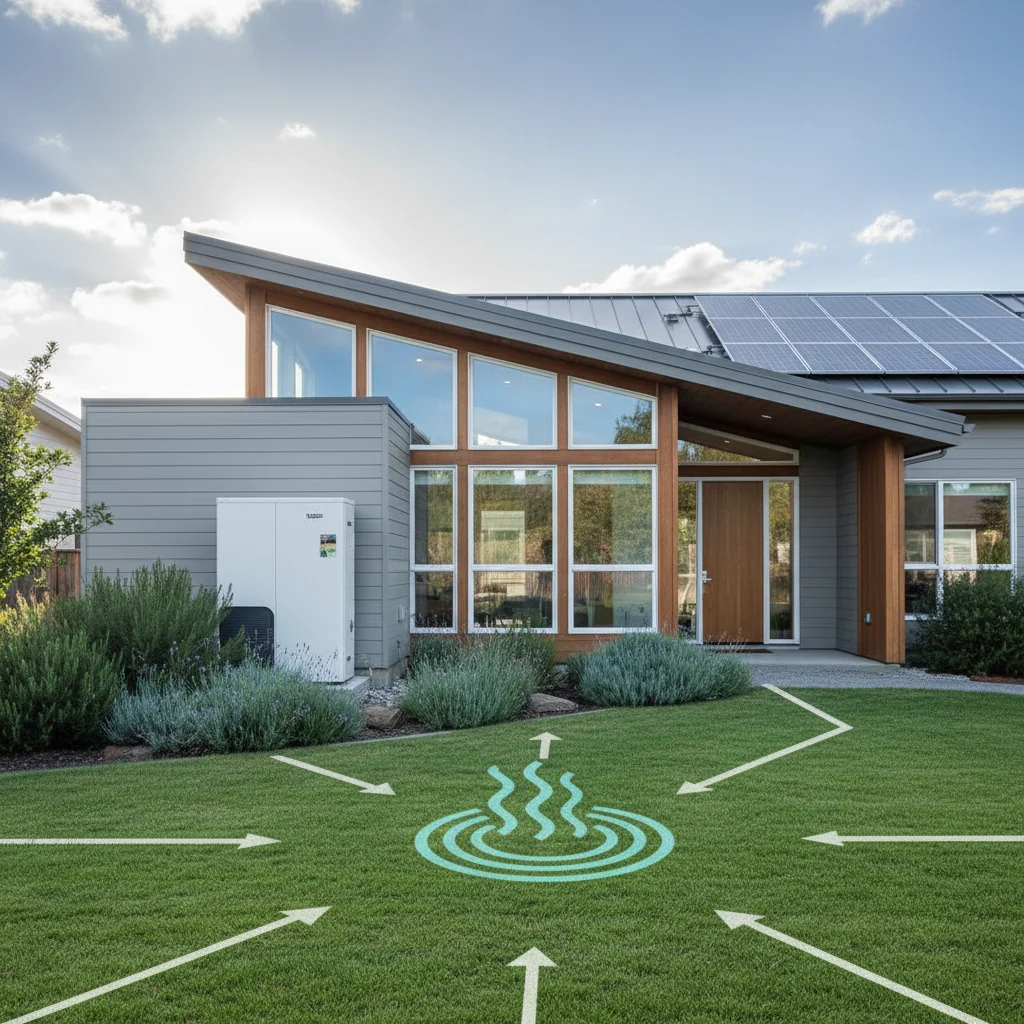
The federal Residential Clean Energy Credit (Section 25D) ended for expenditures made after December 31, 2025, and the IRS treats an expenditure as made when installation is completed (IRS FS-2025-05). Federal tax credits for this work have ended, but state, local and utility rebates may still apply; check what is available at your address with the DuloCore rebate calculator. Homeowners who install geothermal heat pumps in 2026 can claim 30 percent of total installation costs with no annual dollar cap, making this the most valuable period for geothermal investments since the credit's creation in 2008. But the credit steps down to 26 percent in 2033 and 22 percent in 2034 before expiring completely in 2035, creating a seven-year window for maximum savings.
What is the geothermal 30% tax credit and how much can you claim?
The federal Residential Clean Energy Credit (Section 25D) ended for expenditures made after December 31, 2025, and the IRS treats an expenditure as made when installation is completed (IRS FS-2025-05). The credit covers equipment costs, labor, installation fees, site preparation, ductwork modifications, electrical upgrades, and drilling expenses for ground loops. And unlike previous versions of the credit, the 2026 program has no annual dollar cap—homeowners can claim 30 percent of total costs regardless of whether the project costs $15,000 or $50,000. (Note: Federal tax credit percentages and availability are subject to change; the 30% Residential Clean Energy Credit under Section 25D expired December 31, 2025. Verify current incentives at energy.gov.)
So a typical residential geothermal installation costing $25,000 generates a $7,500 federal tax credit. Larger homes requiring more extensive systems costing $40,000 receive $12,000 back. The credit applies to primary residences and second homes but not rental properties, which fall under different commercial energy credit provisions.
"Qualified geothermal heat pump property costs include labor costs properly allocable to the onsite preparation, assembly, or original installation of the property and for piping or wiring to interconnect such property to the home." — IRS Energy Efficient Home Improvement Credit
Does the geothermal tax credit have an annual cap on claims?
The geothermal tax credit operates with no annual dollar cap on total claims for qualified installations. The federal Energy Efficient Home Improvement Credit (Section 25C) ended for property placed in service after December 31, 2025 (IRS FS-2025-05). But geothermal heat pumps fall under the Residential Clean Energy Credit provisions, which eliminated caps entirely.
Homeowners can claim the full 30 percent credit amount in a single tax year regardless of installation cost. And if the credit exceeds tax liability for that year, the unused portion carries forward to subsequent tax years indefinitely until fully claimed. So a homeowner with $6,000 in tax liability who earns an $8,000 credit claims $6,000 immediately and the remaining $2,000 the following year.
The only limitation applies to timing—the system must be installed and placed in service by December 31, 2032 to qualify for the full 30 percent rate. Systems installed in 2033 receive 26 percent, 2034 installations get 22 percent, and the credit expires completely after 2034.
Can you stack the geothermal credit with other energy tax credits?
A homeowner who installs geothermal heat pumps, rooftop solar panels, and battery storage in 2026 claims 30 percent of all three systems separately. So a $25,000 geothermal system, $20,000 solar array, and $15,000 battery pack generates $18,000 in combined federal tax credits.
State and utility rebates operate differently—most states allow homeowners to claim both federal tax credits and state incentives on the same project, but the federal credit amount doesn't reduce when state rebates are applied. California's TECH Clean California program provides up to $3,000 for heat pump installations, and homeowners claim the full federal 30 percent credit on top of that rebate. But check specific state program rules, as some require choosing between state grants and federal credits.
Utility company rebates from investor-owned utilities like PG&E or SoCal Edison stack with federal credits in most cases. And local municipality programs often layer additional incentives—some California cities offer expedited permitting, fee waivers, or direct cash rebates for geothermal installations that combine with federal benefits. Use our free rebate calculator to identify all available stacking opportunities in your area.
What documentation do you need to apply for the geothermal tax credit?
Form 5695 only covers qualifying work completed by December 31, 2025 and claimed on a 2025 return; the federal 25C and 25D credits ended after that date (IRS FS-2025-05). Homeowners need manufacturer certification statements proving the geothermal heat pump meets ENERGY STAR requirements and detailed contractor invoices showing installation dates, equipment specifications, labor costs, and total project expenses. And the system must be installed in a home the taxpayer owns and uses as a primary or secondary residence—rental properties don't qualify for residential credits.
Keep copies of the manufacturer's certification letter listing the equipment model number, AHRI certification number, and efficiency ratings. The geothermal system must meet ENERGY STAR Most Efficient criteria with EER ratings of at least 16.1 for closed-loop systems and 19.1 for open-loop systems. Contractor invoices should itemize equipment separately from labor and installation to document the full qualifying cost basis.
Retain all documentation for at least seven years after filing the return claiming the credit. The IRS doesn't require submitting receipts with the initial filing, but audits can request verification of claimed amounts. So preserve itemized invoices, manufacturer certifications, building permits, final inspection reports, and proof of payment for all qualified expenses. Many contractors provide IRS-compliant documentation packages specifically formatted for tax credit claims.
Is the geothermal 30% tax credit refundable or non-refundable?
The geothermal tax credit operates as a non-refundable credit, meaning it reduces tax liability to zero but doesn't generate a refund if the credit exceeds taxes owed. A homeowner with $5,000 in federal tax liability who claims a $7,500 geothermal credit receives $5,000 in tax reduction and carries forward the unused $2,500 to the following tax year. But unlike refundable credits such as the Earned Income Tax Credit, non-refundable credits never produce cash refunds beyond existing tax liability.
The credit does carry forward indefinitely until fully used, providing flexibility for homeowners with variable income or lower tax liability in the installation year. So retirees or homeowners with significant deductions who owe minimal taxes in 2026 can still capture the full credit value over multiple years. And the carryforward provision removes the pressure to time installations around high-income years.
Compare this to state programs—California's Middle Class Tax Refund provided direct payments regardless of tax liability, operating as a refundable benefit. Homeowners should review projected tax liability with a tax professional before installation to optimize timing and maximize first-year credit capture.
What's the step-by-step application process for claiming the credit?
Form 5695 only covers qualifying work completed by December 31, 2025 and claimed on a 2025 return; the federal 25C and 25D credits ended after that date (IRS FS-2025-05). And carry that credit amount to Form 1040, Schedule 3, Line 5, which reduces your total tax liability dollar-for-dollar up to the amount of taxes owed.
Gather manufacturer certification documentation before filing—the IRS requires proof that installed equipment meets ENERGY STAR Most Efficient specifications for geothermal heat pumps. Request certification letters from your contractor showing the equipment model number, AHRI certification, EER ratings, and installation date. Most contractors provide pre-formatted IRS compliance packages for tax credit claims, including itemized invoices separating equipment costs from labor and installation expenses.
Form 5695 only covers qualifying work completed by December 31, 2025 and claimed on a 2025 return; the federal 25C and 25D credits ended after that date (IRS FS-2025-05). Extensions apply automatically if you file for a tax return extension. And if the credit exceeds your current-year tax liability, the unused portion carries forward automatically to subsequent tax years—no additional forms or applications required. Review IRS Form 5695 instructions for detailed line-by-line filing guidance.
Official Sources
- Department of Energy Geothermal Heat Pumps — Technical specifications, efficiency standards, and system performance data for residential geothermal installations
- IRS Energy Efficient Home Improvement Credit — Official tax credit guidance, Form 5695 instructions, and qualifying equipment requirements (note: the federal 25C and 25D credits ended for projects completed after December 31, 2025)
- ENERGY STAR Geothermal Heat Pumps — Certification requirements and qualified product database for federal tax credit eligibility (note: the federal 25C and 25D credits ended for projects completed after December 31, 2025)
Related Reading: Learn more about Solar Tax Credit 30 Percent.
Frequently Asked Questions
What is the geothermal 30 percent tax credit?
The federal Residential Clean Energy Credit (Section 25D) ended for expenditures made after December 31, 2025, and the IRS treats an expenditure as made when installation is completed (IRS FS-2025-05). The credit covers equipment, labor, drilling, and system installation with no annual dollar cap. Form 5695 only covers qualifying work completed by December 31, 2025 and claimed on a 2025 return; the federal 25C and 25D credits ended after that date (IRS FS-2025-05). The credit rate decreases to 26 percent in 2033, 22 percent in 2034, and expires after 2034.
Who is eligible for the geothermal tax credit in 2026?
The federal Residential Clean Energy Credit (Section 25D) ended for expenditures made after December 31, 2025, and the IRS treats an expenditure as made when installation is completed (IRS FS-2025-05). The property must be located in the United States and owned by the taxpayer claiming the credit. Rental properties, commercial buildings, and new construction homes built by developers don't qualify under residential credit provisions. And the system must meet ENERGY STAR Most Efficient certification with minimum EER ratings of 16.1 for closed-loop systems.
How much can you claim with the geothermal 30 percent tax credit?
Homeowners claim 30 percent of total qualified installation costs with no annual dollar cap through 2032. A $20,000 installation generates a $6,000 credit, while a $35,000 system produces a $10,500 credit. Qualified costs include equipment, labor, drilling, ductwork modifications, electrical upgrades, and site preparation. The credit is non-refundable but carries forward indefinitely if it exceeds current-year tax liability. Check the geothermal tax credit for detailed cost breakdowns and qualifying expense categories.
When is the deadline to claim the geothermal tax credit?
The federal Residential Clean Energy Credit (Section 25D) ended for expenditures made after December 31, 2025, and the IRS treats an expenditure as made when installation is completed (IRS FS-2025-05). Form 5695 only covers qualifying work completed by December 31, 2025 and claimed on a 2025 return; the federal 25C and 25D credits ended after that date (IRS FS-2025-05). The credit rate drops to 26 percent for installations in 2033, 22 percent in 2034, and expires completely after December 31, 2034.
How does the geothermal tax credit compare to other renewable energy credits?
The geothermal credit matches solar panel and battery storage credits at 30 percent with no dollar cap, making it one of the most valuable federal energy tax credits available through 2032. Compare this to the Energy Efficient Home Improvement Credit, which caps most upgrades at $1,200 annually and limits air-source heat pump rebates to $2,000. And geothermal systems qualify for both federal credits and state incentives simultaneously, while some efficiency upgrades require choosing between programs.
Ready to maximize your geothermal savings? Use our free rebate calculator to estimate your total federal tax credit, state incentives, and utility rebates based on your specific installation costs and location. Get your personalized savings breakdown in under 60 seconds.
Updated: April 14, 2026 — fact-checked by DuloCore Research. About our editorial process.
Check your California heat pump rebate eligibility — see the programs you qualify for and the dollar amounts on our California heat pump rebate finder.