Update (2026): The federal Energy Efficient Home Improvement Credit (Section 25C) expired December 31, 2025, following the passage of the OBBBA. Check state and local programs for current incentives.
Charging an electric vehicle at home adds the equivalent of running a second central air conditioner for hours, increasing a home's electricity consumption by 30% to 50% overnight. This sudden demand on an electrical system designed decades ago often leads to overloaded circuits, tripped breakers, and even fire hazards if not properly assessed. So preparing your home's infrastructure isn't just about convenience; it's a critical safety and financial calculation.
What is an EV Charger Home Energy Audit, and Why is it Crucial for Your Home?
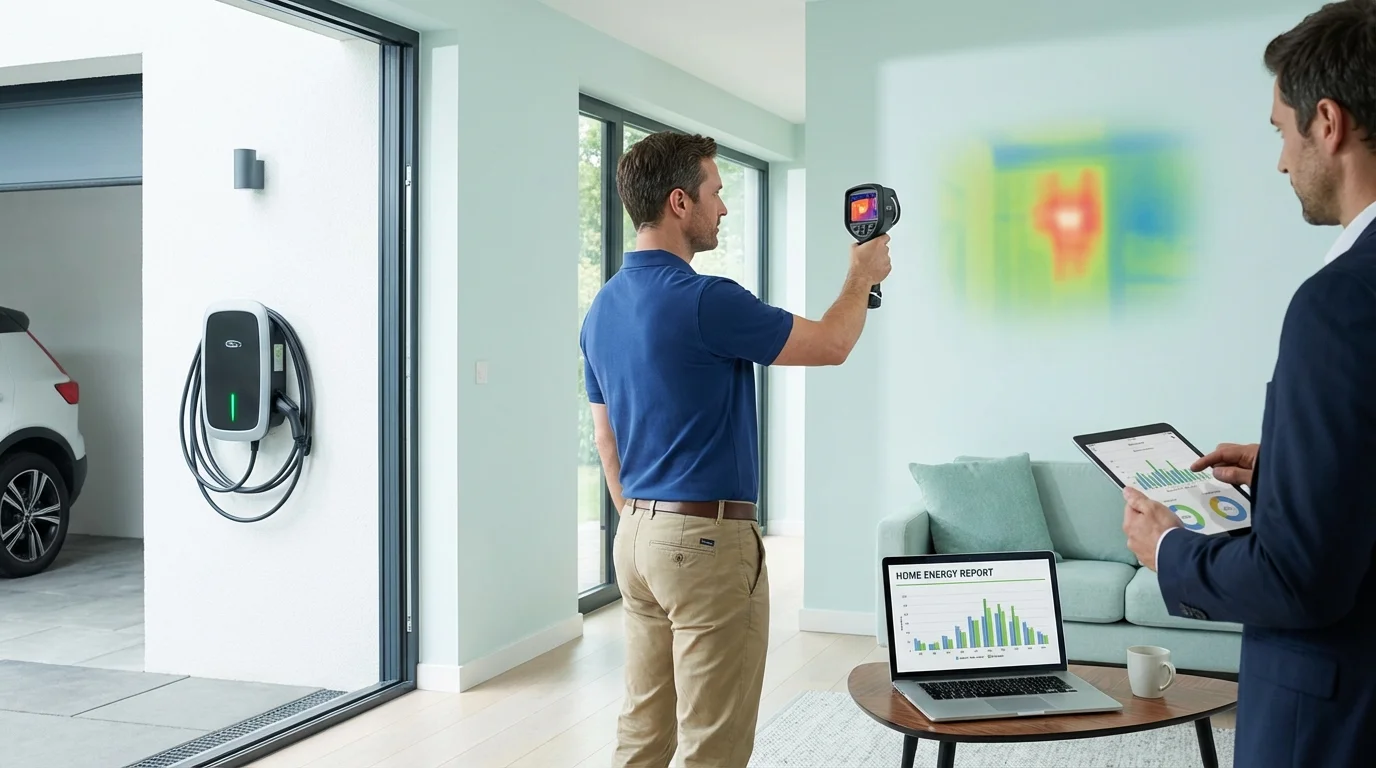
An EV charger home energy audit is a specialized assessment of a home's electrical system to determine its capacity to safely and efficiently support a Level 2 electric vehicle charger. This 2026 evaluation identifies necessary upgrades, such as panel capacity increases or dedicated circuit installations, ensuring system stability.
A standard Level 2 EV charger pulls between 30 and 40 amps of continuous power, a demand that many older homes with 100-amp service panels can't safely meet alongside other appliances. But an energy audit goes beyond a simple capacity check. So it analyzes the entire home's energy profile, identifying opportunities to reduce overall consumption, which frees up electrical capacity for the new charger. This holistic approach prevents the need for a costly electrical service upgrade, which averages $2,500. And by mapping out your home's load distribution, the audit ensures the new 240-volt circuit won't cause voltage drops or interfere with other high-draw appliances. A pre-installation home energy audit is the foundational step to avoid unexpected costs and ensure a safe, reliable charging setup for the next 10+ years.
How Much Does an EV Charger Home Energy Audit Cost, and What Are the Potential Installation Expenses?
An EV charger-focused home energy audit costs between $300 and $700 in 2026, depending on home size and location. This fee covers a certified technician's inspection of the electrical panel, wiring, and overall load calculation. Potential installation expenses revealed by the audit range from $500 to over $4,000.
The audit itself is the diagnostic tool; the real expenses come from the prescribed upgrades. And a simple installation of a NEMA 14-50 outlet near the electrical panel costs between $500 and $900. But if the audit determines your 100-amp panel is insufficient, a panel upgrade to 200 amps is required, costing from $1,500 to $4,000. Other potential costs include trenching for detached garages ($50-$70 per foot) or installing a dedicated load management system to prevent overloads ($500-$800). So while the audit is an initial expense, it prevents the 15% higher costs associated with emergency electrical repairs from an overloaded system. These upfront investments are often eligible for local utility rebates, which can cover up to $500 of the installation cost.
What Rebates, Tax Credits, and Brands Qualify for EV Charger Upgrades?
Homeowners in 2026 have access to federal tax credits, state incentives, and local utility rebates for EV charger installations and required electrical upgrades. The federal 30C charger credit ended for chargers placed in service after June 30, 2026 (IRS FS-2025-05). Federal tax credits for this work have ended, but state, local and utility rebates may still apply; check what is available at your address with the DuloCore rebate calculator.
The primary federal incentive comes from the Inflation Reduction Act, which provides robust energy tax credits through December 31, 2025. To qualify, the charging equipment must be installed in a primary residence. And many popular ENERGY STAR® certified brands like ChargePoint, JuiceBox (Enel X Way), and the Tesla Wall Connector are eligible for both federal credits and local rebates. State and utility programs add another layer of savings, with some offering direct rebates of $250 to $750 for Level 2 charger installations. But these local programs often require pre-approval and the use of a licensed electrician. So it's essential to check your local utility's database for 2026 program-specific requirements and qualifying hardware lists before purchasing any equipment. Use our free rebate calculator to find your exact savings.
| Incentive Program | Type | 2026 Amount | Key Eligibility Requirement |
|---|---|---|---|
| Federal Tax Credit (IRA) | Ended June 30, 2026 | Ended June 30, 2026 | — |
| State Rebate (Varies) | Point-of-Sale or Mail-in | $250 - $750 | State residency, specific brands |
| Utility Rebate (Local) | Bill Credit or Check | $200 - $500 | Customer of utility, often requires audit |
How Does an Energy Audit Optimize Your EV Charger's Efficiency and Suitability for Your Climate?
An energy audit optimizes an EV charger's efficiency by aligning its operation with the home's total electrical load and utility rate structures. The assessment identifies the ideal charging schedule for off-peak hours, which reduces electricity costs by up to 40% annually in regions with time-of-use plans.
The audit provides a detailed roadmap for energy management. For example, it confirms if your panel can handle a 48-amp charger for faster charging or if a 32-amp model is a safer, more efficient choice for your existing infrastructure. And this prevents inefficient "trickle charging" from a standard 120-volt outlet, which has an energy loss of up to 15%. In colder climates, where home energy use spikes in winter for heating, an audit is even more critical. It ensures that running electric heat and charging an EV simultaneously won't overload the system. The Department of Energy emphasizes that understanding your home's total energy picture is key to maximizing savings.
"A home energy assessment, also known as a home energy audit, can help you understand the whole picture of your home's energy use." — U.S. Department of Energy
What is the ROI Payback Period, Lifespan, and Maintenance for an Optimized EV Charging Setup?
An optimized home EV charging setup has a return on investment (ROI) payback period of 3 to 5 years, a functional lifespan of over 10 years, and requires minimal annual maintenance. The ROI is accelerated by federal and local incentives that offset initial installation costs of $1,200 to $2,500.
The payback period is calculated based on fuel savings and incentives. So with average annual savings of $900 compared to gasoline and a $1,000 federal tax credit, a $2,000 installation pays for itself in just over one year. The equipment itself is durable; Level 2 chargers from reputable brands are rated for a lifespan of 10 to 15 years. And maintenance is straightforward: it involves keeping the unit clean, checking the charging cable for wear, and ensuring electrical connections remain tight, a task that takes less than 15 minutes per year. This low-maintenance, long-lifespan profile makes the initial investment in a properly audited and installed system a financially sound decision for EV owners.
Are There Alternatives to a Full Home Energy Audit, and How Do They Compare?
Alternatives to a full home energy audit include a focused electrical assessment by a licensed electrician or the use of a smart circuit splitter. These options are less expensive upfront but don't provide the comprehensive energy usage data or whole-home efficiency recommendations of a full audit.
A focused electrical assessment, costing $150 to $300, specifically evaluates the electrical panel's capacity and wiring integrity for an EV charger. But it won't identify other energy-saving opportunities, like air sealing or insulation upgrades, that a full audit covers. Another alternative is a smart splitter or load-sharing device ($300-$500), which allows two high-draw appliances (like a dryer and an EV charger) to share one circuit by automatically switching power. So this avoids a panel upgrade but doesn't address the home's overall energy efficiency. A full audit, while costing more ($300-$700), is often a prerequisite for accessing certain high-value rebates, such as those for heat pump rebates, making it the most financially strategic option.
Official Sources
- Database of State Incentives for Renewables & Efficiency (DSIRE) — A comprehensive source for state and local renewable energy and energy efficiency incentives.
- ENERGY STAR — Federal guidance and product lists for certified energy-efficient EV chargers that qualify for rebates.
"DSIRE is the most comprehensive source of information on incentives and policies that support renewables and energy efficiency in the United States." — DSIRE
Related Reading: Learn more about Home Energy Audit What To Expect and Inflation Reduction Act Home Energy.
Frequently Asked Questions
Who is eligible for an EV charger home energy audit rebate?
Eligibility for an EV charger home energy audit rebate typically depends on your local utility provider and state programs for 2026. Homeowners who are customers of participating utilities are often eligible. Many programs require the audit to be performed by a BPI (Building Performance Institute) certified professional. And some rebates are tied to income levels, offering higher amounts, up to 100% of the audit cost, for low-to-moderate-income households.
What does an EV charger home energy audit involve?
An EV charger home energy audit involves a thorough inspection of your home's electrical system by a certified technician. The process includes a load calculation to assess the capacity of your main electrical panel, an inspection of existing wiring, and identification of a safe, code-compliant location for the charger. The auditor typically uses diagnostic tools to measure energy consumption and provides a detailed report with recommendations for any necessary upgrades, costing between $300 and $700.
How does an EV charger home energy audit differ from a general home energy audit?
An EV charger home energy audit focuses specifically on the electrical system's capacity to handle the 7.2 kW to 11.5 kW continuous load of a Level 2 charger. A general home energy audit is broader, evaluating insulation, air leakage, HVAC efficiency, and appliance energy use to create a whole-home energy reduction plan. While a general audit may touch on electrical capacity, the EV-specific audit provides the detailed load calculations and circuit analysis required for a safe installation.
Last updated April 14, 2026 — reviewed by DuloCore Editorial. About our authors.
Check your California EV charger rebate eligibility — see the programs you qualify for and the dollar amounts on our California EV charger rebate finder.