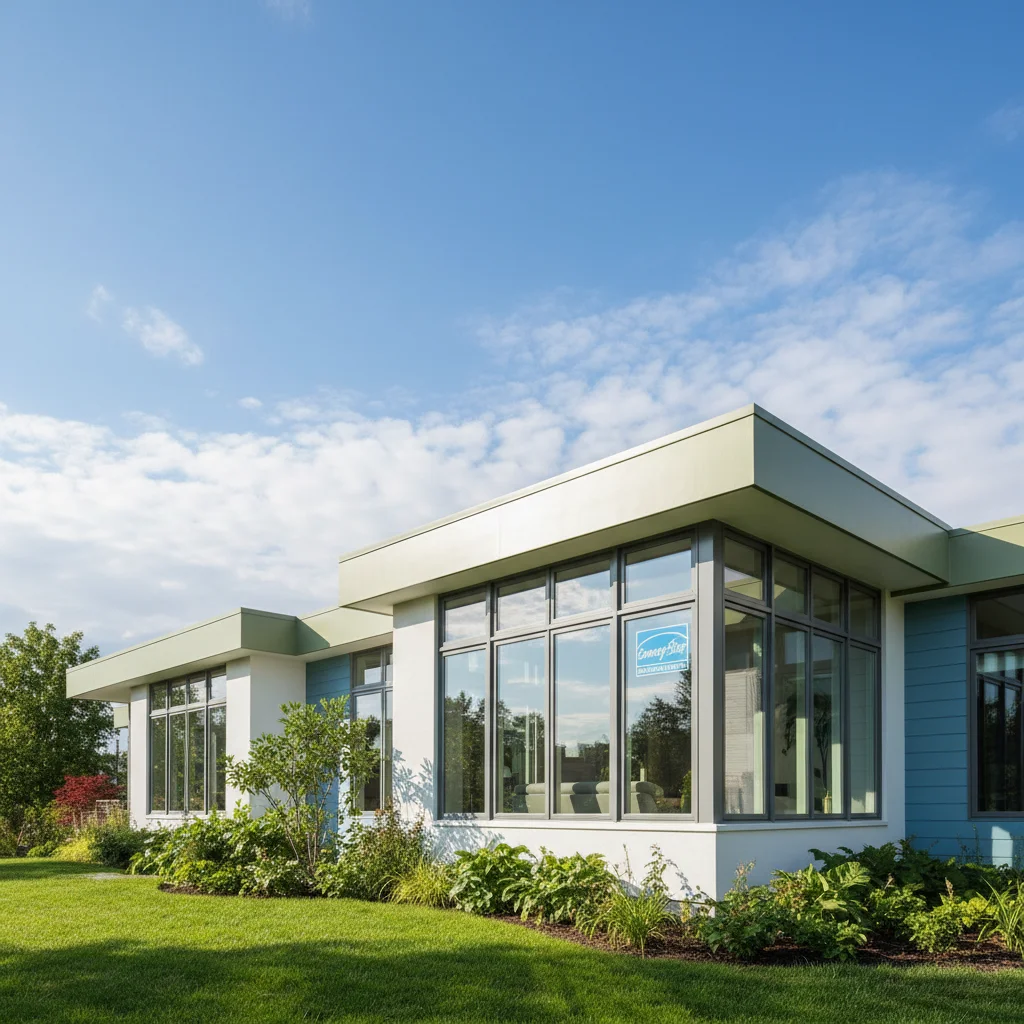
Energy Star Windows
Energy Star Windows: everything you need to know about eligibility, amounts, and the application process.
In 2025, the EPA tightened ENERGY STAR window certification requirements by 12%, eliminating roughly 3,000 previously qualified models from the market. And for the first time in a decade, the agency separated certification by cardinal orientation—north-facing windows now carry different U-factor minimums than south-facing installations. Homeowners replacing windows purchased before 2024 face a new landscape where last year's "certified" product might no longer qualify for federal tax credits or utility rebates in 2026.
How Much Do ENERGY STAR Windows Cost?
ENERGY STAR certified windows cost $300-$900 per window installed in 2026, with double-pane vinyl averaging $450, wood-frame units reaching $650, and fiberglass triple-pane topping $850. Installation labor accounts for 30-40% of total project costs, averaging $120-$180 per window in the Midwest and $180-$240 on the coasts. Regional labor rates and frame material choices drive the widest cost variation.
Double-hung vinyl windows at the $450 average offer the lowest entry point for ENERGY STAR certification. But casement and awning styles—which seal tighter—command 15-25% premiums despite identical glass packages. Wood-frame units cost $200 more than vinyl for the same energy specs due to milling and finishing labor.
So a typical 15-window replacement runs $6,750-$13,500 installed, before rebates. And the rebate calculator shows combined federal and state incentives reduce net costs by $1,200-$3,600 for qualifying homeowners.
Triple-pane models add $150-$250 per window over comparable double-pane units but deliver U-factors as low as 0.15 in Climate Zone 7 installations. Contractors report triple-pane uptake jumped from 8% of residential installs in 2023 to 19% in 2025 as northern-tier utility rebates began requiring U-factors below 0.22.
Which ENERGY STAR Window Specs Qualify for Rebates and Tax Credits?
ENERGY STAR windows must meet U-factor and Solar Heat Gain Coefficient (SHGC) thresholds that vary by Climate Zone, ranging from U-factor ≤0.25 in the North to ≤0.40 in the South, with SHGC ≤0.25 required in southern zones to block summer heat. The IRA federal tax credit covers 30% of material and installation costs up to $600 annually for windows and skylights combined. State and utility rebates add $25-$75 per window in 38 states.
Climate Zone 1 (Miami, Phoenix) requires SHGC ≤0.25 and allows U-factor up to 0.40—prioritizing solar rejection over insulation. Climate Zone 7 (Minneapolis, Fargo) flips the priority: U-factor ≤0.27, SHGC ≥0.30 to capture winter solar gain. Zone 4 (Kansas City, Louisville) sits in the middle at U-factor ≤0.30 and SHGC ≤0.40.
The IRA credit caps total window and skylight credits at $600 per household per year, separate from the $2,000 annual limit for heat pumps and other equipment. But homeowners can claim the window credit in consecutive years—2026, 2027, 2028—if replacing different sets of windows each year.
State incentives layer on top. Massachusetts offers $15-$40 per window through Mass Save, Connecticut provides $50-$75 per unit via Energize Connecticut, and Wisconsin utilities rebate $25-$50 per window in 2026 programs. Rebates require contractor-submitted documentation within 60-90 days of installation.
What's the ENERGY STAR Rating System and How Do Windows Get Certified?
ENERGY STAR certification requires independent lab testing to National Fenestration Rating Council (NFRC) protocols, measuring U-factor, SHGC, Visible Transmittance, and Air Leakage across temperature differentials from -20°F to 180°F. Products passing climate-zone-specific thresholds receive certification valid for three years, after which manufacturers must retest to maintain the label. The EPA publishes a searchable database of 47,000+ certified models updated quarterly.
NFRC-accredited labs subject sample windows to thermal cycling, structural loading, and condensation resistance tests over 4-6 weeks. U-factor gauges insulation effectiveness—lower numbers mean less heat escapes. SHGC measures solar transmission—lower blocks more summer heat in the South, higher captures more winter warmth in the North.
Air leakage limits set maximum infiltration at 0.3 cubic feet per minute per square foot of window area. Windows exceeding this threshold fail certification regardless of U-factor or SHGC performance. Visible Transmittance (VT) doesn't affect certification but gets listed on NFRC labels—VT above 0.60 preserves natural daylighting while meeting energy specs.
So manufacturers pay $3,000-$8,000 per product line for NFRC testing and submit results to the EPA for certification review. The EPA verifies results match climate-zone criteria and adds qualifying models to the official database within 30 days.
What Top Brands Manufacture ENERGY STAR Certified Windows?
Andersen, Pella, Marvin, JELD-WEN, and Milgard manufacture ENERGY STAR certified window lines across all price tiers, with 85-100% of each brand's residential models meeting certification in at least one climate zone. Andersen's 400 Series and Pella's 250 Series dominate contractor installs at the $450-$600 mid-range, while Marvin's Ultimate line and JELD-WEN's Siteline wood series serve the $650-$900 premium segment.
Andersen certified 3,200 window configurations in 2025, the industry's largest ENERGY STAR portfolio. Pella follows with 2,800 certified SKUs, offering triple-pane options across its 250, 350, and Architect series. Marvin's Elevate and Essential lines balance wood aesthetics with fiberglass exteriors, hitting U-factors as low as 0.19 in Zone 7.
JELD-WEN and Milgard focus on vinyl and fiberglass volume production, capturing 40% of new construction installs with sub-$400 builder-grade models. Milgard's Tuscany and JELD-WEN's Premium Vinyl both achieve U-factor 0.26 and SHGC 0.27—qualifying for rebates in Zones 3-5 at price points $75-$125 below Andersen equivalents.
Regional players like Kolbe (Wisconsin), Sierra Pacific (California), and MI Windows (Pennsylvania) offer localized ENERGY STAR models optimized for state rebate programs. And Sierra Pacific's Bi-Fold Patio Door line achieves U-factor 0.21 with triple-pane glass—rare in the large-format category where most products hover at 0.28-0.32.
How Much Does Professional Installation Cost for ENERGY STAR Windows?
Professional installation costs $120-$240 per window in 2026, varying by geographic region, frame material, and structural modifications required. Midwest installations average $135-$165, southern markets run $115-$145, and coastal cities reach $180-$240 due to labor costs and permitting fees. Brick molding replacement and exterior trim upgrades add $40-$80 per window, while structural header modifications for larger openings add $200-$400 per unit.
Standard vinyl double-hung installations in existing openings take 45-75 minutes per window, billed at $120-$150. Wood-frame units requiring exterior caulking and interior trim finishing add 30-45 minutes and $30-$60 in labor. Replacing rotted sills or headers—common in windows over 25 years old—adds $150-$300 per opening for carpentry and moisture barrier upgrades.
So a 12-window project averages $1,620-$2,880 in installation labor before trim or structural work. Full-frame replacements—removing interior and exterior casing down to rough framing—cost 40-60% more than insert installations that leave existing frames intact. But full-frame installs deliver better air sealing and allow upsizing window dimensions for increased daylighting.
Permits run $50-$200 per project in most municipalities, with inspections required for structural modifications or egress window replacements in bedrooms. Contractors bundle permit fees into project quotes, but homeowners pay directly in 15-20% of jurisdictions. Energy tax credits cover installation labor—the 30% IRA credit applies to total project costs, not just materials.
What's Your ROI Payback Period for ENERGY STAR Windows?
ENERGY STAR windows deliver 8-15 year payback periods in northern climates (Zones 5-7) and 15-25 years in southern regions (Zones 1-2), based on $120-$280 annual heating and cooling savings per window. Northern-tier homeowners replacing single-pane windows see the fastest returns at 6-9 years, while southern homeowners upgrading from builder-grade double-pane units face 18-25 year paybacks due to lower temperature differentials and reduced heating loads.
A Minneapolis homeowner replacing 15 single-pane windows with ENERGY STAR triple-pane units at $850 per window saves $240-$320 annually on natural gas heating, yielding a 10-12 year payback after federal and state rebates reduce net costs from $12,750 to $9,800. The same upgrade in Phoenix saves only $90-$130 per year due to minimal heating season and already-efficient cooling equipment.
Zone 5 installations (Chicago, Boston) balance heating and cooling savings, averaging $165-$210 annually per 15-window project. And homes with electric resistance heat see 30-50% larger savings than natural gas heating due to electricity's higher cost per BTU. Heat pump homes occupy middle ground—heat pump rebates and window upgrades compound savings by reducing equipment runtime.
But non-energy benefits accelerate perceived ROI. Contractors report 68% of homeowners cite comfort improvements, noise reduction, and condensation elimination as primary upgrade drivers. Appraisers value window upgrades at 50-70% of installed cost in resale scenarios, compressing effective payback to 4-8 years when factoring home value increases.
Which Climate Zones Benefit Most from ENERGY STAR Windows?
Climate Zones 5-7 (northern states from Pennsylvania to Montana) see the largest energy savings from ENERGY STAR windows, averaging $18-$32 per window annually due to 6-9 month heating seasons and outdoor temperatures 40-70°F below indoor setpoints. Zones 1-2 (Florida, southern Texas, Arizona) save $6-$12 per window annually, as cooling loads span fewer degree-days and existing double-pane windows already block significant solar heat. Zone 4 (mid-Atlantic, Midwest) occupies middle ground at $12-$18 per window.
Fargo (Zone 7) homeowners replacing single-pane windows with triple-pane ENERGY STAR units at U-factor 0.19 reduce heating energy by 28-35%, translating to $380-$480 annually for a 2,200 sq ft home with 15 windows. Miami (Zone 1) homeowners upgrading from standard double-pane to ENERGY STAR low-SHGC glass save $85-$125 annually—enough to justify replacement only when existing windows fail or during whole-home renovations.
So northern installations prioritize U-factor minimums to block winter heat loss, while southern projects focus on SHGC limits to reject summer solar gain. Zone 4 installations optimize both metrics—U-factor ≤0.30 and SHGC ≤0.40—to balance heating and cooling seasons of roughly equal length.
Regional utility costs amplify savings variations. Massachusetts electricity at $0.33/kWh drives window savings 85% higher than Louisiana's $0.12/kWh rates for identical climate conditions. And natural gas pricing spreads—$1.80/therm in California versus $0.90/therm in Texas—double heating savings in high-cost markets.
How Do ENERGY STAR Windows Compare to Standard Windows and Other Alternatives?
ENERGY STAR windows achieve U-factors 30-55% lower than code-minimum builder-grade windows, reducing heating energy loss by 20-35% and cooling loads by 15-25% depending on climate zone. Standard double-pane windows meet code at U-factor 0.32-0.40, while ENERGY STAR certification requires 0.25-0.30 depending on geography. Storm windows added to existing single-pane units lower U-factors to 0.35-0.45—better than bare single-pane but 25-40% worse than ENERGY STAR replacements at similar installed costs.
| Window Type | U-Factor | SHGC | Installed Cost | Annual Savings (Zone 5) |
|---|---|---|---|---|
| Single-pane | 0.90-1.20 | 0.75-0.85 | N/A (existing) | Baseline |
| Code double-pane | 0.32-0.40 | 0.30-0.40 | $350-$500 | $8-$14 vs single |
| ENERGY STAR double-pane | 0.25-0.30 | 0.25-0.35 | $450-$650 | $12-$18 vs single |
| ENERGY STAR triple-pane | 0.15-0.22 | 0.20-0.30 | $600-$850 | $16-$24 vs single |
| Storm windows (added to single) | 0.35-0.45 | 0.60-0.70 | $150-$300 | $6-$11 vs single |
Interior storm windows—panels mounted on existing frames—cost $150-$300 installed and improve U-factors by 40-50% without exterior work. But they require seasonal removal for ventilation, trap condensation between panes, and don't qualify for federal tax credits since they're not permanent installations.
Cellular shades and insulated curtains reduce nighttime heat loss by 15-25% when closed but offer zero daytime solar control. So ENERGY STAR windows deliver 24/7 savings without behavior changes, while window treatments and storm panels require active management. And ENERGY STAR windows qualify for federal and state rebates totaling $75-$250 per window—storm windows and treatments don't.
How Long Do ENERGY STAR Windows Last and What Maintenance Do They Need?
ENERGY STAR certified windows last 20-30 years with proper maintenance, though insulated glass unit (IGU) seal failures occur in 1-3% of installations after 15 years, causing condensation between panes and voiding energy performance. Vinyl frames outlast wood frames 25-30 years versus 20-25 years, while fiberglass frames achieve 30-40 year lifespans in coastal salt environments. Annual maintenance requires cleaning tracks and weep holes, lubricating hardware, and inspecting weather-stripping—tasks consuming 15-30 minutes per window yearly.
IGU seal failures stem from thermal cycling stress and UV degradation of edge seals. Manufacturers warranty IGUs for 10-20 years, covering glass replacement at $150-$300 per sash in years 11-20 of typical stepped warranties. Wood frames demand repainting or staining every 3-5 years at $8-$15 per window for materials, while vinyl and fiberglass exteriors require only soap-and-water washing.
So lifetime costs including maintenance and one IGU replacement average $75-$125 for vinyl windows and $200-$350 for wood over 25 years. Coastal installations see 20-30% higher maintenance costs due to salt corrosion of hardware and accelerated seal degradation. But ENERGY STAR windows' extended warranties—often 5-10 years longer than standard products—reduce replacement part costs by $400-$800 over 20-year ownership.
Weep holes—small openings in frame bottoms that drain moisture—clog with debris in 30-40% of installations after 5 years. Clogged weep holes trap water, rotting wood sills and corroding vinyl frames. Clearing them with a pipe cleaner during annual cleaning prevents 80-90% of premature frame failures according to contractor surveys.
Official Sources
- ENERGY STAR Certified Windows, Doors, and Skylights — EPA's searchable database of 47,000+ certified window models with U-factor and SHGC specs by climate zone
- Database of State Incentives for Renewables & Efficiency — State-by-state rebate and tax credit programs for energy efficiency upgrades including windows
- DOE Energy Saver Guide — Federal guidance on window selection, installation best practices, and estimated energy savings by climate zone
Related Reading: Learn more about Bpi Certification Energy Auditor and Bpi Certified Energy Auditor.
Frequently Asked Questions
What are Energy Star windows and how do they differ from regular windows?
ENERGY STAR windows meet EPA-certified U-factor and SHGC thresholds tested to NFRC protocols, achieving 30-55% better insulation than code-minimum builder-grade windows. Regular windows meet local building codes (typically U-factor 0.32-0.40) but lack independent testing verification and climate-zone-specific optimization. ENERGY STAR certification requires lab testing across temperature differentials from -20°F to 180°F and air leakage limits of 0.3 CFM per square foot.
How much can I save on my energy bills with Energy Star windows?
Northern climate homeowners (Zones 5-7) save $18-$32 per window annually on heating costs, totaling $270-$480 per year for typical 15-window homes. Southern regions (Zones 1-2) save $6-$12 per window annually—$90-$180 total—due to shorter heating seasons and lower temperature differentials. Savings depend on fuel type, with electric resistance heat delivering 30-50% larger reductions than natural gas due to higher electricity costs.
Are Energy Star windows eligible for tax credits or rebates in 2026?
The IRA federal tax credit covers 30% of window material and installation costs up to $600 annually for windows and skylights combined, valid through 2032. State and utility rebates add $25-$75 per window in 38 states, with programs like Mass Save ($15-$40/window) and Energize Connecticut ($50-$75/window) running through December 2026. Combined incentives reduce net costs by $1,200-$3,600 for 15-window projects.
What's the installation process for Energy Star windows and how long does it take?
Professional installation takes 45-75 minutes per window for standard insert replacements in existing openings, requiring exterior caulking, interior air sealing, and trim finishing. Full-frame replacements—removing casing down to rough framing—take 90-120 minutes per window and allow structural upgrades and opening enlargements. A typical 12-window project spans 2-4 days including permit acquisition, installation, and cleanup, with inspections required for egress bedroom windows in most jurisdictions.
Do Energy Star windows work in all climates and weather conditions?
ENERGY STAR certification varies by climate zone—northern windows prioritize low U-factors (≤0.27) to block heat loss, while southern models emphasize low SHGC (≤0.25) to reject solar gain. Zone 7 windows optimized for -20°F winters perform poorly in Zone 1 desert climates where high SHGC overheats interiors. The EPA certifies products separately for four climate regions, so window replacement rebates require zone-matched specifications to qualify for federal credits and state incentives.
Ready to calculate your window replacement savings? Use our free rebate calculator to find federal tax credits, state rebates, and utility incentives available for ENERGY STAR window installations in your area. Get personalized estimates based on your climate zone, home size, and current window type—results in under 2 minutes.
Last updated April 14, 2026 — reviewed by DuloCore Editorial. About our authors.
Find Your Rebates
Use our calculator to see how much you can save on your home improvement project.
Calculate My Savings