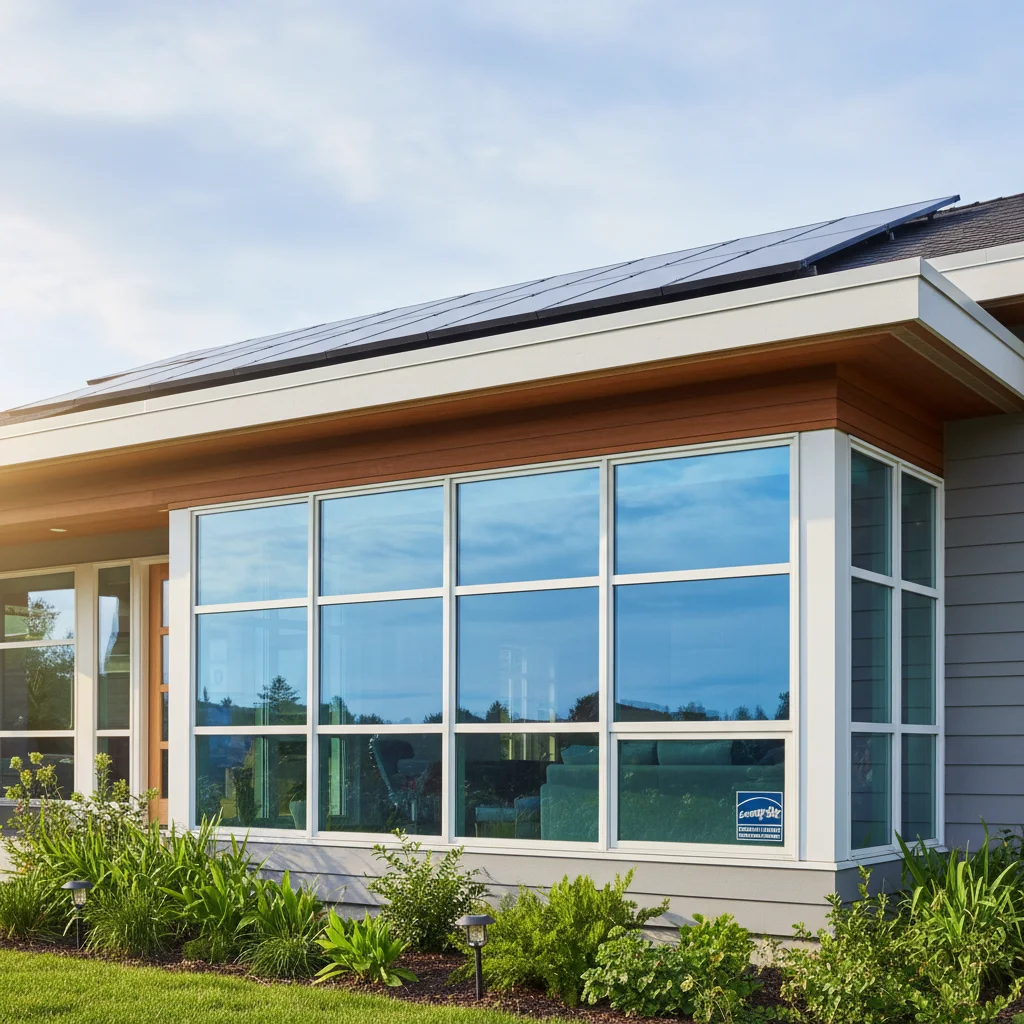
Window replacement costs averaged $15,247 per home in 2025, but federal and state rebates in 2026 now cover up to 100% of installation costs for income-qualified households—and 30-50% for everyone else. The catch? Most homeowners don't know these programs exist, and funding runs out fast.
How Much Can You Get Back With an Energy Star Window Rebate?
Federal Energy Star window rebates in 2026 provide $1,600-$8,000 per household through the Home Efficiency Rebates program, with amounts scaled by income level and project scope. State and utility programs add $500-$3,000 in additional rebates, creating total savings of $2,100-$11,000 for qualifying window replacements.
The Home Efficiency Rebates (formerly HOMES program) pays rebates based on whole-home energy savings achieved after upgrade completion. And window replacement typically qualifies when paired with air sealing, contributing 15-25% toward the required 20% energy reduction threshold. But standalone window projects rarely meet the minimum savings requirement—most homeowners need to bundle windows with insulation or HVAC upgrades to qualify.
So income determines your maximum rebate tier: households earning less than 80% of area median income (AMI) receive up to $8,000, while those earning 80-150% AMI get up to $4,000. Homeowners above 150% AMI don't qualify for federal rebates but can still claim the 30% federal tax credit on window costs through 2032, capped at $600 per year.
| Program | Maximum Rebate | Income Requirement | Deadline |
|---|---|---|---|
| Federal Home Efficiency Rebates | $8,000 | <80% AMI | Funds last 8-10 years |
| State/Utility Rebates | $500-$3,000 | Varies by program | Annual budgets |
| Federal Energy Efficient Home Credit (IRS) | Ended Dec 31, 2025 | — | Ended Dec 31, 2025 |
What Windows and Equipment Qualify for Energy Star Rebates?
Energy Star certified windows meeting climate-zone specific U-factor and Solar Heat Gain Coefficient (SHGC) requirements qualify for rebates in 2026. Northern climate zones (1-4) require U-factors of 0.27 or lower, while southern zones (5-8) prioritize SHGC ratings of 0.25 or lower to reduce cooling loads.
Eligible window products include double or triple-pane units with low-emissivity (Low-E) coatings, argon or krypton gas fills, and insulated frames made from vinyl, fiberglass, or wood composite materials. And the Energy Star label must be visible on the window frame or included in manufacturer documentation—installers submit certification proof during rebate applications. But sliding glass doors, skylights, and storm windows don't qualify under most state programs, though they may count toward the federal tax credit.
Or homeowners can verify product eligibility using the Energy Star Product Finder database at energystar.gov, which lists 4,200+ certified window models by manufacturer, climate zone, and performance rating. Calculate your total project savings with our free rebate calculator before ordering materials.
Are There Income Limits or Financial Requirements to Claim the Rebate?
Federal Home Efficiency Rebates impose strict income verification requirements, with households below 80% area median income receiving maximum rebates of $8,000 and those at 80-150% AMI capped at $4,000. Applicants above 150% AMI don't qualify for federal rebates but remain eligible for the 30% federal tax credit through IRS Form 5695.
Income verification requires tax returns from the most recent filing year, plus additional documentation for households with self-employment income, Social Security benefits, or pension distributions. And state agencies calculate AMI using HUD income limits adjusted annually by county—a family of four in San Francisco qualifies at $141,000, while the same household in rural Nebraska qualifies at $77,000. But documentation requirements vary by state: some accept pay stubs and W-2s, while others mandate third-party verification through approved agencies.
So homeowners claiming the federal tax credit face no income restrictions but must own and occupy the home where improvements occur—rental properties don't qualify. Or eligible taxpayers can claim the credit for multiple properties in one tax year, with each home subject to the $600 annual cap on window and door improvements.
How Do You Apply for an Energy Star Window Rebate and What's the Timeline?
Homeowners apply for Energy Star window rebates through state energy offices or designated program administrators after project completion and third-party energy audit verification. Applications require contractor invoices, product certification documents, pre- and post-installation energy assessments, and proof of income for federal programs—submitted via online portals with 60-90 day processing timelines.
The application sequence starts with a pre-installation home energy audit conducted by certified assessors, who establish baseline energy use and recommend qualifying improvements. And contractors must be enrolled in the state rebate program before starting work, or the entire project becomes ineligible—verify contractor status at your state energy office website before signing contracts. But some states allow homeowners to DIY window installation if they hire certified auditors for pre- and post-project verification, though this rarely saves money after audit fees of $400-$800.
Processing times vary by state funding capacity: well-funded programs in California and New York process rebates in 45-60 days, while underfunded states like Alabama and Mississippi take 90-120 days. So budget for upfront costs and wait for reimbursement—instant rebates at point of sale don't exist in 2026 federal programs, though some utilities offer bill credits within 30 days for their own rebate programs.
"The Home Efficiency Rebates program prioritizes equity by offering the highest rebates to low- and moderate-income households, with streamlined application processes and free technical assistance through state energy offices." — U.S. Department of Energy
What's the Current Funding Status and Deadline for Energy Star Window Rebates?
The federal Home Efficiency Rebates program received $4.3 billion in funding under the Inflation Reduction Act, with allocations distributed to states based on population and energy burden metrics. As of March 2026, 47 states have launched their programs, but 12 states report funding depletion projected within 18-24 months due to higher-than-expected demand.
California exhausted its initial $310 million allocation by January 2026 and received a supplemental $85 million in March, while Texas suspended new applications in February after processing 34,000 rebates totaling $187 million. And first-come, first-served rules govern most state programs—applications submitted after funding exhaustion get waitlisted with no guaranteed payout date. The federal Energy Efficient Home Improvement Credit (Section 25C) ended for property placed in service after December 31, 2025 (IRS FS-2025-05). Federal tax credits for this work have ended, but state, local and utility rebates may still apply; check what is available at your address with the DuloCore rebate calculator.
Or homeowners in high-demand states should submit applications within 60 days of project completion to maximize approval odds before budgets deplete. Track your state's remaining funds at the DSIRE database, updated monthly with program status and estimated closure dates.
Can You Stack Energy Star Rebates With Other Incentives and Tax Credits?
Federal rules allow stacking the Home Efficiency Rebates with the Energy Efficient Home Credit, but total incentives can't exceed 100% of project costs. Homeowners can claim both the $8,000 federal rebate and the 30% tax credit (this federal credit ended for property placed in service after December 31, 2025) on the same window project, provided the rebate amount is subtracted from eligible costs before calculating the credit.
And most state and utility rebates stack with federal programs without restriction—California homeowners routinely combine $2,000 state rebates with $8,000 federal rebates and $600 federal tax credits for total savings of $10,600 on $18,000 window projects. But claiming the federal tax credit reduces the cost basis for state tax credits in 14 states, including New York, Massachusetts, and Oregon, effectively creating a coordination penalty of 5-8% on total incentives.
So timing matters for tax credit optimization: claim rebates in the tax year they're received, not when you completed the project. Or split multi-year projects across tax years to maximize annual $600 caps—replacing 10 windows in December 2026 and 8 windows in January 2027 yields $1,200 in credits instead of $600. Learn more about available incentives in our energy tax credits guide.
What Contractor Requirements and State-Specific Rules Apply to Your Rebate?
Federal programs require contractors to hold active licenses, maintain liability insurance of $1 million minimum, and complete state-specific training on rebate program rules and documentation requirements. Contractors must enroll in each state's program database before project commencement, with enrollment requiring background checks, proof of bonding, and past project references.
And 34 states mandate Building Performance Institute (BPI) or RESNET certification for contractors performing rebate-eligible work, with certification costs of $1,500-$3,000 per technician creating barriers for smaller firms. But homeowners hiring uncertified contractors forfeit rebate eligibility entirely—state agencies reject applications without valid contractor enrollment numbers, and post-installation certification doesn't remedy the deficiency.
So verify contractor credentials before signing contracts: request enrollment confirmation from your state energy office, not just the contractor's word. Or check contractor complaint history through state licensing boards and Better Business Bureau records—contractors with unresolved complaints often face rebate processing delays or denials affecting your payout timeline. For comprehensive heating and cooling upgrades, review our guide on heat pump rebates for additional contractor requirements.
Official Sources
- U.S. Department of Energy - Save Energy, Save Money — Federal rebate program details and income qualification guidelines
- Database of State Incentives for Renewables & Efficiency (DSIRE) — Comprehensive state-by-state rebate and incentive tracking
- Energy Star Product Finder — Official searchable database of certified windows by climate zone
Related Reading: Learn more about Deep Energy Retrofit Planning and Double Pane Window Rebate 2026.
Related Reading: Learn more about Window Replacement Roi And Energy Savings.
Frequently Asked Questions
What qualifies for Energy Star window rebates?
Energy Star certified windows meeting climate-zone specific U-factor ratings of 0.27 or lower (northern zones) or SHGC ratings of 0.25 or lower (southern zones) qualify for 2026 rebates. And projects must achieve 20% whole-home energy reduction when paired with other improvements like insulation or air sealing to meet federal program thresholds.
How much can you save with Energy Star window rebates?
Total savings range from $2,100-$11,000 combining federal rebates ($1,600-$8,000), state/utility rebates ($500-$3,000), and federal tax credits (30% of costs, $600 cap). Income-qualified households below 80% area median income receive maximum federal rebates of $8,000, while higher earners claim $4,000 or tax credits only.
Are Energy Star windows eligible for federal tax credits in 2026?
The federal Energy Efficient Home Improvement Credit (Section 25C) ended for property placed in service after December 31, 2025 (IRS FS-2025-05). Form 5695 only covers qualifying work completed by December 31, 2025 and claimed on a 2025 return; the federal 25C and 25D credits ended after that date (IRS FS-2025-05).
What is the application process for Energy Star window rebates?
Homeowners complete pre-installation energy audits, hire enrolled contractors, submit post-installation verification audits, and file applications through state energy office portals with invoices and product certifications. Processing takes 45-120 days depending on state capacity, with reimbursement via check or direct deposit after approval—no instant point-of-sale rebates exist in 2026.
Do Energy Star windows need professional installation to qualify for rebates?
Federal and most state programs require contractor installation by licensed, program-enrolled professionals with BPI or RESNET certification. DIY installations forfeit rebate eligibility in 43 states, though 7 states allow self-installation if homeowners hire certified auditors for pre- and post-project verification at costs of $400-$800 per audit.
Ready to calculate your exact window rebate amount? Use our free rebate calculator to see federal, state, and utility incentives available at your address—plus tax credit estimates and projected energy savings over 15 years. Get your personalized rebate breakdown in under 60 seconds.
Last updated: April 14, 2026. Reviewed by the DuloCore Editorial Team. About our authors.
Check your California insulation rebate eligibility — see the programs you qualify for and the dollar amounts on our California insulation rebate finder.