Update (2026): The federal Energy Efficient Home Improvement Credit (Section 25C) expired December 31, 2025, following the passage of the OBBBA. Check state and local programs for current incentives.
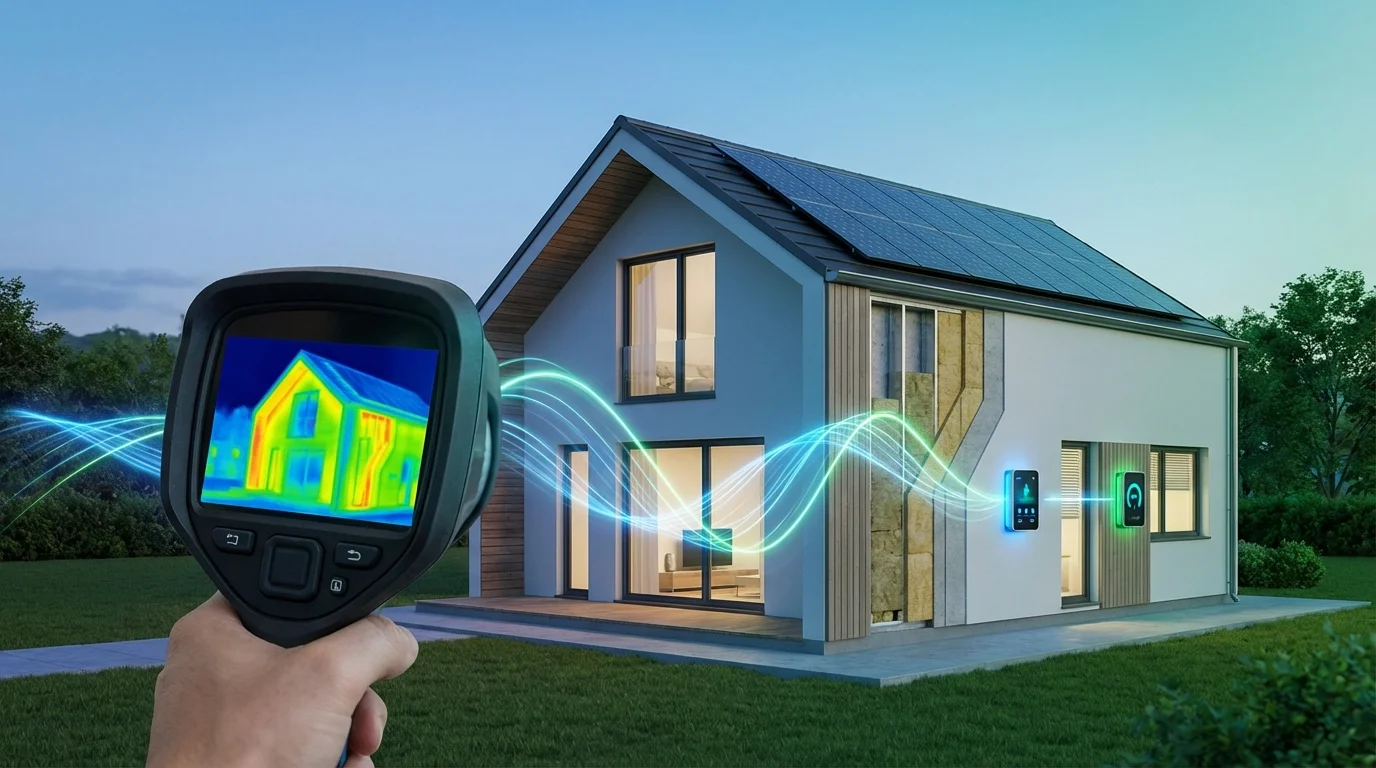
Residential buildings account for 21% of total U.S. energy consumption, with heating and cooling alone making up over 50% of a typical home's energy bill. So with utility costs rising an average of 4.5% annually, a comprehensive plan to slash that usage is no longer optional—it's a financial necessity. Deep energy retrofit planning provides a strategic roadmap to achieve these reductions, moving beyond simple fixes to a whole-house transformation.
What Deep Energy Retrofit Rebates Are Available in My State and Through My Utility, and What Are the Income and Equipment Eligibility Requirements?
State and utility deep energy retrofit rebates in 2026 provide homeowners up to $14,000 for qualifying projects. But eligibility is income-dependent, often requiring households to be at or below 80% of the Area Median Income (AMI), and equipment must meet specific ENERGY STAR certifications.
So rebate availability for 2026 varies drastically by location. For example, programs in states like California and New York offer tiered incentives based on the percentage of energy savings achieved, often requiring a 20% reduction to qualify. And eligibility frequently hinges on income, with programs like the Home Electrification and Appliance Rebate (HEAR) program reserving the largest rebates for low-income households earning less than 80% of the AMI. But equipment requirements are standardized, mandating that items like heat pumps, insulation, and windows meet or exceed ENERGY STAR or Consortium for Energy Efficiency (CEE) Tier 1 specifications. Many programs also require a pre- and post-project home energy audit to verify savings. Homeowners must check with their local utility and state energy office for specific 2026 program rules and funding levels.
The core tension in deep energy retrofit planning is balancing the upfront project cost, which averages $20,000 to $60,000, against the long-term energy savings and available incentives. So while a deep energy retrofit cuts a home's energy use by 50% or more, navigating the complex web of local rebates and federal credits is critical to making the investment financially viable from day one.
How Do I Apply for Deep Energy Retrofit Incentives, and What Key Deadlines Should I Know?
The application process for 2026 deep energy retrofit incentives typically involves a pre-approval from a program administrator, followed by project completion and submission of paid invoices. And key deadlines are often set for December 31, 2026, but some programs operate on a first-come, first-served basis.
So the first step is always to confirm eligibility and reserve funds, as many state-level programs have limited budgets that are exhausted before the year-end deadline. And applicants usually submit an initial application with a project proposal and contractor bids. But once pre-approved, the homeowner proceeds with the installation. Upon completion, final documentation—including paid invoices, contractor certification forms, and a post-installation inspection report—is submitted for reimbursement. The U.S. Department of Energy notes the importance of documentation:
"Keep copies of all your receipts and paperwork. You'll need them for your rebate application and for your tax records." — U.S. Department of Energy
Deadlines are strict; missing a submission window often results in a forfeited rebate. And some programs have rolling application periods, while others have a single annual cutoff, typically in the fourth quarter. Check your specific program's 2026 timeline before committing to any project.
Is Deep Energy Retrofit Funding Still Available, and Can I Combine (Stack) Multiple Rebates?
Deep energy retrofit funding through the Inflation Reduction Act (IRA) is available through December 31, 2025, with billions allocated to state energy offices. And homeowners can often stack federal energy tax credits with state and utility rebates, maximizing total savings on projects like insulation and heat pumps.
Yes, funding is available for 2026. But the availability is managed at the state level, so funds in high-demand areas can run out quickly. And stacking incentives is a key strategy for affordability. For instance, a homeowner can claim a federal tax credit of 30% (up to $2,000) for a new heat pump and combine it with a state rebate that offers another $1,500. Or they can pair a utility's $500 weatherization rebate with federal credits for insulation and air sealing. The Database of State Incentives for Renewables & Efficiency (DSIRE) confirms this approach:
"Many state and utility incentives can be combined with federal tax credits." — DSIRE
This layering of incentives can reduce the net cost of a project by 40% to 70%. Use our free rebate calculator to see what combinations you qualify for.
Deep Energy Retrofit Incentive Comparison (2026)
| Incentive Program | Maximum Amount | Key Eligibility Requirement | Application Deadline |
|---|---|---|---|
| Federal Clean Energy Credit | Ended Dec 31, 2025 | — | December 31, 2025 |
| State HEAR Rebates | Up to $14,000 | Income <150% of Area Median Income | Varies by state (check funding) |
| Utility Heat Pump Rebate | $500 - $2,500 | Must be a utility customer; ENERGY STAR unit | Typically December 31, 2026 |
What Specific Contractor Qualifications Are Required for Deep Energy Retrofit Projects?
Contractors for deep energy retrofit projects must often hold specific certifications, such as Building Performance Institute (BPI) credentials or be part of a state-approved network. So programs require licensed and insured contractors to ensure work meets efficiency and safety standards, which is a prerequisite for rebate approval.
Most state and utility rebate programs maintain a list of pre-approved or "participating" contractors. And hiring from this list is often a condition of receiving the incentive. So these contractors are vetted to ensure they carry adequate insurance and hold relevant licenses. But the technical requirement usually involves certification from an organization like the Building Performance Institute (BPI), which trains professionals in whole-home energy analysis and performance. For example, a contractor performing an insulation and air sealing project may need a BPI Building Analyst or Envelope Professional certification. Using an uncertified contractor not only risks poor quality work but will almost certainly disqualify the project from receiving thousands of dollars in available heat pump rebates or other incentives. Always verify contractor credentials through the program administrator's portal before signing a contract.
Official Sources
- ENERGY STAR — Official U.S. government-backed program providing credible, objective information on energy-efficient products and practices.
- Database of State Incentives for Renewables & Efficiency (DSIRE) — The most comprehensive source of information on incentives and policies that support renewables and energy efficiency in the United States.
- IRS.gov Clean Energy Credits — Authoritative information on federal tax credits for energy-efficient home improvements. (note: the federal 25C and 25D credits ended for projects completed after December 31, 2025)
Related Reading: Learn more about Green Home Certification Process.
Frequently Asked Questions
What are the eligibility criteria for deep energy retrofit programs?
Eligibility for 2026 programs typically depends on three factors: income, location, and project scope. So many high-value rebates are reserved for households earning below 80% or 150% of the Area Median Income (AMI). And your home must be located within the service territory of the sponsoring utility or state. But projects must also achieve a minimum energy savings target, often 20% or more, verified by a required energy audit.
What financial incentives are available for deep energy retrofit projects?
Homeowners can access several layers of incentives in 2026. These include federal tax credits covering 30% of project costs (up to $3,200 annually for improvements and no cap for renewables), state rebates offering up to $14,000 for low-income households, and local utility rebates providing hundreds or thousands for specific upgrades like heat pumps or insulation. So stacking these incentives can cover over 50% of total project costs.
How does deep energy retrofit planning differ from standard home energy upgrades?
Standard upgrades focus on replacing single components, like a furnace or a window. But deep energy retrofit planning uses a comprehensive, whole-house approach. It starts with a detailed home energy audit to model how multiple improvements—such as air sealing, insulation, high-efficiency HVAC, and window replacements—work together as a system to achieve energy savings of 50% or more, a far greater reduction than any single upgrade can deliver.
Updated: April 14, 2026 — fact-checked by DuloCore Research. About our editorial process.