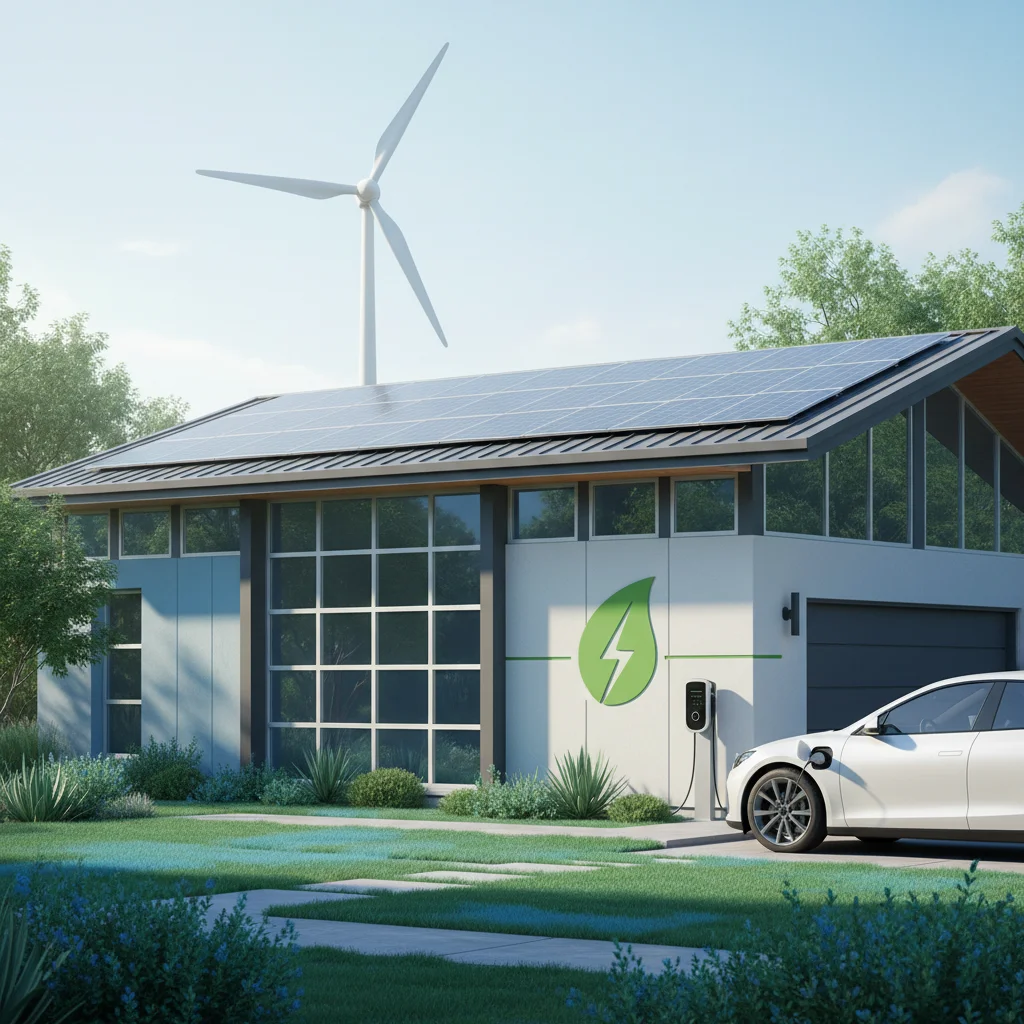
California homeowners left $1.2 billion in unclaimed energy rebates on the table in 2025, largely because they didn't understand the maze of overlapping eligibility rules governing federal tax credits, state programs, and utility incentives. In 2026, the stakes are even higher: combined rebates for heat pumps, insulation, and solar installations now reach $14,000–$24,000 per household, but only if applicants meet specific income thresholds, contractor licensing requirements, and documentation standards.
California energy rebate eligibility in 2026 requires meeting program-specific income thresholds (80%–150% Area Median Income for state programs, up to 400% FPL for federal credits), using licensed contractors with proper certifications, installing ENERGY STAR or AHRI-certified equipment, and submitting applications within 90–180 days of project completion. Combined federal, state, and utility rebates total $8,000–$24,000 per home.
The confusion stems from three separate systems operating under different rules: the Inflation Reduction Act (IRA) federal tax credits running through 2032, California's own rebate programs funded through cap-and-trade revenue, and utility company incentives managed by PG&E, SCE, SDG&E, and 40+ municipal utilities. And each system defines "eligibility" differently—what qualifies you for a federal credit won't necessarily qualify you for a state rebate, even for the same heat pump installation.
What Are the Current Deadlines for California Energy Rebates in 2026?
California energy rebate deadlines in 2026 operate on rolling application windows rather than hard cutoff dates. State programs funded through the California Public Utilities Commission (CPUC) accept applications until annual budgets are exhausted, typically in Q3 or Q4. The federal home energy tax credits (Sections 25C and 25D) ended for projects completed after December 31, 2025 (IRS FS-2025-05). Federal tax credits for this work have ended, but state, local and utility rebates may still apply; check what is available at your address with the DuloCore rebate calculator. Utility rebates run year-round with 90–180 day post-installation application windows.
The Tech Clean California program, which offers $3,000–$8,000 for heat pump installations, operates on a first-come, first-served basis with budget exhaustion expected in September–October 2026 based on 2025 claim rates. And PG&E's Energy Efficiency Rebate Program requires homeowners to submit applications within 180 days of equipment installation, with funding allocated in quarterly cycles.
But federal tax credits work differently. Homeowners can claim the IRA's Energy Efficient Home Improvement Credit (replacing the expired Section 25C) on their 2026 tax return filed by April 15, 2027, covering expenses from January 1–December 31, 2026. So timing your project to maximize both state rebates and federal credits requires coordinating installation dates with both program budgets and tax filing schedules.
"Homeowners should apply for state and utility rebates immediately after project completion, as program funds can be exhausted months before the calendar year ends." — California Energy Commission
Check your rebate calculator for real-time funding availability across all three systems.
Which California Energy Rebates Am I Eligible For?
California energy rebate eligibility hinges on four distinct criteria: household income relative to Area Median Income (AMI), property type and ownership status, equipment specifications matching ENERGY STAR or AHRI certifications, and contractor licensing requirements. State programs like Tech Clean California restrict access to households earning 80%–400% AMI. Renters qualify for portable upgrades (window AC units, portable heat pumps) but not whole-home systems requiring landlord consent.
Income verification separates programs into tiers. The Energy Savings Assistance Program (ESAP) serves households at or below 250% of federal poverty level (~$78,000 for a family of four in 2026) with free audits and installations. Tech Clean California's highest rebates ($8,000 for heat pumps) go to households earning 80%–150% AMI, approximately $76,000–$142,500 in Los Angeles County. And moderate-income households earning 150%–400% AMI still qualify for reduced rebates of $3,000–$5,000.
But equipment matters as much as income. Heat pump rebates require AHRI-certified systems with HSPF2 ratings of 7.8+ (cold climates) or 8.5+ (moderate climates). Insulation rebates demand R-values of R-38 for attics and R-19 for crawl spaces. And all work must be performed by C-20 HVAC or C-2 Insulation contractors licensed through the California Contractors State License Board (CSLB). Homeowners using unlicensed contractors forfeit all rebate eligibility, regardless of equipment quality.
For comprehensive details on qualifying improvements, review our guide to energy tax credits.
How Much Money Can You Get From California Energy Rebates?
California energy rebates in 2026 range from $500 for basic weatherization to $24,000 for comprehensive whole-home electrification projects combining heat pumps, solar, and insulation. Heat pump water heaters qualify for $1,800–$5,500 (federal + state + utility combined). Ducted heat pump HVAC systems reach $8,000 state rebates plus $2,000 federal credits for $10,000 total. Attic insulation upgrades earn $500–$1,500 depending on square footage and starting R-value.
The highest rebate scenarios stack three layers. A San Jose homeowner earning 120% AMI ($114,000 household income) installing a $15,000 ducted heat pump qualifies for: - $8,000 Tech Clean California rebate - The federal Energy Efficient Home Improvement Credit (Section 25C) ended for property placed in service after December 31, 2025 (IRS FS-2025-05). - $1,500 PG&E Energy Upgrade California incentive Total: $11,500 (76% of project cost covered)
And moderate-income households installing heat pump water heaters see similar stacking. A $3,500 unit qualifies for $1,800 federal credit + $2,500 state rebate + $750 utility incentive = $5,050 total, exceeding installation cost by $1,550 in certain service territories.
But rebate amounts decline sharply above 150% AMI. Households earning $200,000+ receive only federal credits ($2,000 for HVAC, $1,200 for insulation, $600 for air sealing) with no state or utility add-ons in most cases. So the rebate-to-income sweet spot sits at 100%–150% AMI, where combined incentives cover 60%–80% of project costs.
Explore detailed stacking scenarios in our heat pump rebates breakdown.
What's the Step-by-Step Process to Claim Your California Energy Rebate?
The California energy rebate claim process requires sequential steps across three parallel systems. Start with a certified home energy audit ($200–$600, free for ESAP-eligible households) identifying cost-effective upgrades. Next, pre-enroll in state programs like Tech Clean California before signing contracts, as retroactive applications are rejected. Select licensed contractors from program-approved lists, ensuring they submit required documentation. Install equipment meeting program specifications. Submit rebate applications within program deadlines (90–180 days post-installation). Form 5695 only covers qualifying work completed by December 31, 2025 and claimed on a 2025 return; the federal 25C and 25D credits ended after that date (IRS FS-2025-05).
Pre-enrollment is non-negotiable for state programs. Tech Clean California requires homeowners to create accounts at techcleanca.com and verify income through tax return uploads or pay stub submissions before contractor selection. And the platform matches applicants with participating contractors who handle rebate paperwork as part of installation contracts, reducing homeowner administrative burden from 8–12 hours to under 2 hours.
Contractor selection determines success rates. Program-approved contractors submit technical documentation (AHRI certificates, permit records, installation photos) directly to rebate administrators, achieving 94% first-time approval rates versus 67% for homeowner-submitted applications. Form 5695 only covers qualifying work completed by December 31, 2025 and claimed on a 2025 return; the federal 25C and 25D credits ended after that date (IRS FS-2025-05).
"Pre-enrollment and contractor selection are the two most common failure points in the rebate process—addressing them upfront prevents 80% of claim rejections." — Database of State Incentives for Renewables & Efficiency
Timeline expectations: state rebates process in 45–90 days, utility rebates in 30–60 days, federal tax credits apply immediately to tax liability. So cash flow planning requires bridging 1–3 months between installation payment and rebate receipt.
How Do California Energy Rebates Compare to Federal Tax Credits?
California energy rebates and federal tax credits differ fundamentally in structure, amount, eligibility, and claiming process. State rebates provide upfront point-of-sale discounts or post-installation checks totaling $3,000–$8,000 per project with income restrictions at 80%–400% AMI. Federal IRA credits function as nonrefundable tax reductions worth $1,200–$2,000 annually with no income cap but requiring sufficient tax liability. Combined stacking produces $10,000–$12,000 total incentives for ducted heat pumps and $6,000–$8,000 for heat pump water heaters.
The mechanical difference matters for budgeting. California's Tech Clean California rebate arrives as a check or direct deposit 60–90 days after installation, reducing out-of-pocket costs for homeowners financing projects. And point-of-sale utility rebates (offered by SCE and SDG&E) discount invoices immediately, with contractors receiving reimbursement directly from utilities.
A homeowner owing $5,000 in federal taxes who installs a $15,000 heat pump qualifies for a $2,000 credit, reducing tax liability to $3,000. The credit is nonrefundable—excess credit doesn't generate a refund—but unused amounts carry forward to future tax years through 2032. So homeowners with low tax liability ($1,000 or less) benefit more from state rebates than federal credits.
Income restrictions flip the calculus for high earners. California rebates phase out entirely above 400% AMI (~$380,000 for a family of four). A San Francisco household earning $500,000 receives zero state rebates but still claims the full $2,000 federal credit, $1,200 insulation credit, and $600 air sealing credit for $3,800 total.
And documentation requirements diverge sharply. State rebates demand pre-enrollment, contractor certifications, and installation photos. Form 5695 only covers qualifying work completed by December 31, 2025 and claimed on a 2025 return; the federal 25C and 25D credits ended after that date (IRS FS-2025-05).
What Documentation Do You Need to Prove Eligibility?
California energy rebate documentation requirements span income verification, equipment certifications, contractor licensing proof, and installation records. State programs require federal tax returns or pay stubs covering the most recent 12 months, AHRI certificates matching installed equipment serial numbers, contractor C-20 or C-2 license verification through CSLB, and timestamped installation photos showing equipment labels and permit inspection stickers. Form 5695 only covers qualifying work completed by December 31, 2025 and claimed on a 2025 return; the federal 25C and 25D credits ended after that date (IRS FS-2025-05).
Income documentation varies by program. Tech Clean California accepts 2025 federal tax returns (Form 1040) showing adjusted gross income, with household size adjustments applied to AMI calculations. And alternative documentation includes 12 consecutive pay stubs, Social Security benefits statements, or CalFresh enrollment confirmation for ESAP applicants. Documents must be uploaded as PDF files under 10MB, with redaction of Social Security numbers except the last four digits.
Equipment certifications prevent the most common rejections. Heat pump rebates require AHRI Certificate of Product Ratings showing HSPF2, SEER2, and COP values meeting program minimums. And water heater rebates demand Uniform Energy Factor (UEF) ratings of 3.3+ for 50-gallon tanks, verified through ENERGY STAR certificates downloaded from manufacturer websites. Serial number matching between certificates and installation photos is mandatory—mismatches trigger automatic denials.
Contractor documentation shifts burden from homeowner to installer. Program-approved contractors submit permit records, building inspection sign-offs, and warranty registrations directly to rebate portals. But homeowners must verify contractor CSLB license status at cslb.ca.gov before signing contracts, as unlicensed work voids all rebate eligibility even if equipment meets specifications.
So the practical workflow: collect tax returns → verify contractor license → obtain AHRI certificates from contractor → photograph installed equipment with serial numbers visible → submit to rebate portal within 180 days → file federal Form 5695 with next tax return.
Official Sources
- U.S. Department of Energy - Energy Saver — Federal guidance on energy efficiency rebates, tax credits, and home upgrade resources (note: the federal 25C and 25D credits ended for projects completed after December 31, 2025)
- Database of State Incentives for Renewables & Efficiency (DSIRE) — Comprehensive database of state and utility rebate programs, updated quarterly
- California Energy Commission — Official state resource for California-specific energy programs, eligibility rules, and funding updates
Related Reading: Learn more about Energy Star Rebate Program and Energy Star Washer Dryer Rebate.
Related Reading: Learn more about California Rebate Application Process Timeline.
Frequently Asked Questions
What qualifications do I need to be eligible for California energy rebates?
California energy rebate eligibility requires meeting income thresholds of 80%–400% Area Median Income for state programs (no cap for federal credits), owning or renting the property where upgrades occur (with landlord permission for renters), installing ENERGY STAR or AHRI-certified equipment through CSLB-licensed contractors (C-20 for HVAC, C-2 for insulation), and submitting applications within 90–180 days of project completion. Combined qualifications unlock $8,000–$24,000 in rebates.
How much money can I get from California energy rebate programs?
California energy rebate programs provide $3,000–$8,000 for heat pump HVAC systems, $1,800–$5,500 for heat pump water heaters, $500–$1,500 for insulation upgrades, and $250–$600 for air sealing through state programs. Federal tax credits add $2,000 for HVAC, $1,200 for insulation, and $600 for air sealing. Utility rebates contribute $500–$1,500 depending on territory. Stacking all three produces $10,000–$12,000 total for comprehensive projects.
What is the deadline to apply for California energy rebates in 2026?
California energy rebates in 2026 operate on rolling deadlines tied to budget exhaustion rather than fixed calendar dates. Tech Clean California accepts applications until annual funding is depleted (projected September–October 2026). Utility rebates require submission within 90–180 days of installation. The federal home energy tax credits (Sections 25C and 25D) ended for projects completed after December 31, 2025 (IRS FS-2025-05). So 2026 installations must be claimed by April 15, 2027.
Do I need to hire a licensed contractor for California energy rebate programs?
California energy rebate programs require contractors licensed through the California Contractors State License Board (CSLB): C-20 HVAC licenses for heat pump installations, C-2 Insulation licenses for insulation and air sealing, and active, non-expired status verified at cslb.ca.gov. Unlicensed work disqualifies all rebate applications regardless of equipment quality or homeowner eligibility. And program-approved contractors handle 94% of documentation, reducing homeowner administrative burden and achieving higher first-time approval rates.
What is the difference between California energy rebates and federal tax credits?
California energy rebates arrive as upfront point-of-sale discounts or post-installation checks within 60–90 days, totaling $3,000–$8,000 per project with income caps at 80%–400% AMI. Federal tax credits reduce tax liability dollar-for-dollar through IRS Form 5695, worth $1,200–$2,000 annually with no income restrictions but requiring sufficient tax liability to claim full value. State rebates demand pre-enrollment and contractor certifications; federal credits require only equipment receipts and manufacturer certifications.
Ready to claim your rebates? Use our free rebate calculator to estimate your total incentives across federal, state, and utility programs. Enter your zip code, household income, and planned upgrades to see real-time eligibility and funding availability. Most California homeowners qualify for $8,000–$14,000 in combined rebates—find yours in under 2 minutes.
Updated on April 14, 2026. Fact-checked by DuloCore Editors. About our research team.