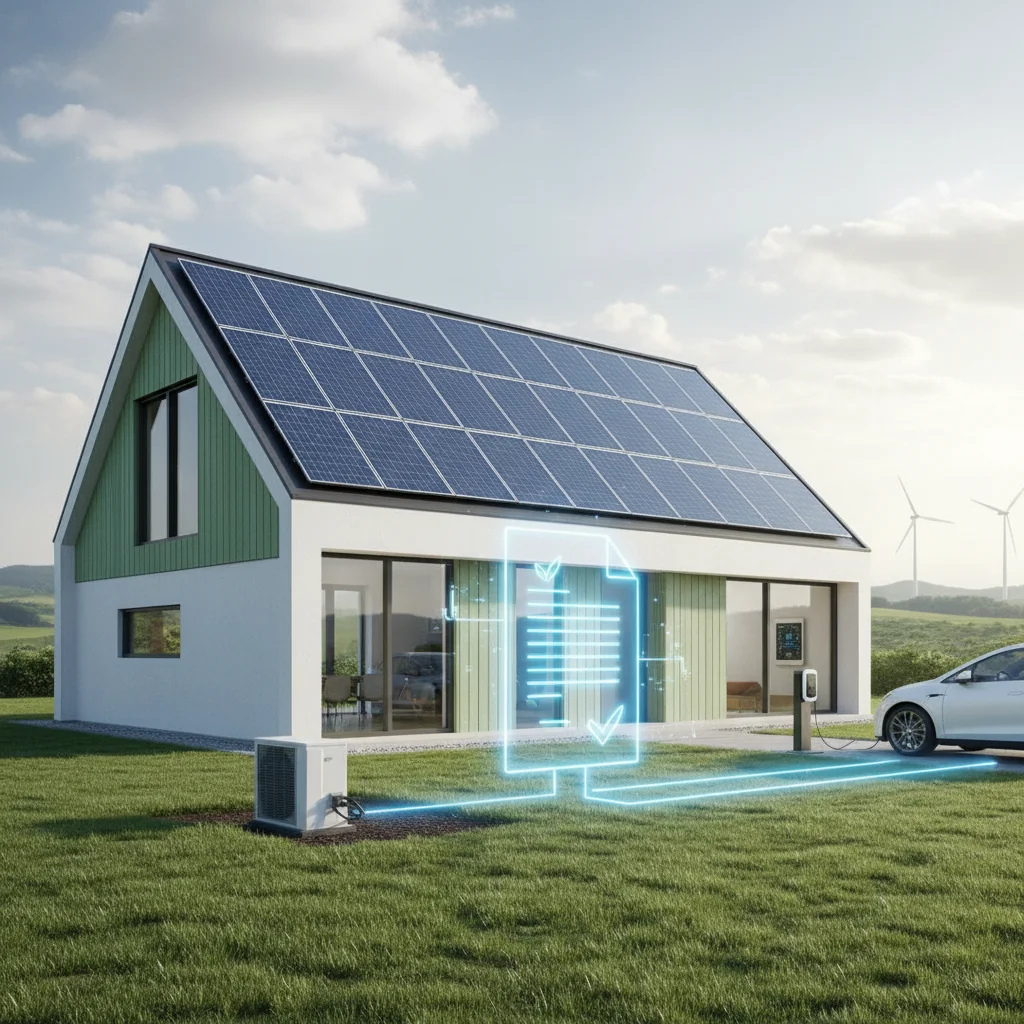
The federal tax credit that saved homeowners $4.2 billion in 2024 expired on January 1, 2026. The federal Energy Efficient Home Improvement Credit (Section 25C) ended for property placed in service after December 31, 2025 (IRS FS-2025-05). Federal tax credits for this work have ended, but state, local and utility rebates may still apply; check what is available at your address with the DuloCore rebate calculator.
What is the Energy Efficient Home Improvement Credit and What Percentage Can You Claim?
The federal Energy Efficient Home Improvement Credit (Section 25C) ended for property placed in service after December 31, 2025 (IRS FS-2025-05). Form 5695 only covers qualifying work completed by December 31, 2025 and claimed on a 2025 return; the federal 25C and 25D credits ended after that date (IRS FS-2025-05). The credit applies to installation costs and equipment purchases for insulation, windows, doors, heat pumps, and electrical upgrades that meet EnergyStar certification standards.
And the 30% rate remains fixed through 2032, giving homeowners an eight-year window. But the credit phases down to 26% in 2033 and 22% in 2034 before expiring entirely. So installation timing matters for maximizing savings.
How Much Can You Save? Understanding the Annual Cap and Equipment Limits
The federal Energy Efficient Home Improvement Credit (Section 25C) ended for property placed in service after December 31, 2025 (IRS FS-2025-05). The cap breaks down into two categories: $1,200 for building envelope improvements (insulation, windows, doors) and $2,000 for heat pumps, heat pump water heaters, and biomass stoves.
Or look at it this way: a homeowner installing $8,000 in new windows and $10,000 in heat pumps claims $2,400 in window credits (30% of $8,000) but only receives $1,200 due to the envelope cap, plus the full $2,000 heat pump credit—totaling $3,200 in tax savings.
And the credit carries forward. If qualified expenses exceed the annual cap, homeowners can't roll over unused amounts to the following tax year. Each calendar year resets the limit.
| Program | Annual Cap | Equipment Cap | Credit Rate | Expiration |
|---|---|---|---|---|
| IRA Energy Efficiency Credit | Ended Dec 31, 2025 | Ended Dec 31, 2025 | Ended Dec 31, 2025 | Ended Dec 31, 2025 |
| Old Section 25C (expired) | $2,000 | $500 (per item) | 10-30% | December 31, 2025 |
| Section 25D Clean Energy Credit | Ended Dec 31, 2025 | Ended Dec 31, 2025 | Ended Dec 31, 2025 | Ended Dec 31, 2025 |
Which Home Improvements and Equipment Qualify for the Tax Credit?
Qualified improvements include exterior windows ($600 cap), exterior doors ($500 per door, $1,200 total), central air conditioners, electric heat pumps, heat pump water heaters, biomass stoves, insulation, and electrical panel upgrades. All equipment must meet EnergyStar certification or equivalent efficiency standards published by the Department of Energy.
But not everything counts. Appliances like refrigerators, dishwashers, and light bulbs don't qualify. And labor costs for building envelope improvements (windows, doors, insulation) aren't included—only the equipment itself. So a $5,000 window replacement with $1,500 in labor costs only qualifies for $3,500 in credits.
The IRS publishes a complete list of qualifying equipment with specific efficiency requirements in Publication 5307. Homeowners should verify certification before purchasing to avoid losing the credit during tax filing. Use our free rebate calculator to estimate your total savings across federal, state, and utility programs.
"Qualified energy property expenditures include amounts paid or incurred for any qualified energy efficiency improvements installed during the taxable year and for residential energy property expenditures." — Energy.gov Energy Saver
Are You Eligible? Income Limits and Other Requirements Explained
The IRA energy efficiency credit has no income limits for 2026—unlike the energy tax credits for electric vehicles or solar installations. Any taxpayer who owns and occupies the property as a principal residence qualifies. Renters don't qualify unless they own the building. And the credit doesn't apply to new construction—only retrofits of existing homes.
So second homes qualify. But rental properties don't unless the owner also lives in the unit as a primary residence. The IRS defines principal residence as the property where the taxpayer lives most of the year.
And married couples filing jointly claim the full credit if both spouses meet the residency requirement. Married couples filing separately split the credit 50/50 unless one spouse pays 100% of the qualified expenses—then that spouse claims the full amount.
Which Form Do You File to Claim the Energy Efficient Home Improvement Credit?
Form 5695 only covers qualifying work completed by December 31, 2025 and claimed on a 2025 return; the federal 25C and 25D credits ended after that date (IRS FS-2025-05). Part II of Form 5695 covers the energy efficient home improvement credit, while Part I covers clean energy credits for solar, geothermal, and wind installations.
The form requires manufacturer certification statements proving equipment meets efficiency standards. Homeowners should retain these certificates—usually provided at purchase or available for download on the manufacturer's website—for at least three years after filing in case of IRS audit.
And the credit is nonrefundable. If the credit exceeds tax liability for the year, the taxpayer doesn't receive the difference as a refund. But the credit can reduce total tax owed to zero. So timing installations across multiple tax years maximizes value for homeowners with lower tax bills.
When Can You Claim This Credit? Start Dates, Expiration Dates, and Phase-Out Schedules
The IRA energy efficiency credit took effect January 1, 2023, replacing the expired 25C credit. The 30% rate continues through December 31, 2032. The rate drops to 26% for 2033, then 22% for 2034, before expiring entirely on January 1, 2035.
But installation date determines eligibility—not purchase date. The federal Energy Efficient Home Improvement Credit (Section 25C) ended for property placed in service after December 31, 2025 (IRS FS-2025-05). And homeowners must file the credit in the tax year when installation occurred.
So a homeowner installing qualified equipment in November 2026 claims the credit on their 2026 tax return filed by April 15, 2027. Extensions to file don't extend the installation deadline—only the filing deadline.
Can You Stack This Credit with Other Energy Tax Credits and Rebates?
Homeowners can combine the IRA energy efficiency credit with state rebates, utility incentives, and the separate IRA clean energy credit (Section 25D) for solar, geothermal, and battery storage. The credits don't reduce each other—they stack.
Or consider this scenario: a homeowner installs a $20,000 geothermal heat pump qualifying for both credits. The clean energy credit covers 30% of the full cost ($6,000) with no cap. The energy efficiency credit adds another $2,000 under the heat pump equipment cap—totaling $8,000 in federal tax credits on a single installation.
And state programs add more. Many states offer additional rebates for heat pump rebates that don't reduce federal credit eligibility. The Database of State Incentives for Renewables & Efficiency (DSIRE) tracks current programs by state.
But utility rebates sometimes reduce the qualified cost basis. If a utility rebate covers $2,000 of a $10,000 heat pump installation, the federal credit applies to $8,000—not the full $10,000. Check your utility's rebate terms before calculating federal credits.
"Taxpayers may claim the energy efficient home improvement credit and the residential clean energy credit for the same tax year, provided the improvements qualify under each program's requirements." — DSIRE USA
Official Sources
- IRS Topic No. 611: Energy Efficient Home Improvement Credit — Federal tax guidance on qualifying improvements and filing requirements.
- Energy.gov Energy Saver — Department of Energy resources on energy efficiency upgrades and federal rebate programs.
- DSIRE USA — Database of state, utility, and federal incentives for energy efficiency and renewable energy.
Frequently Asked Questions
What is the energy efficient home improvement credit and who qualifies?
The federal home energy tax credits (Sections 25C and 25D) ended for projects completed after December 31, 2025 (IRS FS-2025-05). Any homeowner who occupies the property as a principal residence qualifies—no income limits apply. Renters and landlords don't qualify unless they own and occupy the unit as a primary residence.
How much money can you get from the energy efficient home improvement credit?
Homeowners claim up to $3,200 annually: $1,200 for building envelope improvements (windows, doors, insulation) and $2,000 for heat pumps or heat pump water heaters. The credit covers 30% of equipment costs, so reaching the $3,200 cap requires approximately $10,667 in qualified expenses. Unused credit doesn't roll over to future years.
What forms do you need to file to claim the energy efficient home improvement credit?
Form 5695 only covers qualifying work completed by December 31, 2025 and claimed on a 2025 return; the federal 25C and 25D credits ended after that date (IRS FS-2025-05). Retain manufacturer certification statements proving equipment meets EnergyStar or DOE efficiency standards for at least three years.
When is the deadline to claim the energy efficient home improvement credit?
The credit applies to installations completed between January 1, 2023, and December 31, 2032. Taxpayers claim the credit on the tax return for the year when installation occurred, typically due April 15 of the following year. Extensions to file don't extend the installation window—only the filing deadline. The credit rate drops to 26% in 2033 and 22% in 2034 before expiring.
What is the difference between the energy efficient home improvement credit and other energy tax credits?
Form 5695 only covers qualifying work completed by December 31, 2025 and claimed on a 2025 return; the federal 25C and 25D credits ended after that date (IRS FS-2025-05). Homeowners can claim both credits in the same tax year for different qualifying improvements without reducing either credit amount.
Ready to maximize your energy savings? Use our rebate calculator to find every federal, state, and utility incentive available for your home improvements—plus get step-by-step guidance on filing Form 5695 and claiming your credits.
Last updated April 14, 2026 — reviewed by DuloCore Editorial. About our authors.