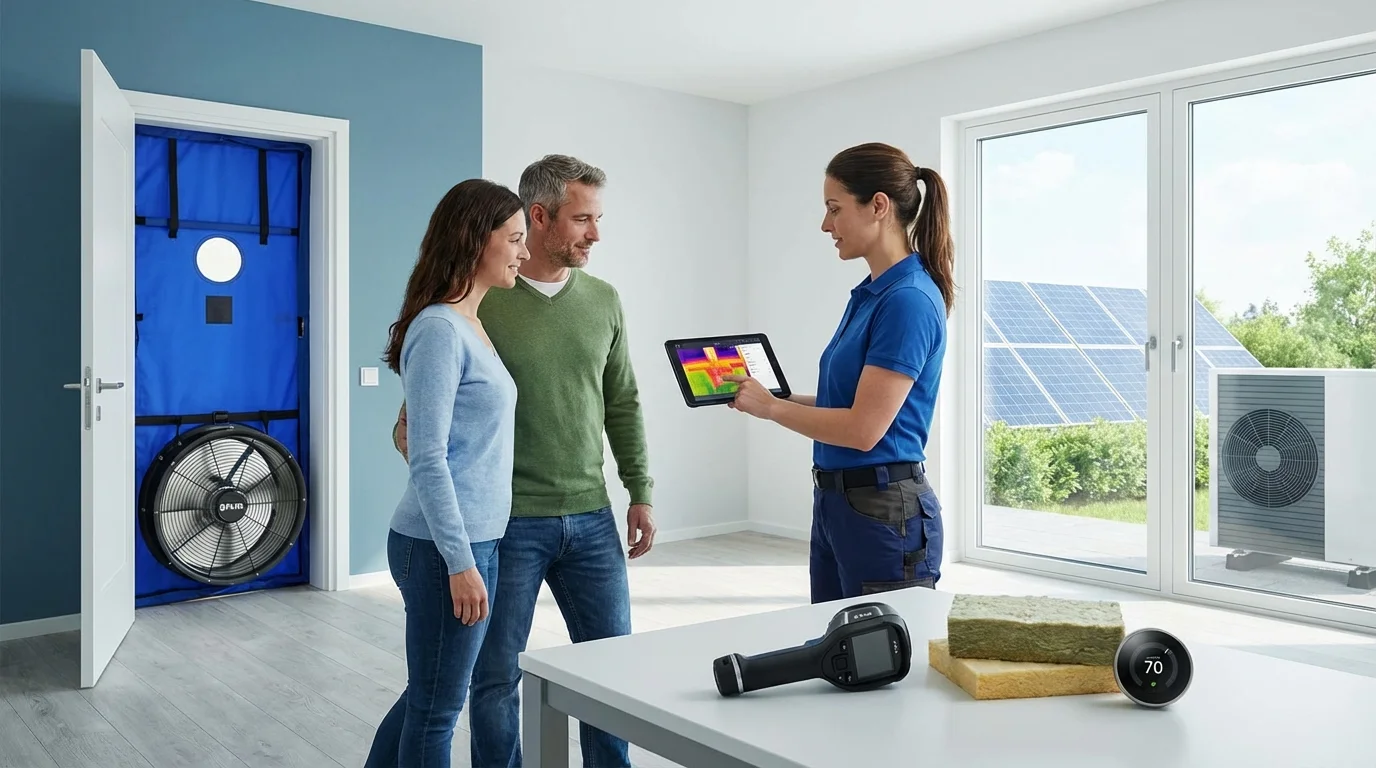
Over 40% of total U.S. energy consumption is tied to buildings, with homes representing a massive piece of that carbon footprint. As the country shifts away from fossil fuels, the first step for any homeowner isn't buying a new appliance; it's understanding exactly where your home's energy is going. So an electrification-focused audit provides the specific roadmap needed to transition away from gas and oil, unlocking thousands in savings and rebates.
What Financial Rebates and Grants Are Available for Electrification Home Energy Audits in My State?
An electrification home energy audit is a professional assessment identifying opportunities to replace fossil-fuel appliances with electric alternatives. It provides a prioritized roadmap for installations like heat pumps and induction stoves, detailing energy savings and available rebates for 2026.
Financial incentives for these specialized audits vary by location but are widely available. So state energy offices, like NYSERDA in New York or Mass Save in Massachusetts, often provide rebates covering 50-100% of the audit cost, up to $500. And many local utilities offer their own programs, sometimes as an instant discount or a bill credit. The federal High-Efficiency Electric Home Rebate Act (HEEHRA) program, administered by states, also allocates funds that can cover the audit cost for low-to-moderate-income households. But funding is state-dependent and operates on a first-come, first-served basis. Homeowners must check their specific state energy office and utility provider websites for 2026 program details, as funding levels and rebate amounts are updated annually.
Am I Eligible for Electrification Home Energy Audit Incentives Based on Income and Equipment?
Electrification home energy audit incentives are state-administered programs with eligibility based on household income and property type. These 2026 programs often use Area Median Income (AMI) to determine qualification for enhanced rebates, with a common threshold set at 80% of AMI for maximum benefits.
Eligibility for most 2026 incentives hinges on income verification. So homeowners with income below 80% of their Area Median Income (AMI) often qualify for rebates covering up to 100% of the audit cost, sometimes capped at $500. And households between 80% and 150% of AMI frequently qualify for partial rebates covering 50% of the cost. But high-income households above 150% of AMI generally don't qualify for these specific income-based programs, though they can still access federal energy tax credits for the resulting upgrades. The property must be the owner's primary residence. And some programs exclude multi-family buildings with more than four units. Verification requires submitting recent tax returns or other income documentation during the application process.
"The High-Efficiency Electric Home Rebate Act (HEEHRA) provides rebates for low- and moderate-income households to electrify their homes. State energy offices are in charge of setting up and running the programs." — U.S. Department of Energy
How Do I Apply for Electrification Home Energy Audit Programs and What Contractor Requirements Exist?
The application process for a 2026 electrification audit rebate is a multi-step procedure requiring certified contractors and documentation. Homeowners typically apply through a state energy program portal or their local utility's website before any work begins to reserve funding and confirm eligibility.
Applying for an audit rebate starts with finding a qualified professional. So most state and utility programs mandate that the audit be performed by a contractor with a certification from the Building Performance Institute (BPI) or a similar credentialing body. And the homeowner must first pre-apply through the program's online portal, submitting proof of residency and income. After the audit is complete, the contractor provides a detailed report, which the homeowner submits along with a final invoice to receive the rebate. But failure to use a program-approved contractor is the most common reason for application denial. The entire process, from application to payment, typically takes 6-8 weeks. A standard home energy audit is a good first step, but an electrification-focused one is required for certain rebates.
Electrification Incentive Program Comparison
| Program / Incentive | Rebate Amount (2026) | Key Eligibility | Application Deadline |
|---|---|---|---|
| State HEEHRA Program | Up to 100% of audit cost | <150% of Area Median Income | Varies by state; often closes when funds are depleted |
| Local Utility Rebate | $50 - $250 flat rebate | Must be a customer in good standing | Typically December 31, 2026 |
| State Energy Office Grant | 50-75% of cost, up to $400 | All residents, income tiers may vary | Varies, check state website |
What Are the Deadlines and Current Funding Status for Home Electrification Audit Programs?
Home electrification audit program deadlines for 2026 are determined by state and utility budget cycles, with most applications due by December 31. Funding is finite and allocated annually, so popular programs often close early once all the money has been claimed by applicants.
Most state and utility rebate programs operate on an annual cycle, with 2026 funding becoming available in January and application deadlines typically set for the end of the year. But these programs are not guaranteed to last the full year. So funding is allocated on a first-come, first-served basis, and popular programs often exhaust their budgets by the third or fourth quarter. For example, some state programs in 2025 ran out of funds by October. And homeowners should check the program's website for a "funding status" dashboard before applying. Applying early in the calendar year maximizes the chance of securing a rebate. Use our free rebate calculator to find active programs and check their current funding levels in your area.
Can I Combine (Stack) Multiple State and Utility Rebates for My Electrification Home Energy Audit?
Stacking, or combining, multiple rebates for an electrification home energy audit is often permitted but is governed by specific program rules. Homeowners can typically pair a state-level rebate with a local utility incentive, but they can't claim two state grants for the same audit in 2026.
The ability to stack incentives is a powerful way to reduce costs. So a homeowner can often combine a $250 state rebate with a $100 utility rebate for the same $500 audit, cutting the out-of-pocket cost to just $150. But programs usually include a clause preventing the total rebate amount from exceeding the total project cost. And federal programs like HEEHRA can't be combined with other federal incentives for the same specific upgrade, though they can be combined with state or utility rebates. For instance, getting a rebate for an audit doesn't prevent you from claiming rebates for the recommended upgrades, like heat pump rebates. Always read the terms and conditions for each program, as they explicitly state which incentives can and cannot be combined.
Official Sources
- DSIRE (Database of State Incentives for Renewables & Efficiency) — A comprehensive database of state, local, utility, and federal incentives that promote renewable energy and energy efficiency.
- U.S. Department of Energy (DOE) Energy Saver — Federal guidance on home energy savings, electrification, and details on Inflation Reduction Act (IRA) rebates and tax credits. (note: the federal 25C and 25D credits ended for projects completed after December 31, 2025)
- IRS Home Energy Tax Credits — Official information from the Internal Revenue Service on eligibility and rules for claiming federal energy tax credits. (note: the federal 25C and 25D credits ended for projects completed after December 31, 2025)
Related Reading: Learn more about Energy Audit Biggest Energy Wasters Home and Energy Audit Myths Debunked.
Frequently Asked Questions
Who is eligible for an electrification home energy audit?
Eligibility primarily depends on the specific rebate program, but generally, any homeowner can get an audit. For financial incentives in 2026, eligibility is often tied to income. For example, the federal HEEHRA program targets households earning less than 150% of the Area Median Income. Utility rebates typically just require you to be a customer.
What does an electrification home energy audit involve?
An electrification audit includes all the components of a standard audit, like a blower door test and thermal imaging. But it adds a specific focus on creating a plan to replace fossil-fuel systems. The final report prioritizes switching to electric appliances like heat pumps, induction stoves, and EV chargers, and it outlines the associated costs, savings, and available 2026 rebates.
Are there rebates or incentives available for the cost of an electrification home energy audit?
Yes, many states and utilities offer rebates that cover a portion or the entire cost of an audit. These incentives typically range from $150 to $500. For 2026, income-qualified households may get up to 100% of the cost covered through state-administered programs funded by the Inflation Reduction Act.
How does an electrification home energy audit differ from a standard home energy audit?
A standard audit focuses on general efficiency improvements like insulation and air sealing. An electrification audit does that too, but its primary goal is to create a strategic roadmap for phasing out fossil fuels. It specifically assesses the home's electrical panel capacity and provides a cost-benefit analysis for switching to all-electric appliances like heat pumps and induction cooktops.
What are the next steps after an electrification home energy audit to qualify for home electrification rebates?
After the audit, you receive a detailed report with prioritized recommendations. The next step is to use this report to apply for specific appliance rebates, like those for heat pumps or water heaters. You'll need to hire a qualified contractor for the installation and submit the project invoice to the rebate administrator, often the same state or utility office that managed the audit rebate.
Ready to Electrify Your Home?
An electrification audit is the first step. Find out exactly how much you can save on audits, heat pumps, insulation, and more with the DuloCore Rebate Calculator.
Updated: April 14, 2026 — fact-checked by DuloCore Research. About our editorial process.