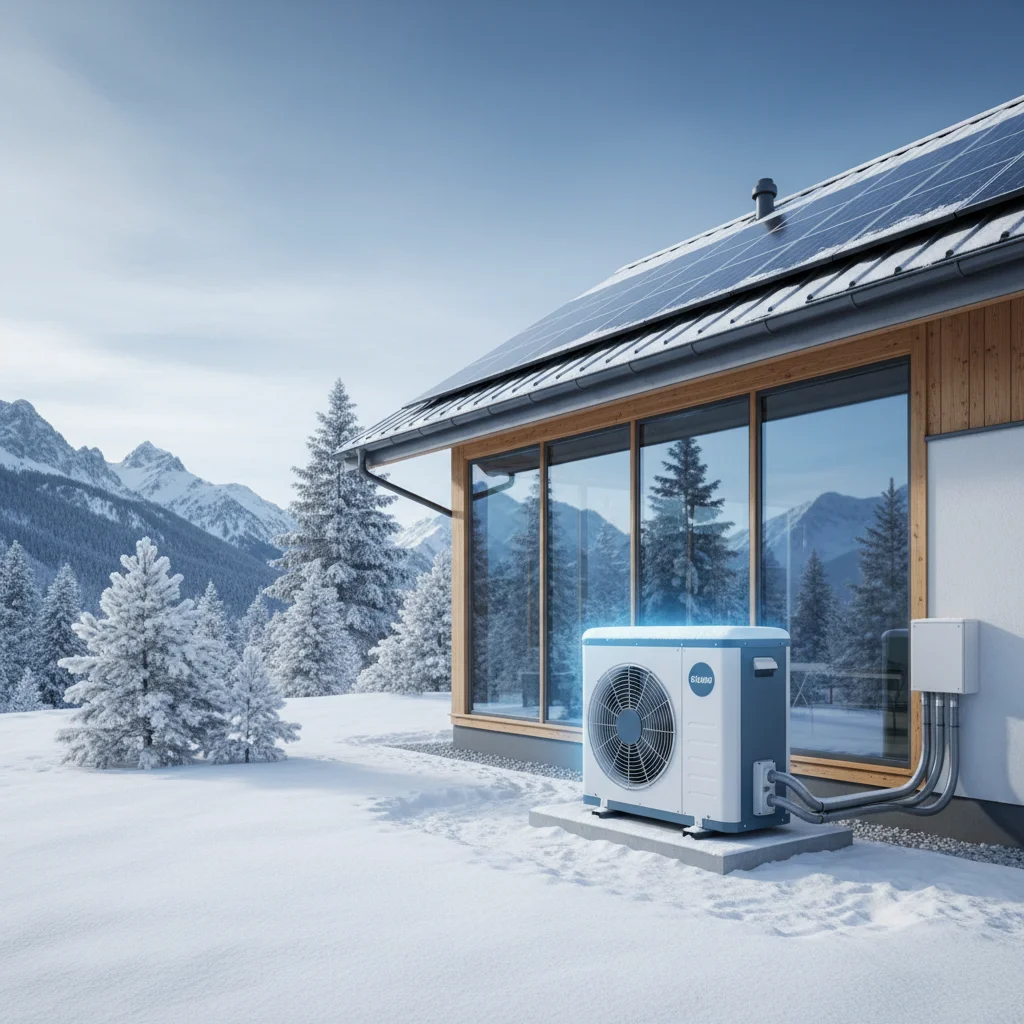
Minnesota homeowners spent an average of $2,347 on heating bills in 2025—and 68% of that energy heated their homes inefficiently using fossil fuel furnaces. But cold climate heat pumps now deliver 300% efficiency in temperatures as low as -15°F, slashing heating costs by $800 to $1,200 annually while cutting carbon emissions by 3 to 5 tons per year.
How Much Does a Cold Climate Heat Pump Cost and What's the ROI Payback Period?
Cold climate heat pumps cost $15,000 to $25,000 installed for a whole-home system, with payback periods of 6 to 10 years depending on existing fuel type and local electricity rates. Systems replacing oil or propane furnaces deliver faster ROI of 5 to 7 years, while natural gas replacements extend payback to 8 to 10 years in regions with cheap gas.
And here's the tension: upfront costs scare homeowners away from the single most effective heating upgrade available. The federal Energy Efficient Home Improvement Credit (Section 25C) ended for property placed in service after December 31, 2025 (IRS FS-2025-05). Check current state, local and utility incentives for your address with the DuloCore rebate calculator. State and utility rebates stack on top, with California offering up to $3,000 and Massachusetts up to $10,000 for income-qualified households.
Equipment accounts for $8,000 to $15,000 of total cost, with labor adding $5,000 to $10,000. Multi-zone systems serving 3 to 4 rooms cost less than whole-home ducted installs. So geography matters: northern states see 30% higher installation costs due to specialized cold-weather equipment and backup heating integration.
Use our free rebate calculator to estimate your net cost after federal and state incentives.
Cold Climate Heat Pumps vs. Traditional Heating Systems: Which Alternative Is Right for You?
Cold climate heat pumps deliver 200% to 400% efficiency at 5°F, converting $1 of electricity into $2 to $4 of heat, while gas furnaces max out at 95% efficiency and oil furnaces at 85%. Electric resistance baseboards hit 100% efficiency but cost 3 times more to operate than heat pumps at the same outdoor temperature.
Natural gas furnaces cost $3,500 to $7,000 installed—60% less than heat pumps upfront—but deliver $400 to $800 less annual savings. And gas prices jumped 23% in 2025, narrowing the operating cost gap. Oil furnaces cost $5,500 to $9,000 installed with fuel costs 40% higher than electricity per BTU delivered.
Geothermal heat pumps beat cold climate air-source models on efficiency, delivering 400% to 600% efficiency year-round, but cost $25,000 to $45,000 installed due to ground loop drilling. Payback extends to 15 to 25 years unless electricity rates exceed $0.18/kWh or federal geothermal incentives stack with state programs.
"Cold climate heat pumps maintain heating capacity down to -5°F or lower, while standard heat pumps lose 50% of capacity at 25°F." — ENERGY STAR
How Long Do Cold Climate Heat Pumps Last and What's the Expected Lifespan?
Cold climate heat pumps last 15 to 20 years with proper maintenance, matching or exceeding gas furnace lifespans of 15 to 18 years and oil furnaces of 12 to 15 years. But outdoor compressors face harsher conditions than indoor furnaces, so annual maintenance extends lifespan by 3 to 5 years.
Inverter-driven variable-speed compressors last longer than single-stage units because they ramp capacity gradually instead of cycling on and off. And brands offering 10-year compressor warranties—like Mitsubishi, Fujitsu, and Carrier—signal longer expected lifespans.
Maintenance costs run $150 to $300 annually for refrigerant checks, coil cleaning, and filter replacement. So total lifetime operating cost equals purchase price plus 15 to 20 years of electricity and maintenance, minus fuel savings of $800 to $1,500 per year.
What Financial Incentives and Tax Credits Can Help Offset Your Cold Climate Heat Pump Investment?
The federal Energy Efficient Home Improvement Credit (Section 25C) ended for property placed in service after December 31, 2025 (IRS FS-2025-05). The credit maxes out at $2,000 per year for heat pump installations, but high-efficiency models above 16 SEER2 and 9.5 HSPF2 qualify for the full amount.
California offers $3,000 through the Tech Clean California program. Massachusetts provides $10,000 for income-qualified households through Mass Save. And New York's Clean Heat program delivers $3,500 to $7,500 depending on system capacity.
| Program | Amount | Eligibility | 2026 Deadline |
|---|---|---|---|
| Federal IRA Tax Credit | Ended Dec 31, 2025 | — | Ended Dec 31, 2025 |
| California Tech Clean California | Up to $3,000 | Income ≤150% AMI | Dec 31, 2026 |
| Massachusetts Mass Save | Up to $10,000 | Income-qualified | Rolling |
Utility rebates add $500 to $2,500 on top of tax credits. But programs change annually—verify current 2026 offerings before purchase. And income limits vary by state, with most capping eligibility at 80% to 150% of area median income.
What's the Installation Process and Timeline for a Cold Climate Heat Pump System?
Installation takes 1 to 3 days depending on system type and home configuration. Ductless mini-split systems install in 4 to 8 hours, while ducted central systems require 2 to 3 days for ductwork modification and multi-zone setup.
Contractors start with a Manual J load calculation to size equipment correctly—oversized units short-cycle and waste energy, while undersized units can't maintain temperature below 0°F. And permit approval adds 1 to 4 weeks before installation begins in jurisdictions requiring electrical and HVAC permits.
Outdoor units mount on concrete pads 12 to 18 inches above ground to prevent snow blockage. So installers must clear foundation walls by 24 inches minimum and avoid roof eaves that drip ice. Indoor air handlers connect via refrigerant lines running through 3-inch diameter holes in exterior walls.
Backup heating integration extends timelines by 1 day. Systems pair with existing furnaces for automatic switchover below 5°F, or add electric resistance coils for $800 to $1,500. But most cold climate models deliver full capacity to -15°F, eliminating backup needs in 95% of U.S. climate zones.
How Do Cold Climate Heat Pumps Perform in Extreme Weather Conditions?
Cold climate heat pumps deliver 100% rated capacity at 5°F and 75% capacity at -15°F, maintaining heat output when standard models drop to 40% capacity at 17°F. Hyper-heating inverter technology adjusts refrigerant pressure 60 times per second, extracting heat from air down to -22°F in some models.
And defrost cycles impact efficiency. Units reverse refrigerant flow every 30 to 90 minutes to melt ice buildup on outdoor coils, temporarily blowing cool air indoors for 5 to 10 minutes. So perceived comfort drops during defrost even though net heat delivery stays positive.
Performance metrics matter: look for HSPF2 ratings above 9.5 and heating capacity retention above 70% at 5°F. Mitsubishi's H2i series maintains 100% capacity to -13°F. Carrier's Greenspeed delivers full output to -15°F. And Fujitsu's Halcyon series operates to -25°F in low-capacity mode.
Energy savings scale with temperature. Heat pumps deliver $1,200 annual savings in Minnesota where heating degree days exceed 7,500, but only $600 savings in Virginia with 4,200 heating degree days. So colder climates see faster payback despite higher upfront costs.
Official Sources
- U.S. Department of Energy - Energy Saver — Federal energy efficiency guidance and IRA rebate information for heat pump installations
- ENERGY STAR Heat Pumps — Efficiency ratings, climate zone recommendations, and qualified product lists
- DSIRE USA — Comprehensive database of state and utility incentive programs for cold climate heat pumps
Frequently Asked Questions
What is a cold climate heat pump and how does it work?
Cold climate heat pumps extract heat from outdoor air using inverter-driven compressors and variable refrigerant flow, maintaining efficiency down to -15°F or lower. The system vaporizes refrigerant at low pressure outdoors, compresses it to high temperature indoors, and releases heat through air handlers or ducts. And reverse-cycle operation provides air conditioning in summer by moving heat outdoors.
Are cold climate heat pumps eligible for federal tax credits in 2026?
The federal Energy Efficient Home Improvement Credit (Section 25C) ended for property placed in service after December 31, 2025 (IRS FS-2025-05). Visit our guide to current energy tax credits for details.
How much can you save with a cold climate heat pump installation?
Homeowners save $800 to $1,500 annually replacing oil or propane heat, and $400 to $900 replacing natural gas, depending on electricity rates and climate zone. Minnesota homeowners average $1,200 annual savings. Massachusetts saves $1,000 per year. And milder climates like Oregon see $600 to $800 savings due to fewer heating degree days.
What is the difference between a cold climate heat pump and a standard heat pump?
Cold climate heat pumps use enhanced vapor injection (EVI) compressors, larger coils, and variable-speed inverters to maintain 75% to 100% capacity at -15°F, while standard heat pumps drop to 40% capacity at 17°F and require backup heat below 25°F. And cold climate models cost $2,000 to $4,000 more upfront but eliminate electric resistance backup costing $300 to $600 annually.
Do cold climate heat pumps work in extremely cold temperatures?
Yes, modern cold climate heat pumps operate efficiently to -15°F with full heating capacity, and some models function to -25°F in low-capacity mode. But prolonged cold snaps below -15°F reduce efficiency by 30% to 40%, so backup heat integration makes sense in Alaska, northern Minnesota, and high-elevation mountain regions where temperatures stay below -15°F for 10+ consecutive days.
Ready to calculate your savings? Our rebate calculator shows exactly how much federal and state incentives will reduce your cold climate heat pump installation cost—plus annual heating savings based on your current fuel type and local electricity rates. Get your personalized estimate in under 2 minutes.
Updated: April 14, 2026 — fact-checked by DuloCore Research. About our editorial process.
Check your California heat pump rebate eligibility — see the programs you qualify for and the dollar amounts on our California heat pump rebate finder.