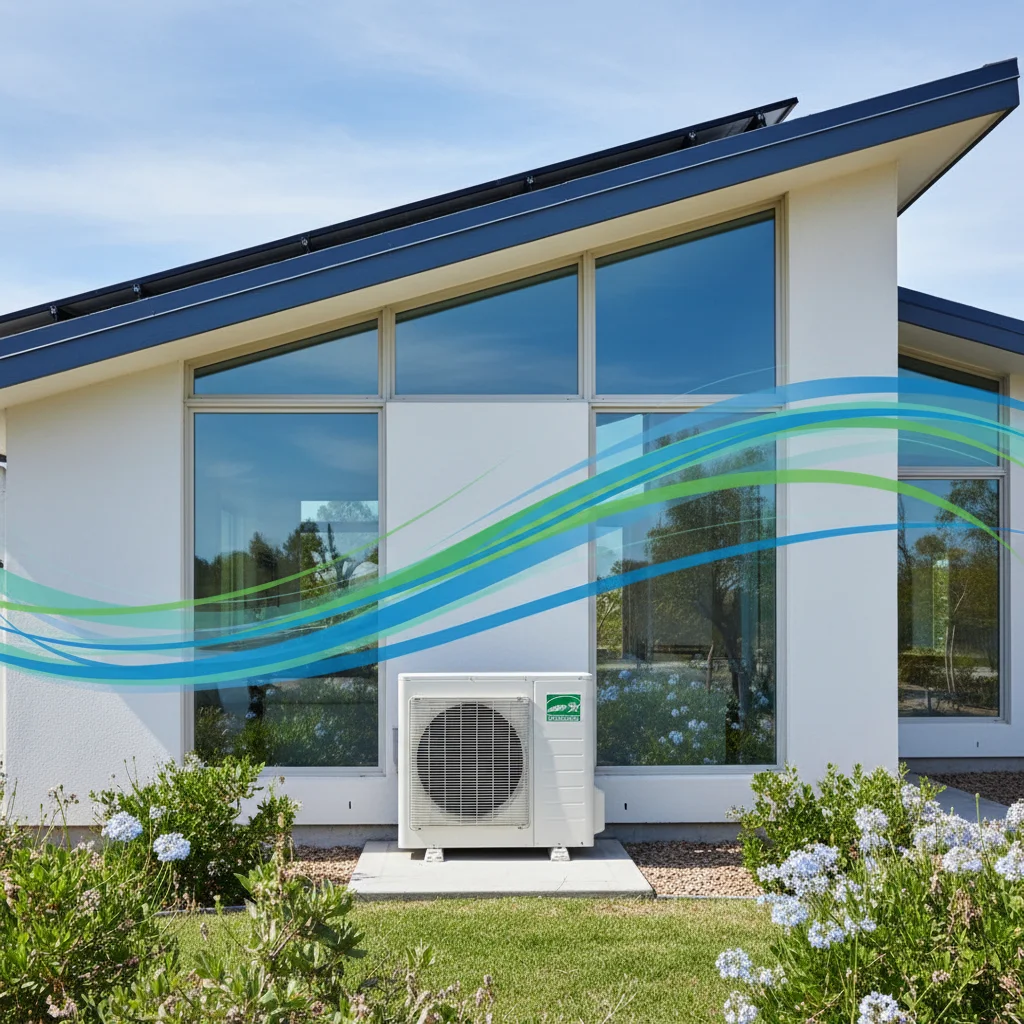
California homeowners replaced more than 187,000 central air conditioning systems in 2025, and most left $1,200 to $8,000 in rebate money on the table. The combination of federal tax credits, state programs, and utility incentives makes 2026 one of the most financially advantageous years to upgrade aging AC equipment—but only if you know which programs stack and how to apply before funding runs out.
What Central Air Conditioning Rebates Are Available Right Now?
Central air conditioning rebates in 2026 come from three sources: federal Inflation Reduction Act tax credits worth up to 30% of equipment costs (maximum $2,000), California state programs offering $1,000-$3,000 for high-efficiency systems, and utility company rebates ranging from $300-$1,500 depending on SEER2 rating and service territory.
The federal Energy Efficient Home Improvement Credit (Section 25C) ended for property placed in service after December 31, 2025 (IRS FS-2025-05). Federal tax credits for this work have ended, but state, local and utility rebates may still apply; check what is available at your address with the DuloCore rebate calculator. And homeowners can claim 30% of equipment and installation costs, capped at $2,000 per year through 2032.
California's Building Initiative for Low-Emissions Development (BUILD) program provides $1,000-$3,000 for central AC replacements when paired with heat pump technology or advanced controls. But funding is allocated on a first-come basis and often depletes by mid-summer.
Utility companies in Southern California Edison, Pacific Gas & Electric, and San Diego Gas & Electric territories offer tiered rebates: $300 for SEER2 16-17 systems, $600 for SEER2 18-19, and $1,200-$1,500 for SEER2 20+ installations. So homeowners who upgrade to the highest efficiency tier see payback periods of 4-6 years instead of 8-10 years.
"Central air conditioners that earn the ENERGY STAR Most Efficient designation save 30% more energy than standard models and qualify for the highest rebate tiers." — ENERGY STAR
The Database of State Incentives for Renewables & Efficiency tracks 47 active programs in California alone. But program availability changes quarterly as funding gets exhausted and reauthorized.
How Much Money Can You Save With a Central AC Rebate?
Homeowners save $1,500-$10,000 total when stacking federal IRA credits ($600-$2,000), California state rebates ($1,000-$3,000), and utility incentives ($300-$1,500) on a qualifying central air conditioning system upgrade with installation costs between $4,000-$12,000.
The math changes dramatically based on equipment efficiency and income level. A 3-ton SEER2 18 system costs roughly $6,500 installed. And the federal credit returns $1,950 (30% of $6,500), a BUILD rebate adds $2,000, and PG&E contributes $600—totaling $4,550 in combined incentives on a $6,500 project.
Low-income households earning below 80% of area median income qualify for enhanced rebates through the California Low-Income Weatherization Program: up to $8,000 per central AC replacement with no out-of-pocket cost for eligible families. So households earning under $73,300 in Los Angeles County pay zero for qualifying system upgrades.
Use our free rebate calculator to estimate your exact savings based on system size, efficiency rating, and zip code.
Energy savings compound over time. A SEER2 20 system uses 40% less electricity than a 15-year-old SEER 10 unit, translating to $840-$1,260 annual savings for the average 2,400-square-foot California home running AC 6 months per year at $0.32/kWh.
"Upgrading to a high-efficiency central air conditioner can cut cooling costs by 20-50% annually depending on climate zone and existing equipment age." — U.S. Department of Energy
What Documentation Do You Need to Qualify for a Central AC Rebate?
Rebate applications require manufacturer certification sheets proving SEER2 rating and ENERGY STAR qualification, dated receipts showing equipment and installation costs, contractor license verification (HVAC-C20 in California), and proof of purchase within the program year (2026 for current applications).
Form 5695 only covers qualifying work completed by December 31, 2025 and claimed on a 2025 return; the federal 25C and 25D credits ended after that date (IRS FS-2025-05). And the IRS requires contractors to provide Manufacturer Certification Statements (MCS) at time of installation—homeowners cannot retroactively obtain these documents.
California BUILD program applications demand pre-approval before installation begins, income verification documents for households claiming low-income tiers, and final inspection reports from HERS (Home Energy Rating System) raters confirming proper installation and system commissioning.
Utility rebates require reservation numbers issued before purchase, serial number photos of the outdoor condenser unit proving AHRI directory match, and final inspection sign-off within 180 days of reservation date. But PG&E and SCE automatically void reservations if installations don't complete within the 6-month window.
Keep digital and physical copies of all documents for 7 years. The IRS audits energy tax credit claims at 2.3 times the rate of standard deductions, and documentation gaps lead to full credit denial plus penalties.
Pre-application checklists prevent rejection: verify contractor licensing at cslb.ca.gov, confirm equipment AHRI certification at ahridirectory.org, and validate ENERGY STAR qualification before signing contracts.
What's the Application Process for Getting Your Central AC Rebate?
The application process requires three sequential steps: reserve utility rebates before purchase (online portals with 48-hour approval), submit state program applications within 90 days of installation with HERS rater verification, and claim federal tax credits when filing 2026 returns using IRS Form 5695 with manufacturer certification sheets attached.
Utility rebate reservations open January 1 each year and close when annual funding depletes—typically August-October in high-demand territories. And Southern California Edison's 2025 allocation exhausted by September 14, leaving 23,000 homeowners on waitlists.
The reservation process takes 15-30 minutes online: create account at utility website, enter property address and account number, select equipment specifications (SEER2 rating, tonnage, manufacturer model), upload contractor license verification, and receive confirmation number valid for 180 days.
State BUILD applications require pre-approval before installation begins but can take 4-6 weeks for income verification and eligibility determination. Or homeowners can use third-party program administrators who handle paperwork for a 5-8% fee deducted from final rebate payment.
Federal IRA credits require zero pre-approval—homeowners claim the credit when filing taxes between January-April 2027 for installations completed in 2026. But the Manufacturer Certification Statement must be obtained at installation time, not retroactively.
Link to our heat pump rebates guide for information on dual-fuel systems that qualify for additional incentive programs.
When Are Central AC Rebate Deadlines and What's the Wait Time to Get Paid?
Utility rebates process in 6-8 weeks after installation verification, California state programs pay in 10-16 weeks after final inspection approval, and federal IRA tax credits reduce 2026 tax liability or generate refunds when filing returns in early 2027—effectively a 3-15 month wait from installation to payment.
Deadline structures vary by program type. Federal tax credits have no application deadline beyond the standard tax filing date (April 15, 2027 for 2026 installations), and unused credits can't roll forward to future tax years if total liability is less than credit amount.
Utility rebates expire on installation completion date plus 180 days for final verification submission. So a system installed June 1, 2026 requires final paperwork by November 28, 2026 or the reservation becomes void and rebate money is forfeited.
California BUILD program deadlines follow fiscal year cycles: applications accepted July 1, 2026 through June 30, 2027 or until allocated funds deplete. And 2025 funding exhausted by March 2026, creating a 4-month blackout period until new fiscal year appropriations.
Payment timelines create cash flow planning challenges. Homeowners pay full installation costs upfront ($4,000-$12,000) and wait 2-15 months for combined rebates. But some contractors offer rebate advance programs that front 70-80% of expected rebate value for a 3-5% processing fee.
Priority processing exists for income-qualified households: California Low-Income Weatherization Program payments average 4-6 weeks versus 10-16 weeks for standard BUILD applications. Or contractors enrolled as approved program providers can receive direct payment within 3-4 weeks, passing savings immediately to homeowners.
Can You Stack Multiple Central AC Rebates Together?
Homeowners can stack federal IRA tax credits with California state programs and utility rebates—combining three funding sources for total savings of $1,500-$10,000 on a single central air conditioning installation—but cannot double-claim the same equipment cost across multiple federal programs or use both state and federal funding for the same expense component.
And IRS Notice 2023-59 clarifies that federal tax credits apply to gross equipment costs before subtracting state or utility rebates, maximizing total benefit.
California BUILD rebates stack with utility programs but require coordination: homeowners must disclose all funding sources on applications, and state rebate amounts adjust downward if combined incentives exceed 90% of total project cost. So a $6,000 installation receiving $1,950 federal credit and $600 utility rebate qualifies for up to $3,450 BUILD funding ($6,000 × 0.90 = $5,400 maximum combined).
The federal home energy tax credits (Sections 25C and 25D) ended for projects completed after December 31, 2025 (IRS FS-2025-05). But solar plus central AC installed in the same year allows separate credit claims totaling up to $9,000.
Utility program terms often prohibit stacking with certain manufacturer rebates or retailer promotions. Or SCE's Summer Discount Plan participants forfeit eligibility for equipment rebates but receive $200 annual bill credits instead—requiring homeowners to calculate which path yields higher lifetime value.
Documentation requirements multiply with stacking: each program demands separate application forms, unique certification sheets, and distinct payment timelines. But the administrative burden pays off—stacked rebates reduce net system costs by 45-70% versus single-program participation.
Review our comprehensive energy tax credits guide for details on combining multiple federal and state programs in a single year.
Official Sources
- U.S. Department of Energy Energy Saver — Federal guidance on energy efficiency rebates and home cooling technologies
- ENERGY STAR Central Air Conditioning — Efficiency standards and qualified product directory
- Database of State Incentives for Renewables & Efficiency — Comprehensive database of all state, local, and utility energy programs
Frequently Asked Questions
What are the eligibility requirements for central air conditioning rebates?
Federal IRA credits require ENERGY STAR Most Efficient certification (SEER2 16+ for split systems), installation in taxpayer's primary residence, and sufficient tax liability to claim the credit. California BUILD programs add income verification for enhanced tiers, pre-existing system replacement (no new construction), and HERS rater commissioning reports. Utility rebates require active customer accounts in service territory, contractor installation by licensed HVAC-C20 professionals, and equipment purchase after reservation date. Or homeowners in multifamily properties may qualify for different program structures with shared system limitations.
How much money can you get from a central air conditioning rebate?
Combined rebates range from $1,500-$10,000 depending on equipment efficiency, household income, and utility territory. Federal IRA credits provide 30% of costs up to $2,000, California BUILD offers $1,000-$3,000 (or $8,000 for low-income households), and utility rebates contribute $300-$1,500 based on SEER2 rating. A typical 3-ton SEER2 18 system costing $6,500 installed generates $4,550 in stacked incentives: $1,950 federal, $2,000 state, $600 utility.
What is the process for applying for a central air conditioning rebate?
Reserve utility rebates online before purchase (48-hour approval, 180-day installation window), submit California BUILD pre-approval applications 4-6 weeks before installation with income documents, and claim federal IRA credits on 2026 tax returns using Form 5695 with manufacturer certification sheets. Or work with program-enrolled contractors who handle state and utility paperwork for 5-8% fees, leaving only federal tax filing for homeowners. Document everything: equipment specs, dated receipts, contractor licenses, serial numbers, and HERS reports.
When is the deadline to apply for central air conditioning rebates?
Federal tax credits have no application deadline beyond April 15, 2027 for 2026 installations, but unused credits don't roll forward if tax liability is insufficient. Utility reservations close 180 days after installation completion for final verification. California BUILD applications run July 1, 2026 through June 30, 2027 or until funding exhausts—2025 allocation depleted by March 2026. So early-year installations have highest success rates before summer demand exhausts state and utility budgets.
How do central air conditioning rebates compare to tax credits?
Rebates provide direct payment 6-16 weeks after installation (immediate cash), while tax credits reduce 2026 tax liability when filing returns in early 2027 (delayed benefit requiring sufficient tax obligation). Rebates have no income restrictions but deplete annually. The federal home energy tax credits (Sections 25C and 25D) ended for projects completed after December 31, 2025 (IRS FS-2025-05). Or homeowners with low tax liability benefit more from rebates and state programs than federal credits that can't be fully claimed or refunded.
Ready to find out how much you can save? Use our free rebate calculator to get a personalized estimate based on your home's location, current system, and upgrade options. Find available rebates in your area and maximize your savings on a new high-efficiency central air conditioning system.
Last updated April 14, 2026 — reviewed by DuloCore Editorial. About our authors.