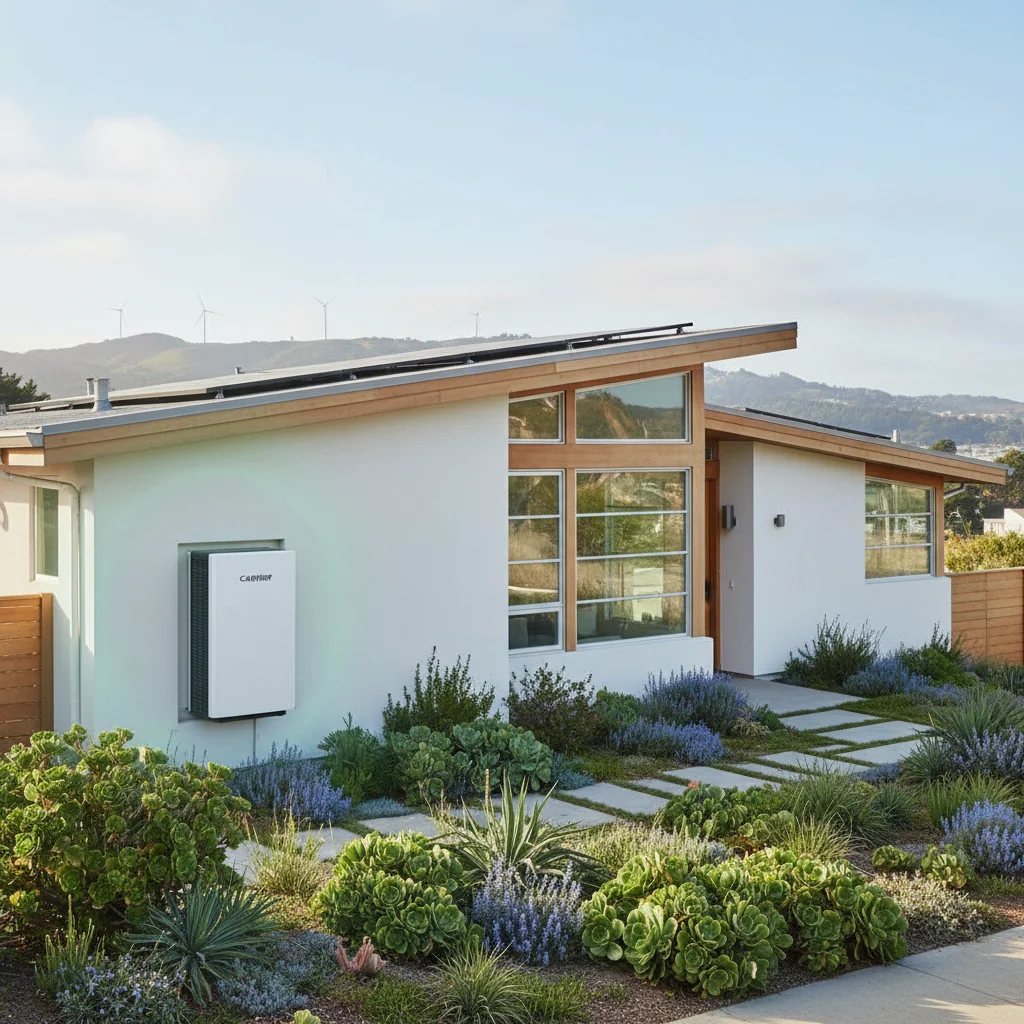
Editorial disclosure: DuloCore operates as an independent resource. Brand names appear for identification only. We do not receive paid compensation, commission, or affiliate revenue from any manufacturer mentioned in this article. Product recommendations reflect independent research against public specifications and energy-efficiency ratings. This disclosure is provided in accordance with FTC Endorsement Guides (16 CFR Part 255).
San Francisco homeowners spend between $12,000 and $28,000 on Carrier heat pump installations in 2026, but federal tax credits and Bay Area utility rebates can cut that cost by up to 45% within the first year. And while the city's moderate climate makes heat pumps one of the most efficient heating and cooling solutions available, the brand premium Carrier commands adds $1,800 to $3,200 over competing models.
How Much Does a Carrier Heat Pump Cost in San Francisco?
Carrier heat pump installations in San Francisco range from $12,000 to $28,000 in 2026, with the average system costing $18,500 including equipment, labor, and permits. Ducted systems with 3-ton capacity cost $15,000 to $22,000, while ductless mini-split configurations run $12,000 to $18,000 for a three-zone setup. Premium Infinity series models add $3,000 to $5,000 over base models.
Equipment accounts for 40% to 50% of total project cost. A Carrier Infinity 18VS variable-speed heat pump with 18 SEER2 efficiency rating costs $6,800 to $8,200 in equipment alone before installation. Labor runs $80 to $120 per hour in San Francisco, with typical installations requiring 16 to 24 hours across two days. Electrical upgrades add $800 to $2,500 if the existing panel can't support the new system's 240-volt circuit requirements.
So San Francisco's permitting requirements add $400 to $800 to the total, plus mandatory Title 24 energy compliance documentation. But the city's moderate 50°F to 70°F annual temperature range means heat pumps run more efficiently here than in extreme climates, lowering operating costs by 30% compared to national averages. And PG&E's tiered electricity rates make the initial investment pay back faster through reduced energy consumption of 8,000 to 12,000 kWh annually.
The cost breakdown for a typical 3-ton Carrier Infinity system: - Equipment: $7,500 - Labor (18 hours at $95/hour): $1,710 - Electrical work: $1,200 - Permits and inspections: $600 - Refrigerant lines and materials: $890 - Total: $17,900
Ductless mini-split systems cost less upfront but require multiple indoor units. A three-zone Carrier ductless system with one outdoor compressor and three wall-mounted heads runs $13,500 to $16,000 installed. Each additional zone adds $2,200 to $2,800. Or homeowners with existing ductwork pay $2,000 to $3,500 less by retrofitting the current system rather than installing new ducts.
Heat pump rebates from BayREN and PG&E reduce these costs by $3,000 to $6,000 for qualifying systems installed in 2026.
What Is the ROI and Payback Period for a Carrier Heat Pump in San Francisco?
Carrier heat pump installations in San Francisco deliver an average ROI of 180% over 15 years, with payback periods ranging from 6 to 9 years depending on rebate eligibility and the system replaced. Homeowners replacing gas furnaces and central AC see annual energy savings of $1,200 to $1,800, while those upgrading from electric resistance heating save $2,400 to $3,200 per year based on 2026 PG&E rates.
The typical financial timeline for an $18,500 Carrier Infinity system: - Year 1: $4,500 in rebates (federal tax credit + utility incentives) + $1,500 energy savings = $6,000 net benefit - Year 2-6: $1,500 annual savings × 5 years = $7,500 - Total recovery by Year 7: Initial $14,000 net cost (after rebates) fully recovered
But the ROI calculation improves significantly when factoring in avoided replacement costs. A gas furnace requires replacement every 15 to 18 years at $5,500 to $8,000, while central AC lasts 12 to 15 years at $4,000 to $6,500. And a single heat pump handles both functions, eliminating dual-system maintenance costs of $300 to $500 annually.
San Francisco's moderate climate extends the financial advantage. Heat pumps maintain 300% to 400% efficiency in the city's 40°F to 85°F operating range, compared to 200% to 250% in extreme cold climates. So each dollar spent on electricity produces three to four dollars of heating or cooling value, versus one-to-one for electric resistance or 80% to 95% for gas furnaces.
The monthly cost comparison shows the ongoing savings: - Old system (gas furnace + AC): $185/month average - Carrier heat pump: $95/month average - Monthly savings: $90 - Annual savings: $1,080
Or homeowners who maximize energy tax credits and combine them with BayREN's $3,000 whole-home retrofit incentive see payback periods as short as 4.5 years. And property value increases of 2% to 4% add another $18,000 to $36,000 in equity for San Francisco's median $900,000 home price.
"Heat pumps can reduce electricity use for heating by approximately 50% compared to electric resistance heating such as furnaces and baseboard heaters." — U.S. Department of Energy
How Long Do Carrier Heat Pumps Last and What's the Lifespan?
Carrier heat pumps installed in San Francisco last 15 to 20 years with proper maintenance, with the Infinity series rated for 18 to 22 years due to variable-speed compressor technology and corrosion-resistant components. The moderate coastal climate extends equipment lifespan by 2 to 4 years compared to extreme temperature regions where compressors cycle more frequently.
Component lifespan varies across the system: - Compressor: 12 to 18 years (covered by 10-year parts warranty) - Heat exchanger: 15 to 25 years - Fan motors: 10 to 15 years - Refrigerant lines: 20+ years - Control boards: 8 to 12 years
So the most critical factor affecting longevity is maintenance frequency. Systems serviced twice annually last 18 to 22 years, while neglected units fail at 10 to 12 years. Annual maintenance costs $150 to $250 in San Francisco and includes refrigerant level checks, coil cleaning, electrical connection inspection, and airflow testing.
But Carrier's build quality commands a premium for good reason. The Infinity series uses two-stage or variable-speed compressors that run at lower speeds 80% of the time, reducing wear compared to single-stage units that cycle fully on and off. And coastal corrosion protection coatings on outdoor units prevent the salt air degradation that cuts 3 to 5 years off unprotected systems in San Francisco's microclimate zones near the ocean.
The warranty structure reflects expected lifespan: - 10 years: Compressor and parts (registered within 90 days) - 5 years: Labor coverage (optional extended warranty) - Lifetime: Heat exchanger (on select models)
Or homeowners extend practical lifespan through proactive component replacement. Replacing fan motors at year 12 costs $400 to $650 and adds 5 to 7 years of reliable operation. And control board upgrades at $350 to $500 prevent nuisance failures that often lead to premature system retirement.
What Rebates and Incentives Are Available for Carrier Heat Pumps in San Francisco?
San Francisco homeowners qualify for $7,500 to $9,500 in combined rebates and tax credits for Carrier heat pump installations in 2026, including a 30% federal tax credit capped at $2,000, BayREN's $3,000 to $6,000 whole-home incentive, and PG&E's $500 to $1,500 equipment rebate. The federal Energy Efficient Home Improvement Credit (Section 25C) ended for property placed in service after December 31, 2025 (IRS FS-2025-05). Utility programs operate on annual budgets with waitlists opening each January.
Federal Tax Credit (2026) - Amount: 30% of installation cost, maximum $2,000 - Eligibility: ENERGY STAR certified heat pumps with ≥16 SEER2 and ≥9 HSPF2 - Form 5695 only covers qualifying work completed by December 31, 2025 and claimed on a 2025 return; the federal 25C and 25D credits ended after that date (IRS FS-2025-05). Federal tax credits for this work have ended, but state, local and utility rebates may still apply; check what is available at your address with the DuloCore rebate calculator. - Income limits: None - Deadline: December 31, 2032
BayREN Whole Home Program - Amount: $3,000 base + up to $3,000 bonus for comprehensive upgrades - Eligibility: Income-qualified or whole-home energy assessment showing 15%+ savings - Application: Pre-approval required before installation - Wait time: 2 to 4 weeks for approval, 6 to 8 weeks for payment - Website: BayREN.org
PG&E Energy Efficiency Rebates - Amount: $500 to $1,500 based on system SEER2 rating - Eligibility: Replace existing AC or furnace with qualifying heat pump - Application: Online within 180 days of installation - Processing time: 4 to 6 weeks
But the most valuable incentive is often the least advertised. San Francisco homeowners in single-family homes built before 1978 qualify for an additional $1,000 through the city's Weatherization Assistance Program when combining heat pump installation with insulation upgrades. And the program covers 100% of costs for households at or below 200% of federal poverty level.
Income-qualified residents access deeper discounts: - CARE/FERA rates: 30% to 35% discount on PG&E electricity - GoGreen Financing: 0% APR loans up to $25,000 for energy upgrades - DAC incentive: Additional $2,000 for disadvantaged community census tracts
The stacking strategy maximizes savings. A household installing an $18,500 Carrier system receives: 1. $2,000 federal tax credit 2. $6,000 BayREN whole-home incentive 3. $1,500 PG&E rebate 4. Total: $9,500 (51% of project cost)
Or homeowners finance the remaining $9,000 through PG&E's On-Bill Financing at 0% interest for 10 years, creating a monthly payment of $75 that's offset by $90 in energy savings from day one.
Use our free rebate calculator to find your exact savings based on your home's size, existing system, and income qualification.
How Does a Carrier Heat Pump Compare in Cost to Other Brands in San Francisco?
Carrier heat pumps cost $1,800 to $3,200 more than comparable Goodman or Rheem models in San Francisco, with the brand premium justified by 3 to 5 years longer average lifespan, 8% to 12% higher seasonal efficiency, and wider contractor support network for warranty service. An 18 SEER2 Carrier Infinity system costs $18,500 installed, while a 17 SEER2 Rheem RP17 runs $15,800 and a 16 SEER2 Goodman GSZ16 costs $14,200.
Brand cost comparison (3-ton systems, installed): - Carrier Infinity 18VS: $18,500 (18 SEER2, variable-speed) - Mitsubishi MUZ-FH: $17,200 (19 SEER2, ductless specialty) - Lennox XP25: $19,800 (23 SEER2, ultra-premium) - Rheem RP17: $15,800 (17 SEER2, two-stage) - Goodman GSZ16: $14,200 (16 SEER2, single-stage)
But the cost difference narrows when factoring in operating expenses. Carrier's variable-speed technology saves $180 to $280 annually compared to single-stage competitors, recovering the $1,800 premium in 6.5 to 10 years. And the 10-year parts warranty on Infinity models beats Goodman's 5-year coverage, reducing out-of-pocket repair costs by an estimated $800 to $1,200 over the system's lifespan.
So contractor availability becomes a hidden cost factor. San Francisco has 47 licensed Carrier dealers versus 23 for Rheem and 31 for Goodman, according to 2026 contractor licensing data. And more competition drives labor costs down by 8% to 15% while reducing wait times for service calls from 5-7 days to 1-2 days during peak summer and winter demand.
The efficiency difference translates to real dollars: - Carrier 18 SEER2: $95/month average electricity cost - Rheem 17 SEER2: $103/month average electricity cost - Goodman 16 SEER2: $112/month average electricity cost
Or homeowners prioritizing upfront cost over long-term value choose Goodman and invest the $4,300 savings into insulation or window upgrades that deliver equal or better whole-home efficiency improvements. And mid-tier brands like Rheem split the difference, offering 90% of Carrier's performance at 85% of the cost.
What's the Installation Timeline and Process for a Carrier Heat Pump?
Carrier heat pump installations in San Francisco take 1 to 3 days of active work, with the complete process spanning 2 to 4 weeks from initial quote to final inspection when factoring in permitting, equipment ordering, and city inspection scheduling. Straightforward replacements on existing ductwork complete in 1 day, while new construction or major electrical upgrades require 2 to 3 days across multiple site visits.
Week 1: Assessment and Planning - Day 1-2: In-home assessment with load calculation - Day 3-5: Quote preparation and financing approval - Day 6-7: Contract signing and permit application submission
Week 2: Permits and Procurement - Day 8-10: City permit review (San Francisco DBI) - Day 11-14: Equipment ordering and delivery scheduling
Week 3: Installation - Day 15: Old system removal (4 to 6 hours) - Day 16: New system installation and electrical work (8 to 12 hours) - Day 17: Startup, testing, and homeowner training (2 to 4 hours)
Week 4: Inspection and Closeout - Day 18-21: City final inspection scheduling - Day 22-28: Rebate application submission and warranty registration
But San Francisco's permitting requirements add complexity that other cities skip. The Department of Building Inspection requires sealed mechanical and electrical plans for all heat pump installations, adding $400 to $600 in engineering fees and 3 to 5 business days to the timeline. And Title 24 energy compliance documentation must be filed before final inspection, typically handled by the contractor but requiring an additional site visit.
So the installation day itself follows a structured sequence: 1. Morning (8 AM - 12 PM): Old equipment removal, refrigerant recovery, electrical disconnect 2. Afternoon (12 PM - 4 PM): New outdoor unit placement, indoor air handler installation, refrigerant line running 3. Evening (4 PM - 6 PM): Electrical connection, system startup, airflow testing
Or ductless systems install faster, with simple three-zone configurations completing in 6 to 8 hours. The wall-mounted indoor units mount in 30 to 45 minutes each, and refrigerant lines run through 3-inch holes in exterior walls rather than through attic or crawlspace ductwork. And minimal electrical work—often a single 240-volt circuit upgrade—cuts the electrical contractor's time from 4 to 6 hours down to 2 to 3 hours.
Weather rarely delays installations in San Francisco's stable climate, but contractor scheduling bottlenecks occur in March through May when 40% of annual installations happen before summer cooling season. And homeowners booking installations in January or February get 10% to 15% discounts during the slow season while avoiding the 3- to 4-week wait times common in spring.
Official Sources
- U.S. Department of Energy - Heat Pump Systems — Federal guidance on heat pump efficiency, savings, and rebate programs
- ENERGY STAR Heat Pumps — Certification requirements and qualified product listings
- DSIRE USA — Database of state and utility incentives for renewable energy and efficiency
Related Reading: Learn more about Heat Pump Rebates San Francisco.
Frequently Asked Questions
How much does a Carrier heat pump cost in San Francisco?
Carrier heat pump installations in San Francisco cost $12,000 to $28,000 in 2026, with the average 3-ton ducted system running $18,500 including equipment, labor, permits, and electrical work. Ductless mini-split configurations cost $12,000 to $18,000 for three zones. And federal tax credits plus utility rebates reduce net cost by $7,500 to $9,500, bringing the typical out-of-pocket expense to $9,000 to $11,000 for qualifying households.
What rebates are available for Carrier heat pump installation in San Francisco?
San Francisco homeowners qualify for a 30% federal tax credit up to $2,000, BayREN whole-home incentives of $3,000 to $6,000, and PG&E rebates of $500 to $1,500 in 2026. Income-qualified residents access additional $1,000 to $2,000 through weatherization programs. And the combined incentives total $7,500 to $9,500 for most installations, covering 40% to 51% of project cost. Applications require pre-approval for BayREN but post-installation for PG&E and federal credits.
Are Carrier heat pumps eligible for California tax credits?
The federal Energy Efficient Home Improvement Credit (Section 25C) ended for property placed in service after December 31, 2025 (IRS FS-2025-05). And California residents instead access utility rebates through BayREN, PG&E, and regional energy networks that deliver $3,500 to $7,500 in direct incentives. Income-qualified households receive enhanced rebates covering 50% to 100% of installation costs through the TECH Clean California initiative.
How long does it take to install a Carrier heat pump in San Francisco?
Carrier heat pump installations in San Francisco take 1 to 3 days of active work, with the complete process spanning 2 to 4 weeks including permitting and inspections. Straightforward replacements on existing ductwork complete in 1 day, while new ductless systems require 1 to 2 days for multi-zone configurations. And electrical panel upgrades add 0.5 to 1 day. City permit approval takes 3 to 5 business days, while final inspection scheduling adds another 3 to 7 days after installation completion.
What is the payback period for a Carrier heat pump in San Francisco?
Carrier heat pumps in San Francisco deliver payback periods of 6 to 9 years, with homeowners saving $1,200 to $1,800 annually on energy costs when replacing gas furnaces and central AC. And households maximizing federal tax credits and utility rebates see payback as short as 4.5 years. The moderate climate extends the financial advantage through 300% to 400% heating efficiency year-round, compared to 200% to 250% in extreme cold regions. Monthly energy costs drop from $185 to $95 on average.
Ready to find out how much you can save? Use our free rebate calculator to get a personalized estimate of your federal tax credits, utility rebates, and energy savings for a Carrier heat pump installation in San Francisco.
Updated on April 14, 2026. Fact-checked by DuloCore Editors. About our research team.
Check your California heat pump rebate eligibility — see the programs you qualify for and the dollar amounts on our California heat pump rebate finder.