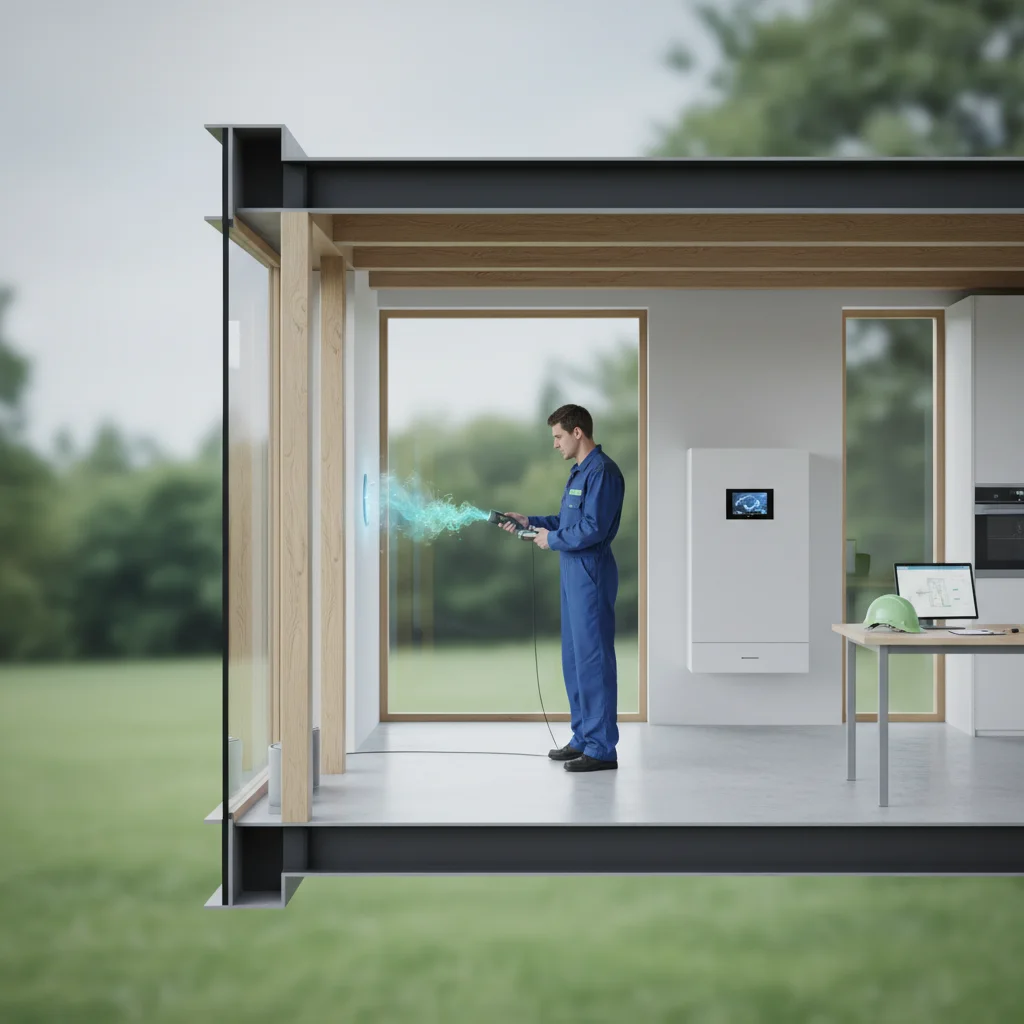
Every year, 420 Americans die from unintentional carbon monoxide poisoning. And 100,000 visit emergency rooms. But most homeowners don't realize their energy audit can include carbon monoxide testing—and that some utility companies cover the cost as part of whole-home efficiency programs running through 2026.
How Much Will a Carbon Monoxide Test Cost as Part of Your Energy Audit?
Carbon monoxide testing during a 2026 energy audit costs $0 to $150 as a standalone service, or $0 when bundled into comprehensive home energy assessments that range from $200 to $500. Utility-sponsored programs in California, New York, and Massachusetts cover 100% of audit costs for income-qualified households, while federal HOMES rebates reimburse up to $500 for whole-home assessments that include combustion safety testing. So the actual out-of-pocket expense depends on your state, utility provider, and household income bracket.
And most auditors include carbon monoxide testing automatically when inspecting furnaces, water heaters, or gas appliances. The test takes 5 to 10 minutes using a digital analyzer that measures CO levels in parts per million near combustion equipment. But standalone CO testing without a full energy audit typically costs $75 to $150 from HVAC contractors or home inspectors.
Use our free rebate calculator to find your local energy audit incentives and see if carbon monoxide testing is covered in your ZIP code.
What Equipment Qualifies for Rebates During a Carbon Monoxide Energy Audit?
Equipment that qualifies for 2026 rebates after carbon monoxide testing includes gas furnaces, boilers, water heaters, fireplaces, and any appliance with a combustion chamber. The Inflation Reduction Act provides up to $8,000 in tax credits for heat pump installations and $1,200 for high-efficiency natural gas systems when installed after a failed CO test reveals unsafe equipment. And California's TECH Clean California program offers $3,000 to $7,000 for replacing gas furnaces with electric heat pumps, while New York's Clean Heat program provides $10,000 to $14,000 for low-income households switching from fossil fuel heating.
Combustion safety testing identifies equipment that produces carbon monoxide above 35 parts per million—the EPA's 8-hour exposure limit. When auditors detect elevated CO levels, homeowners can access expedited rebates for replacement systems. And many utility programs waive the standard 30-day waiting period for equipment upgrades when carbon monoxide poses an immediate health risk.
"Home energy audits that include combustion safety testing help identify carbon monoxide hazards and qualify homeowners for equipment replacement rebates." — U.S. Department of Energy
Are You Income Eligible for Carbon Monoxide Testing Rebate Programs?
Income eligibility for 2026 carbon monoxide testing rebates varies by program, but most use 80% of Area Median Income as the threshold—$89,600 for a family of four in Los Angeles County, or $108,400 in San Francisco. Federal HOMES rebates cover 100% of energy audit costs for households at or below 80% AMI, while California's Energy Savings Assistance Program provides free whole-home assessments including carbon monoxide testing for households at or below 200% of federal poverty guidelines—$62,400 for a family of four in 2026.
And utility programs offer tiered incentives. Pacific Gas & Electric covers 100% of audit costs for customers earning less than $73,800, while Southern California Edison provides $400 audits at no cost for households below 60% AMI. But non-income-qualified homeowners still access $200 to $300 rebates through energy tax credits and utility efficiency programs.
Check your state's HOMES program administrator to verify income limits in your county—they adjust annually based on HUD median income data.
What's the Step-by-Step Process to Apply for CO Testing Rebates in Your State?
The application process for carbon monoxide testing rebates starts with scheduling an audit through your utility's approved contractor network, which you can find at DSIRE USA by entering your ZIP code. Within 3 to 7 business days, a certified energy auditor visits your home, tests combustion appliances with a digital CO analyzer, and generates a report listing detected hazards and eligible equipment upgrades. You then submit the audit report to your utility or state program administrator along with income verification documents if required, and receive approval within 14 to 21 days.
After approval, you select a participating contractor to install replacement equipment—most programs require contractors to hold BPI Building Analyst or RESNET HERS Rater certifications. And the contractor submits final invoices directly to the rebate administrator, so you never pay upfront for covered costs. But some programs like California's TECH Clean California require point-of-sale rebates, where the incentive reduces your invoice immediately at installation.
"Homeowners should verify contractor certifications and program participation status before scheduling work to ensure rebate eligibility." — Database of State Incentives for Renewables & Efficiency
When Are the Deadlines and Funding Cutoffs for Carbon Monoxide Audit Programs?
Deadlines for 2026 carbon monoxide audit programs vary by state, but most federal HOMES rebates require project completion by December 31, 2026, with applications submitted by March 31, 2027. California's Energy Savings Assistance Program operates on a first-come, first-served basis with no fixed deadline, but historically exhausts funding by October in high-demand counties like Los Angeles and San Diego. And New York's Clean Heat program allocated $250 million through September 30, 2026—applications submitted after that date get waitlisted for 2027 funding.
Utility programs reset annually. Pacific Gas & Electric's Home Upgrade program runs January 1 to December 31 with monthly funding caps, while Mass Save in Massachusetts operates on a July 1 fiscal year. So the optimal application window is January through March when funding is most available and contractor schedules are less congested.
Check your utility's website monthly for real-time funding status—programs can close early when demand exceeds allocations.
Can You Stack Carbon Monoxide Rebates With Other Energy Efficiency Incentives?
Carbon monoxide testing rebates can stack with federal tax credits, state rebates, and utility incentives, allowing homeowners to combine up to $22,000 in savings for a single heat pump installation. The Inflation Reduction Act's 30% tax credit (this federal credit ended for property placed in service after December 31, 2025) for heat pumps (up to $2,000) stacks with federal HOMES rebates ($8,000) and state programs like California's TECH Clean California ($3,000 to $7,000), while utility companies add $500 to $2,000 in additional incentives. And low-income households access the federal HEAR rebate program for an additional $8,000 on top of other incentives.
But stacking rules vary by administrator. Some state programs prohibit combining state and federal rebates for the same equipment, while others allow it. California's Self-Generation Incentive Program and the federal tax credit can stack, but California's TECH program and federal HOMES rebates cannot for the same heat pump unit.
Read program terms carefully or consult a certified contractor who understands your state's heat pump rebates stacking rules.
What Contractor Certifications Do You Need for Rebate-Eligible CO Testing?
Rebate-eligible carbon monoxide testing requires contractors to hold BPI Building Analyst, RESNET HERS Rater, or state-specific certifications like California's Home Energy Analyst credential. Federal HOMES rebates mandate that auditors complete DOE-approved training on combustion safety testing and use calibrated analyzers that meet ANSI/ASHRAE Standard 62.2 specifications. And most state programs require contractors to carry $1 million in general liability insurance plus workers' compensation coverage.
California's Energy Savings Assistance Program maintains a pre-approved contractor database at cpuc.ca.gov, while New York's Clean Heat program lists qualified installers at nyserda.ny.gov/cleanheatsearch. But not all certified auditors perform carbon monoxide testing—call ahead to confirm they include combustion safety analysis in their standard home energy audit protocol.
And avoid unlicensed contractors. Even if the audit is free, using a non-certified provider disqualifies you from rebates and tax credits.
| Program | Audit Cost | Income Limit (4-person) | CO Testing Included | Application Deadline |
|---|---|---|---|---|
| Federal HOMES Rebate | $0 (80% AMI) / $200-$500 | $89,600 (varies by county) | Yes | December 31, 2026 |
| California ESA | $0 | $62,400 (200% FPL) | Yes | Rolling (first-come) |
| New York Clean Heat | $0 (low-income) / $300 | $108,000 (80% AMI NYC) | Yes | September 30, 2026 |
| PG&E Home Upgrade | $0 (income-qualified) / $400 | $73,800 (SF Bay Area) | Yes | December 31, 2026 |
Official Sources
- U.S. Department of Energy Save Energy, Save Money — Federal guidance on home energy audits, rebates, and combustion safety testing
- Database of State Incentives for Renewables & Efficiency — Comprehensive database of state, utility, and federal energy efficiency programs
- EPA Carbon Monoxide Information — Health guidelines and exposure limits for carbon monoxide in residential buildings
Related Reading: Learn more about Mini Split Energy Audit Assessment and Moisture Problems Energy Audit.
Related Reading: Learn more about Central Ac Energy Audit Testing and Ductwork Inspection Energy Audit.
Frequently Asked Questions
What is carbon monoxide testing in an energy audit?
Carbon monoxide testing in an energy audit measures CO levels in parts per million near combustion appliances like furnaces, water heaters, and fireplaces using a digital analyzer. Auditors test ambient air and flue gases to identify equipment that produces carbon monoxide above the EPA's 35 ppm safety threshold. The test takes 5 to 10 minutes per appliance and is required by most utility rebate programs before approving equipment replacement incentives.
How much does a carbon monoxide test cost during an energy audit?
A carbon monoxide test costs $0 to $150 when included in a whole-home energy audit, or $75 to $150 as a standalone service from HVAC contractors. Utility-sponsored audits in California, New York, and Massachusetts include combustion safety testing at no cost for income-qualified households. And federal HOMES rebates reimburse up to $500 for comprehensive audits that include carbon monoxide analysis for non-income-qualified homeowners.
Do I need carbon monoxide testing for energy audit rebates?
Carbon monoxide testing is required for most 2026 rebate programs that cover gas furnaces, boilers, or water heaters. Federal HOMES rebates mandate combustion safety testing when replacing fossil fuel equipment, while California's TECH Clean California and New York's Clean Heat programs require CO testing before approving heat pump rebates for homes with existing gas heating systems. But homes with electric-only heating may skip carbon monoxide testing.
How often should carbon monoxide be tested during a home energy audit?
Carbon monoxide should be tested annually if your home has gas appliances, or immediately after installing new combustion equipment. Most rebate programs require CO testing only once during the initial audit, but contractors recommend annual testing during furnace maintenance visits. And homes with attached garages or wood-burning fireplaces should test every 6 months to catch seasonal changes in ventilation and appliance performance.
What's the difference between carbon monoxide testing and other energy audit inspections?
Carbon monoxide testing measures toxic gas levels from combustion appliances, while other energy audit inspections use blower doors, infrared cameras, and duct leak tests to measure heat loss and air infiltration. CO testing takes 5 to 10 minutes and focuses solely on health hazards, whereas thermal imaging and pressure testing take 2 to 4 hours and identify efficiency opportunities. And only carbon monoxide testing triggers expedited rebates for unsafe equipment replacement.
Ready to find your carbon monoxide testing rebates? Use our free rebate calculator to see exactly what incentives are available in your ZIP code, compare program deadlines, and get a step-by-step plan for maximizing your savings on energy-efficient equipment upgrades.
Last updated April 14, 2026 — reviewed by DuloCore Editorial. About our authors.