Update (2026): The federal Energy Efficient Home Improvement Credit (Section 25C) expired December 31, 2025, following the passage of the OBBBA. Check state and local programs for current incentives.
Up to 30% of the energy used to heat and cool the average American home is simply wasted due to air leaks, poor insulation, and inefficient equipment. This silent drain on your bank account happens every month, but identifying the source of the waste is the first step toward claiming thousands in efficiency rebates. So the critical question isn't just about finding leaks; it's about whether your method of discovery qualifies you for the money to fix them.
Can I effectively perform my own energy audit, or is a professional required for rebates?
A homeowner's DIY energy audit identifies basic efficiency issues like drafts and insulation gaps. But professional audits conducted by certified technicians are mandatory for accessing most 2026 federal and utility rebates, which require specific diagnostic testing like blower door tests and infrared scans for documentation.
A do-it-yourself energy audit is an excellent starting point for any homeowner. You can visually inspect insulation levels in your attic, check for drafts around windows and doors using an incense stick, and review past utility bills to spot usage spikes. These simple steps build a foundational understanding of your home's performance. But this self-assessment has its limits. It won't quantify air leakage rates or pinpoint hidden thermal bypasses in walls. For most 2026 rebate programs, especially those offering more than $600, a professional audit is not optional; it's a prerequisite. These programs require certified reports from BPI (Building Performance Institute) accredited auditors to validate the need for upgrades like new insulation or a high-efficiency HVAC system. So, a DIY audit helps you plan, but a professional audit unlocks the cash to execute. Learn more about what a full home energy audit entails.
What financial incentives and rebate amounts are available for energy efficiency upgrades based on my audit?
Financial incentives for 2026 include federal tax credits up to $3,200 annually and state or utility rebates that offer from $250 for smart thermostats to over $8,000 for qualifying heat pump installations. These programs require specific equipment efficiency ratings and often a professional energy audit.
The financial landscape for energy upgrades is robust, driven by the Inflation Reduction Act (IRA). The federal Energy Efficient Home Improvement Credit (Section 25C) ended for property placed in service after December 31, 2025 (IRS FS-2025-05). Federal tax credits for this work have ended, but state, local and utility rebates may still apply; check what is available at your address with the DuloCore rebate calculator. But these federal incentives are just the beginning. State energy offices and local utilities offer direct cash rebates that often depend on income level and the specific equipment installed. For example, a low-to-moderate-income household often qualifies for higher rebate amounts, sometimes covering up to 100% of the cost for weatherization. An audit identifies which upgrades deliver the most savings, directly influencing which energy tax credits and rebates you can target. An audit report acts as a roadmap to maximize your financial return on these energy-saving investments.
How do I apply for energy efficiency rebates, and are there income limits or specific eligible equipment requirements?
The application process for 2026 energy rebates typically involves submitting an audit report, contractor invoices, and equipment model numbers through a utility or state web portal. Income limits are common, with programs like the Home Electrification and Appliance Rebate (HEAR) reserving funds for households below 150% of the area median income.
Applying for rebates requires careful documentation. Before any work begins, homeowners must verify their eligibility, which often includes income verification for enhanced rebate programs. Eligible equipment requirements are strict; for instance, a heat pump must meet specific SEER2 (Seasonal Energy Efficiency Ratio 2) and HSPF2 (Heating Seasonal Performance Factor 2) ratings to qualify.
The process is sequential: get the audit, select qualifying equipment with a certified installer, complete the project, and then submit all paperwork before the program's deadline. So, missing a single step, like using a non-certified contractor or installing a non-ENERGY STAR model, results in application denial. Use our free rebate calculator to see which incentives you qualify for.
Can I combine or "stack" different energy efficiency programs, and do I need a certified contractor for all incentives?
Homeowners can stack federal tax credits with state and utility rebates in 2026, often combining multiple incentives for a single project like a heat pump installation. Most high-value rebates, particularly those exceeding $1,000, mandate installation by a contractor with specific certifications from the manufacturer or a trade group.
Stacking incentives is the key to reducing out-of-pocket costs by 50% or more. For example, a homeowner can use the $2,000 federal tax credit for a new heat pump, a $4,000 state rebate, and a $1,500 utility incentive simultaneously on a $15,000 system. But each program has its own rules. The federal credit doesn't require a specific contractor, but most state and utility programs do to ensure quality installation. They often maintain a public list of approved or "certified" contractors. Using an unlisted installer is a common reason for rebate rejection. So, verifying contractor eligibility for each specific rebate program you plan to use is a critical step before signing any contract. This ensures you can access all available heat pump rebates for your project.
How do state and utility energy audit programs differ in terms of deadlines, funding status, and application processes?
State and utility energy audit programs for 2026 vary widely; some offer free audits with rolling applications, while others have fixed annual budgets that run out by Q3. Deadlines are often tied to fiscal years, and application processes range from simple online forms to multi-page paper applications.
There is no national standard for local energy programs. A utility in California will have different funding levels, eligible measures, and deadlines than one in Massachusetts. For example, some programs offer a free or discounted audit (e.g., $50 co-pay) but require it to be scheduled through their approved list of providers.
"DSIRE is the most comprehensive source of information on incentives and policies that support renewables and energy efficiency in the United States." — DSIRE
Funding status is the most critical variable. Many popular state rebate programs are first-come, first-served and exhaust their annual funding months before the calendar year ends. So, homeowners must check the program's website frequently for updates on available funds and application deadlines. The process always requires proactive research to confirm the specific rules for your location, as assuming one program's rules apply to another is a costly mistake.
Rebate Program Comparison (2026)
| Program Feature | Federal IRA Tax Credit | State HEAR Program (Example) | Local Utility Rebate (Example) |
|---|---|---|---|
| Max Amount | $3,200 annually | Up to $14,000 total | $500 - $2,000 per unit |
| Income Limit | None | Yes (<150% Area Median Income) | Typically none, some tiered rates |
| Audit Required? | No, but recommended | Yes, professional audit required | Often required for >$1,000 |
| Deadline | December 31, 2025 | Varies by state; funds can run out | Often annual, check funding status |
Official Sources
- ENERGY STAR — A U.S. Environmental Protection Agency (EPA) program providing credible, objective information on energy-efficient products and practices.
- Database of State Incentives for Renewables & Efficiency (DSIRE) — The most comprehensive national database of state and utility incentives for energy upgrades.
- IRS Home Energy Tax Credits — Official guidance from the IRS on eligibility and rules for claiming federal energy efficiency tax credits. (note: the federal 25C and 25D credits ended for projects completed after December 31, 2025)
Frequently Asked Questions
Can a homeowner effectively perform their own energy audit?
Yes, a homeowner can perform an effective basic audit by identifying obvious issues. This includes checking for drafts around windows, measuring attic insulation depth (which should be 12-16 inches in most climates), and inspecting ductwork for leaks. But this DIY approach won't provide the quantitative data, like a CFM50 air leakage score from a blower door test, that most 2026 rebate programs require for verification.
What steps are involved in conducting a DIY home energy audit?
A DIY audit involves a checklist-based approach. Start by analyzing the last 12 months of utility bills to find seasonal spikes. Next, perform a visual inspection: look for dirty spots on insulation (a sign of air leaks), check weatherstripping on doors, and use an incense stick to see where drafts are coming from on a windy day. Finally, check appliance and lighting efficiency, replacing any incandescent bulbs with LEDs.
Are self-performed energy audits sufficient for rebate eligibility?
No, for almost all substantial 2026 state and utility rebates (typically those over $500), a self-performed audit is not sufficient. These programs require a detailed report from a certified professional, often a BPI-certified auditor. This third-party verification is necessary to validate the home's energy-saving potential and ensure the funded upgrades are appropriate and effective. The federal tax credit, however, generally does not require an audit.
What are the limitations of doing your own energy audit compared to a professional one?
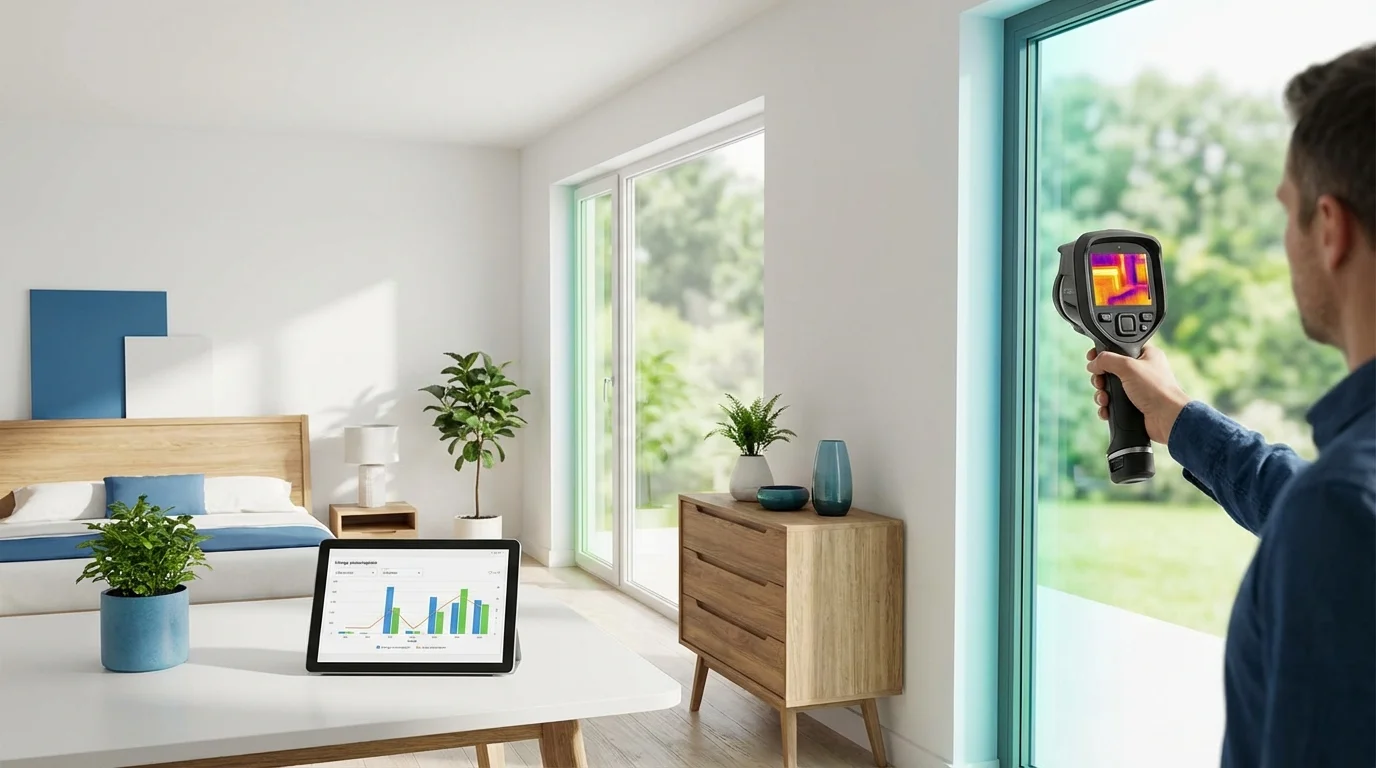
The primary limitation is the lack of diagnostic tools. A DIY audit cannot perform a blower door test to measure total home air leakage or use an infrared camera to find hidden insulation gaps inside walls. Professionals provide a detailed report with a prioritized list of improvements and their projected return on investment, which is a level of analysis a visual inspection alone can't achieve.
What tools or resources are needed to conduct a thorough DIY energy audit?
For a thorough DIY audit, you'll need a few tools. An incense stick or smoke pen helps visualize air leaks. A tape measure is essential for checking insulation depth in the attic and crawlspace. A flashlight is needed for inspecting dark corners like basements and ductwork. Finally, using an online tool like the Department of Energy's Home Energy Saver can help you analyze your findings and get recommendations.
Unlock Your Home's Rebate Potential
Stop guessing how much you can save. An energy audit is the first step, but knowing your exact rebate eligibility is the key. Use our free, up-to-date rebate calculator to see the specific incentives available for your home in 2026.
Calculate Your Savings NowLast reviewed: April 14, 2026. Reviewed by DuloCore Energy Specialists. About the team.