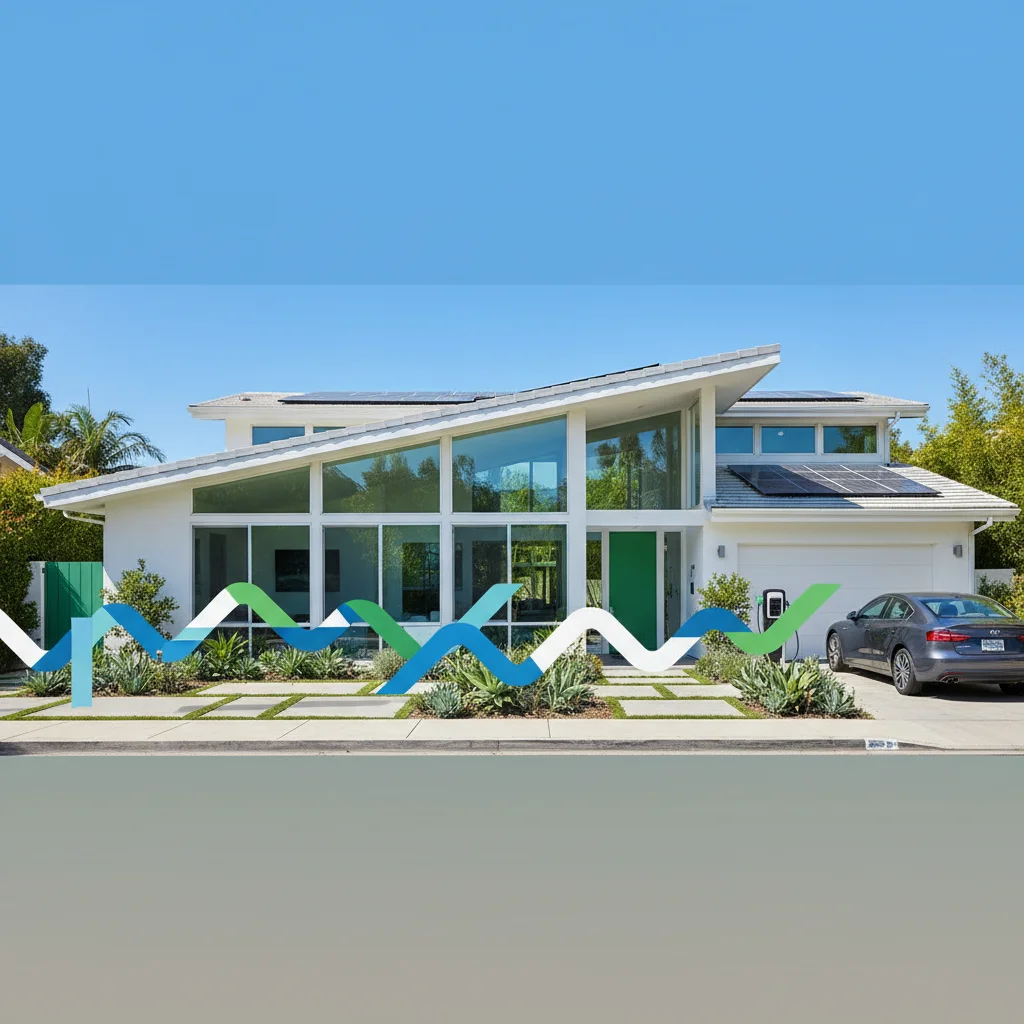
California homeowners left $847 million in rebate money unclaimed in 2025—not because programs ran out of funding, but because applications arrived too late, paperwork sat incomplete, or deadlines passed unnoticed. With $1.2 billion allocated for 2026 state rebates and an additional $8.8 billion in federal Inflation Reduction Act funds flowing through state programs, timing determines who captures savings and who loses thousands of dollars to expired windows.
California rebate applications typically take 6 to 12 weeks from submission to payment, though timelines vary by program—TECH Clean California processes claims in 45 days, while SGIP solar battery rebates can extend to 90 days. State HOMES rebates require pre-approval before installation, adding 2 to 4 weeks to the front end, and federal IRA credits process through annual tax filing cycles.
What Are the Current California Rebate Stacking Rules and Limits?
California permits stacking of federal, state, and utility rebates for the same home improvement project, but total combined incentives cannot exceed 100% of project cost. Homeowners can layer a federal 30% tax credit (this federal credit ended for property placed in service after December 31, 2025) with California TECH Clean rebates up to $3,000 and local utility incentives up to $2,500 for heat pump installations. State HOMES rebates explicitly allow combination with federal tax credits but prohibit stacking with HEAR rebates for the same equipment. And income-qualified households access higher rebate tiers—SGIP allocates $1,000 per kilowatt-hour for battery storage in equity-designated communities compared to $150 per kWh for standard applicants. Rebate reservation systems lock in rates for 60 to 180 days depending on program, protecting applicants from mid-project funding depletion.
How Long Does the California Rebate Application Process Typically Take From Start to Finish?
The complete California rebate cycle spans 8 to 16 weeks from initial application to check deposit, broken into distinct phases. Pre-approval applications for HOMES rebates require 2 to 4 weeks for energy assessor review and state confirmation before installation begins. Installation and inspection add 4 to 8 weeks depending on contractor availability and permitting backlogs—solar permitting in Los Angeles County currently averages 6 weeks compared to 3 weeks in San Diego. Post-installation claim submission triggers a 6 to 12 week review period, with TECH Clean California processing most applications in 45 days while SGIP extends to 90 days for complex solar-plus-storage projects. And payment distribution adds another 2 to 3 weeks after approval, though direct deposit shortens this window to 5 business days for programs offering electronic disbursement.
What Are the Eligibility Requirements and Financial Limits for California Rebates?
California rebate programs tier eligibility by household income, project type, and home characteristics. TECH Clean California restricts heat pump rebates to single-family homes and duplexes with household income below 80% of area median income—$66,800 for a family of four in Fresno County, $106,300 in San Francisco. State HOMES rebates require whole-home energy reductions of 20% to 35% verified by HERS raters, with rebates scaling from $2,000 for 20% reduction to $4,000 for 35% improvement. But SGIP battery storage rebates impose no income limits for standard tiers, opening $150 per kWh incentives to all residential applicants while reserving higher $1,000 per kWh rates for CARE/FERA utility customers. Property type matters—manufactured homes qualify for specialized rebate tracks with up to $6,000 available through California Energy Commission programs, and multifamily buildings access separate funding pools with $4,500 per unit caps.
"California HOMES rebates require at least 20% whole-home energy savings to qualify for $2,000 base rebates, increasing to $4,000 for 35% reductions." — California Energy Commission
What's the Step-by-Step Timeline for Submitting Your California Rebate Application?
California rebate applications follow a structured 5-phase sequence with specific timing requirements at each stage. Phase 1 involves project scoping and pre-approval submission (week 1-2), where homeowners submit energy assessments and contractor quotes to reserve funding before work begins—HOMES and TECH Clean California both mandate pre-approval, while SGIP allows post-installation applications. Phase 2 covers installation and permitting (week 3-10), requiring building department sign-off and utility interconnection approval for electrical upgrades—Los Angeles permitting delays now average 6 weeks versus 3 weeks statewide. Phase 3 triggers post-installation inspection (week 11-12), with certified HERS raters verifying equipment specifications and performance testing for heat pumps and HVAC systems. And Phase 4 launches claim submission (week 12-13), requiring uploaded receipts, W-9 forms, and final inspection reports within 30 to 180 days of project completion depending on program. Phase 5 delivers payment disbursement (week 14-16), with electronic payments arriving in 5 business days versus 2-3 weeks for mailed checks. Calculate your potential savings with our rebate calculator before starting applications.
How Do California Rebate Deadlines Compare Across Different Programs?
| Program | Application Deadline | Project Completion Window | Payment Timeline | Funding Status |
|---|---|---|---|---|
| TECH Clean California | December 31, 2026 | 180 days from approval | 45 days | $380M available |
| HOMES Rebates | Rolling until funds depleted | 120 days from pre-approval | 90 days | $425M remaining |
| SGIP Battery Storage | First-come, first-served | 365 days from reservation | 90 days | Step 5 active ($150/kWh) |
| Federal Heat Pump Credit | Ended Dec 31, 2025 | Ended Dec 31, 2025 | Ended Dec 31, 2025 | Ended Dec 31, 2025 |
| PG&E Energy Upgrade | Quarterly cycles (Q3 2026 next) | 90 days from approval | 60 days | $67M allocated |
SGIP operates on a first-come, first-served reservation system across 5 funding steps, currently in Step 5 at $150 per kWh after Steps 1-4 depleted $1.4 billion since 2021. TECH Clean California enforces annual calendar-year deadlines, requiring completed installations by December 31, 2026 for current-year funding—applications submitted in November face compressed timelines. But HOMES rebates run on rolling acceptance until state allocation exhausts, with California's $425 million pot projected to last through Q2 2027 at current claim rates of $18 million monthly. And utility programs like PG&E Energy Upgrade operate on quarterly funding cycles, resetting reservation lists every 90 days and prioritizing applications by submission timestamp within each cycle.
What Happens If You Miss a California Rebate Application Deadline?
Missing California rebate deadlines forfeits reserved funds and forces applicants to reapply under new program rules or reduced funding tiers. SGIP reservation expirations cost homeowners an average of $3,500 in lost battery storage incentives when Step 3 ($300/kWh) funds depleted and applicants re-entered at Step 5 ($150/kWh) rates. TECH Clean California enforces strict installation completion deadlines—projects approved in July 2026 must finish by December 31, 2026 or lose $3,000 heat pump rebates with no extension provision. So homeowners who miss HOMES pre-approval windows can resubmit applications, but funding availability isn't guaranteed—11 states exhausted HEAR allocations by March 2026, creating months-long waitlists. And federal tax credits remain available through 2032 regardless of annual filing deadlines, though amended returns cost $200 to $400 in accounting fees for missed prior-year claims. California maintains no formal appeals process for deadline violations, though documented utility interconnection delays or permit office closures occasionally qualify for case-by-case extensions.
"$8.8 billion in federal HVAC rebates flow through state programs, but 29% of states report depleted HEAR funds as of March 2026." — U.S. Department of Energy
Official Sources
- California Energy Commission — State rebate program administration and funding allocation updates
- Database of State Incentives for Renewables & Efficiency (DSIRE) — Comprehensive searchable database of California rebates, tax credits, and utility programs (note: the federal 25C and 25D credits ended for projects completed after December 31, 2025)
- U.S. Department of Energy SAVE Portal — Federal IRA rebate guidance and state program implementation tracking
Related Reading: Learn more about Insulation Rebate Application Process and Solar Rebate Utility Application Process.
Frequently Asked Questions
How long does it take to get approved for a California rebate?
California rebate approval timelines range from 2 to 6 weeks depending on program complexity and application volume. TECH Clean California pre-approves heat pump applications in 14 to 21 days during standard processing periods, extending to 35 days in Q4 when annual deadline rushes spike submissions by 340%. HOMES rebate pre-approvals require HERS rater energy assessments adding 7 to 10 business days before state review begins. And SGIP battery storage reservations generate instant confirmation emails but final approval after installation takes 60 to 90 days for utility interconnection verification and equipment inspection sign-off.
What is the California rebate application deadline for 2026?
California rebate deadlines vary by program—TECH Clean California requires completed installations by December 31, 2026 for current-year funding, while HOMES rebates operate on rolling acceptance until $425 million in state allocation depletes (projected Q2 2027). SGIP battery storage runs first-come, first-served with no fixed deadline but current Step 5 funding expected to last through September 2026 at $18 million monthly claim rates. The federal Energy Efficient Home Improvement Credit (Section 25C) ended for property placed in service after December 31, 2025 (IRS FS-2025-05).
Can I apply for multiple California rebates at the same time?
California homeowners can stack federal, state, and utility rebates for the same project with restrictions. A heat pump installation qualifies for federal 30% tax credit plus TECH Clean California $3,000 rebate plus local utility incentives up to $2,500, totaling $8,500 on a $15,000 project. But HOMES and HEAR rebates cannot combine for the same equipment—choosing HOMES whole-home rebates disqualifies the same heat pump from separate HEAR point-of-sale discounts. And total stacked incentives cannot exceed 100% of project cost, with programs performing cross-checks against CaliforniaFIRST PACE loans and other state-funded financing to prevent over-subsidization.
How much money can I get back from California home improvement rebates?
California rebate amounts range from $500 to $14,000 depending on project type, household income, and program combination. Low-income households qualify for $8,000 HEAR rebates for heat pump installations plus $4,000 HOMES rebates for whole-home energy reductions, totaling $12,000 in state incentives before federal 30% tax credit (this federal credit ended for property placed in service after December 31, 2025)s. SGIP battery storage delivers $1,000 per kWh for equity-designated communities—a 13.5 kWh Tesla Powerwall 3 generates $13,500 in rebates for qualifying applicants. And TECH Clean California caps heat pump rebates at $3,000 for moderate-income households earning 80% to 150% of area median income, with heat pump rebates stacking allowed across federal and utility programs.
What documents do I need to submit for a California rebate application?
California rebate applications require proof of purchase, contractor licensing verification, energy performance documentation, and income qualification for tiered programs. All programs mandate itemized receipts showing equipment model numbers, installation labor costs, and sales tax—SGIP rejects applications with bundled pricing that doesn't separate battery hardware from installation. HOMES rebates require pre- and post-installation HERS reports from certified energy raters demonstrating 20% to 35% whole-home efficiency gains. So TECH Clean California demands contractor C-20 HVAC license verification, property tax assessor records confirming home ownership, and 2 years of tax returns or CARE utility enrollment proof for income qualification. Form 5695 only covers qualifying work completed by December 31, 2025 and claimed on a 2025 return; the federal 25C and 25D credits ended after that date (IRS FS-2025-05).
Don't let rebate deadlines cost you thousands in unclaimed savings. Use our free rebate calculator to discover your total available incentives and get step-by-step application guidance for every qualifying program in your area. The federal home energy tax credits (Sections 25C and 25D) ended for projects completed after December 31, 2025 (IRS FS-2025-05).
Last updated: April 14, 2026. Reviewed by the DuloCore Editorial Team. About our authors.