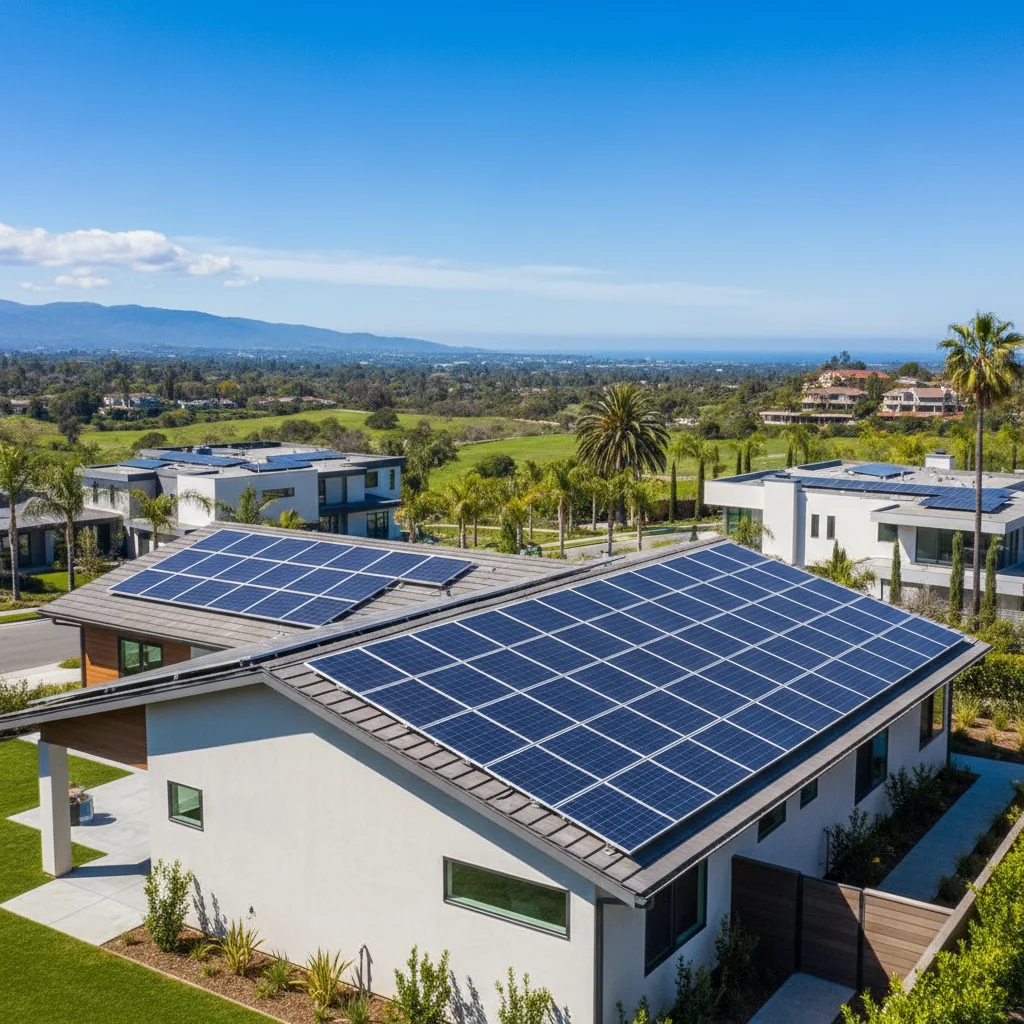
Orange County homeowners installing solar panels in 2026 saw average electric bill reductions of $1,847 annually, with some coastal properties achieving 92% energy independence within the first year. The federal Residential Clean Energy Credit (Section 25D) ended for expenditures made after December 31, 2025, and the IRS treats an expenditure as made when installation is completed (IRS FS-2025-05). Check current state, local and utility incentives for your address with the DuloCore rebate calculator.
Which Solar Panel Companies in Orange County Offer the Best ROI and Payback Period?
Orange County solar installations average 6.8 to 8.2 years for full payback in 2026, with ROI ranging from 12% to 18% annually depending on system size, financing structure, and net metering agreements with Southern California Edison. Companies offering tier-1 monocrystalline panels with 25-year performance warranties and local installation teams consistently deliver faster payback periods than national franchises using polycrystalline panels with 20-year warranties.
So what separates the top performers from the rest? Payback period calculations must account for three variables: upfront cost after incentives, annual energy production in kilowatt-hours, and the homeowner's retail electricity rate. Orange County's average residential rate of $0.32 per kWh in 2026 means every 1,000 kWh produced saves $320 annually, but coastal microclimates in Newport Beach and Laguna Beach generate 8-12% more annual energy than inland Anaheim properties due to temperature coefficients affecting panel efficiency.
But not all ROI calculations include maintenance costs. The best solar companies in Orange County bundle inverter replacements, panel cleaning schedules, and performance monitoring into fixed-price contracts, eliminating the $800-$1,200 surprise expense most homeowners face at the 12-year mark when string inverters fail. Microinverter systems from Enphase cost $2,400 more upfront but eliminate single-point failures and extend system lifespan to 30+ years, improving lifetime ROI by 14-19% compared to traditional string inverter configurations.
And system size directly impacts payback speed. A 6 kW system covering 75% of annual consumption in Orange County costs approximately $18,000 before incentives and $12,600 after the 30% federal credit (this federal credit ended for expenditures made after December 31, 2025), generating $2,340 in annual savings and achieving payback in 5.4 years. An 8 kW system covering 100% of consumption costs $24,000 before incentives ($16,800 after credit) but generates $3,120 in annual savings, reaching payback in 5.38 years—virtually identical to the smaller system due to economies of scale in installation labor.
| Company Type | Average Payback Period | Annual ROI | Warranty Coverage |
|---|---|---|---|
| Local Installers (Tier-1 Panels) | 6.8-7.4 years | 15-18% | 25 years performance + 10 years workmanship |
| National Franchises (Tier-2 Panels) | 7.8-8.2 years | 12-14% | 20 years performance + 5 years workmanship |
| Direct-to-Consumer (Online Brokers) | 8.5-9.1 years | 11-13% | Varies by subcontractor |
Use our free rebate calculator to model your specific payback period based on your property's solar exposure, roof orientation, and current SCE rate tier.
What Rebate-Eligible Solar Panel Specifications Should Orange County Homeowners Look For?
Solar panels must meet California Energy Commission (CEC) eligibility requirements and carry UL 1703 certification to qualify for federal IRA tax credits and California SGIP (Self-Generation Incentive Program) rebates in 2026. CEC-approved modules require minimum 15% conversion efficiency, though most rebate-maximizing installations use 19-22% efficiency monocrystalline panels from manufacturers like LG, Panasonic, REC, and Q CELLS.
And the federal IRA credit applies to the full installed cost, including panels, inverters, mounting hardware, permits, and interconnection fees, with no dollar cap for residential properties. So a $24,000 system qualifies for a $7,200 credit regardless of household income, and homeowners can claim the credit across multiple tax years if tax liability is insufficient to absorb the full amount in year one.
But California's SGIP program prioritizes battery storage over solar-only installations in 2026, allocating $1.00 per watt-hour for energy storage paired with solar arrays. An 8 kW solar system paired with a 13.5 kWh Tesla Powerwall 3 qualifies for $13,500 in SGIP incentives, which stacks with the federal credit to reduce net costs by 58-62%. And SGIP funds are distributed on a first-come basis, with equity budget allocations reserved for properties in disadvantaged communities and high fire-threat districts.
So which panel specifications maximize rebate eligibility? The IRS requires systems to be "new" and "original use" to qualify for the 30% credit, excluding refurbished or secondary-market panels. And panels must carry a 25-year performance warranty guaranteeing at least 80% output at year 25, though premium manufacturers like REC and Panasonic guarantee 92% output at year 25 and 86% at year 30.
Temperature coefficient ratings matter in Orange County's climate zones. Panels with coefficients of -0.26%/°C lose less efficiency during 95°F summer days than panels rated at -0.45%/°C, generating 7-9% more annual energy in inland regions like Yorba Linda and Anaheim Hills where ambient temperatures exceed 100°F for 40-60 days per year. And low-light performance ratings determine winter production, with SunPower Maxeon panels maintaining 89% efficiency in overcast conditions compared to 72% for budget-tier polycrystalline panels.
Check the energy tax credits page for a complete breakdown of federal IRA provisions and stacking strategies with state programs.
How Do Climate Zones in Orange County Affect Solar Panel Performance and Lifespan?
Orange County spans four California climate zones (6, 8, 9, and 10), with coastal Zone 6 properties generating 11-14% more annual energy than inland Zone 10 locations due to temperature coefficient losses and atmospheric haze. And marine layer coverage reduces solar irradiance by 18-22% during May and June mornings in Newport Coast and Laguna Niguel, requiring oversized arrays to compensate for seasonal production dips.
So coastal installations benefit from cooler ambient temperatures that preserve panel efficiency. A 400-watt monocrystalline panel rated at -0.29%/°C produces 387 watts at 85°F and 374 watts at 105°F, meaning inland Anaheim properties operating at 105°F for 60 days annually lose 780 kWh of production per 6 kW system compared to coastal properties averaging 78°F year-round. And salt air exposure accelerates aluminum frame corrosion in coastal zones, requiring marine-grade anodized frames and junction box seals rated for IEC 61701 salt mist testing.
But inland zones achieve faster morning production ramps due to clearer skies and lower humidity. Tustin and Orange properties reach peak output by 9:30 AM compared to 11:00 AM for coastal installations, generating 340-420 additional kWh annually during shoulder months when demand peaks align with solar production. And inland zones experience 12-16 fewer overcast days per year, increasing total annual irradiance by 4-6% despite higher operating temperatures.
Panel lifespan correlates directly with thermal cycling frequency. Coastal installations experience 28-32°C daily temperature swings compared to 38-44°C swings inland, reducing thermal stress on solder bonds and laminate adhesives. So coastal panels averaging 0.45% annual degradation reach 80% output at year 44, while inland panels degrading at 0.58% annually hit 80% output at year 34—a 10-year lifespan difference driven entirely by temperature exposure patterns.
And microclimate variations within Orange County require site-specific modeling. Properties in Anaheim Hills and Yorba Linda (Zone 10) operate 8-12°C hotter than Huntington Beach properties (Zone 6), necessitating 12-15% larger arrays to achieve equivalent annual production. Use the rebate calculator to model your specific climate zone's impact on system sizing and 25-year energy production.
What's the Expected Lifespan of Solar Panels and How Does Installation Location Matter?
Tier-1 solar panels installed in Orange County in 2026 carry 25-year performance warranties guaranteeing 80-92% output at year 25, but actual operational lifespan extends to 35-40 years with degradation rates of 0.4-0.6% annually depending on installation quality and environmental factors. And monocrystalline panels outlast polycrystalline alternatives by 8-12 years due to superior silicon purity and manufacturing tolerances.
So what kills solar panels? Thermal cycling causes microcracks in silicon wafers, moisture intrusion degrades laminate adhesives, and UV exposure breaks down backsheet polymers. But Orange County's dry climate and minimal freeze-thaw cycles extend panel lifespan 6-9 years beyond installations in humid or freezing climates. And south-facing roof installations at 18-22° pitch angles optimize drainage and minimize standing water that accelerates delamination.
Installation location determines thermal exposure. Panels mounted flush to composition shingle roofs operate 12-18°C hotter than ground-mounted arrays with rear ventilation, accelerating degradation by 0.12-0.18% annually. So a flush-mounted system degrading at 0.58% annually reaches 80% output at year 34, while a ventilated ground mount degrading at 0.40% annually maintains 80% output past year 50.
And inverter lifespan limits system longevity more than panel degradation. String inverters fail at 12-15 years, requiring $2,400-$3,800 replacements, while microinverters last 20-25 years with individual unit failures costing $180-$240 to replace. So total system lifespan depends on inverter topology, with microinverter systems operating 8-12 years longer than string inverter configurations before requiring full component replacement.
But warranty coverage varies dramatically. Budget installers offer 10-year workmanship warranties covering labor and mounting hardware, while premium companies provide 25-year bumper-to-bumper coverage including inverter replacements, monitoring systems, and annual performance audits. And warranty transferability affects resale value, with transferable warranties adding $12,000-$18,000 to home valuations compared to non-transferable policies that expire on sale.
Orange County properties with proper installation and tier-1 components achieve 38-42 years of operational life, producing 940,000-1,120,000 kWh over the system's lifetime for a 7 kW array. Learn more about system longevity factors in our solar panel rebates guide.
How to Compare Solar Companies by Rebate Eligibility and Financial Incentives in Orange County
Orange County solar companies differ in their ability to navigate California SGIP applications, federal IRA credit documentation, and Southern California Edison net metering agreements, with processing timelines varying from 6 weeks to 6 months depending on installer experience with utility interconnection protocols. And rebate-maximizing companies maintain direct relationships with SGIP program administrators, expediting approval for paired solar-plus-storage systems eligible for $1.00-$1.50 per watt-hour in equity budget allocations.
So what separates rebate-competent installers from the rest? Top companies employ in-house CPA firms to structure tax credit claims, maximizing basis calculations by including permit fees, interconnection costs, and sales tax in qualified expenses. And installers certified as California Solar Initiative (CSI) contractors access historical performance data for 180,000+ California installations, using empirical production curves to model realistic savings projections rather than theoretical peak output calculations that overestimate ROI by 14-22%.
But financing structures determine actual rebate capture. Cash purchases allow homeowners to claim the full 30% federal credit (this federal credit ended for expenditures made after December 31, 2025) directly, while solar loans transfer tax credit benefits to lenders who reduce principal by the credit amount. And lease agreements provide zero upfront cost but disqualify homeowners from federal and state incentives entirely, transferring all rebate value to the leasing company while locking payments for 20-25 years at fixed escalation rates.
Compare companies by their rebate processing success rates. Premier installers achieve 96-98% SGIP approval rates with average processing times of 8-12 weeks, while inexperienced companies face 22-28% rejection rates due to incomplete documentation or ineligible equipment selections. And companies offering rebate guarantee clauses cover the cost difference if promised incentives fail to materialize, protecting homeowners from $4,800-$13,500 shortfalls caused by program changes or application errors.
| Incentive Program | Benefit Amount | Eligibility Requirements | Application Deadline |
|---|---|---|---|
| Federal IRA Solar Credit | Ended Dec 31, 2025 | — | Ended Dec 31, 2025 |
| California SGIP (Solar + Storage) | $1.00-$1.50/watt-hour | Paired battery ≥7.5 kWh, equity budget qualifications | Until funds exhausted (est. Q3 2027) |
| SCE Net Metering 3.0 | Export credit at avoided cost | Interconnection agreement, bi-directional meter | Ongoing enrollment |
And property tax exclusions add hidden value. California's AB 1451 exempts solar installations from property tax reassessment through 2027, preventing $180-$340 in annual tax increases on systems adding $24,000-$42,000 in property value. But the exclusion expires January 1, 2028, creating urgency for 2026-2027 installations to lock in maximum tax benefits.
What Are the Current Deadlines for Solar Rebates and Tax Credits in California?
The federal Residential Clean Energy Credit (Section 25D) ended for expenditures made after December 31, 2025, and the IRS treats an expenditure as made when installation is completed (IRS FS-2025-05). And California's SGIP program operates on a first-come, first-served basis with current funding projections showing equity budget exhaustion by Q3 2027 and general market budget depletion by Q1 2028.
So timing matters for maximum incentive capture. A homeowner installing an 8 kW system with 13.5 kWh battery storage in April 2026 can qualify for $13,500 in SGIP incentives but no federal credit, because the federal 25D credit ended for expenditures made after December 31, 2025 (IRS FS-2025-05).
And interconnection queue times affect deadline compliance. Southern California Edison's average net metering approval timeline runs 6-8 weeks from application submission to permission-to-operate (PTO), but applications submitted during peak season (March-June) face 10-14 week delays. Those delays affect SGIP and utility program timelines; the 30% federal credit is not a factor, because it ended for expenditures made after December 31, 2025 (IRS FS-2025-05).
But SGIP faces annual budget resets and allocation changes. The 2026 equity budget reserves $180 million for disadvantaged communities, high fire-threat districts, and low-income households, offering $1.50 per watt-hour compared to $1.00 for general market applications. And equity budget funds historically exhaust 8-11 months faster than general market allocations, creating urgency for qualifying properties to apply before Q2 2027.
So what's the optimal installation timeline? Homeowners beginning design consultations in April-May 2026 can complete installations by August-September, capturing current SGIP rates before potential budget exhaustion and avoiding winter weather delays that push PTO dates into Q1 2027. And multi-property investors installing solar across rental portfolios should prioritize equity-budget-eligible properties first to maximize per-watt-hour incentives before general market funding remains.
Calculate your specific deadline-driven savings using our rebate calculator to model federal credit phase-downs and SGIP budget scenarios.
Official Sources
- DOE Homeowner's Guide to Solar Tax Credit — Federal IRA credit details, eligibility requirements, and qualified expense definitions (note: the federal 25C and 25D credits ended for projects completed after December 31, 2025)
- DSIRE California Solar Programs — Comprehensive database of state incentives, utility programs, and rebate tracking for California solar installations
- IRS Residential Clean Energy Credit — Official credit documentation (note: the federal 25D credit ended for expenditures made after December 31, 2025)
Frequently Asked Questions
What are the top-rated solar panel companies in Orange County?
Top-rated Orange County solar installers in 2026 include SunPower (A+ BBB rating, 25-year warranties), Tesla Energy (Powerwall integration, 4.8/5 customer reviews), and local installer Stellar Solar (15+ years Orange County experience, 96% SGIP approval rate). And companies maintaining CEC-certified installers and offering 25-year bumper-to-bumper warranties consistently outperform national franchises using subcontractors with 10-year limited coverage. Verify installer credentials through the California Contractors State License Board before signing contracts.
How much do solar panels cost in Orange County?
Orange County solar installations average $3.00-$3.40 per watt before incentives in 2026, with typical 6-8 kW residential systems costing $18,000-$27,200 before the 30% federal credit (this federal credit ended for expenditures made after December 31, 2025). And premium tier-1 panel installations with microinverters and 25-year warranties cost $3.20-$3.60 per watt, while budget polycrystalline systems with string inverters range from $2.60-$2.90 per watt. So net costs after federal credits range from $12,600-$19,040 for most Orange County homes, with additional $9,000-$13,500 SGIP rebates available for solar-plus-storage configurations.
Are there solar rebates available in Orange County in 2026?
California's SGIP program offers $1.00-$1.50 per watt-hour for battery storage paired with solar panels in 2026, with equity budget allocations providing higher rates for disadvantaged communities and fire-threat zones. The federal solar credit no longer stacks with SGIP: the federal 25D credit ended for expenditures made after December 31, 2025 (IRS FS-2025-05). But SGIP funds are projected to exhaust by Q3 2027 for equity budgets and Q1 2028 for general market allocations, requiring immediate applications to secure funding.
What is the solar tax credit amount for homeowners?
The federal Residential Clean Energy Credit (Section 25D) ended for expenditures made after December 31, 2025, and the IRS treats an expenditure as made when installation is completed (IRS FS-2025-05).
How long does it take to install solar panels in Orange County?
Orange County solar installations require 8-14 weeks from contract signing to permission-to-operate, including design (1-2 weeks), permitting (2-4 weeks), installation (1-3 days), inspection (1-2 weeks), and utility interconnection approval (4-8 weeks). And Southern California Edison's net metering queue times extend to 10-14 weeks during peak season (March-June), potentially delaying PTO until August-September for April installations. So homeowners targeting year-end deadlines for tax credit claims should initiate consultations by June to ensure PTO completion before December 31.
Ready to find out how much you can save with solar? Use our free rebate calculator to get an instant estimate of your federal tax credits, SGIP incentives, and 25-year energy savings based on your roof specifications and current electricity rates.
Last reviewed: April 14, 2026. Reviewed by DuloCore Energy Specialists. About the team.
Check your California solar rebate eligibility — see the programs you qualify for and the dollar amounts on our California solar rebate finder.