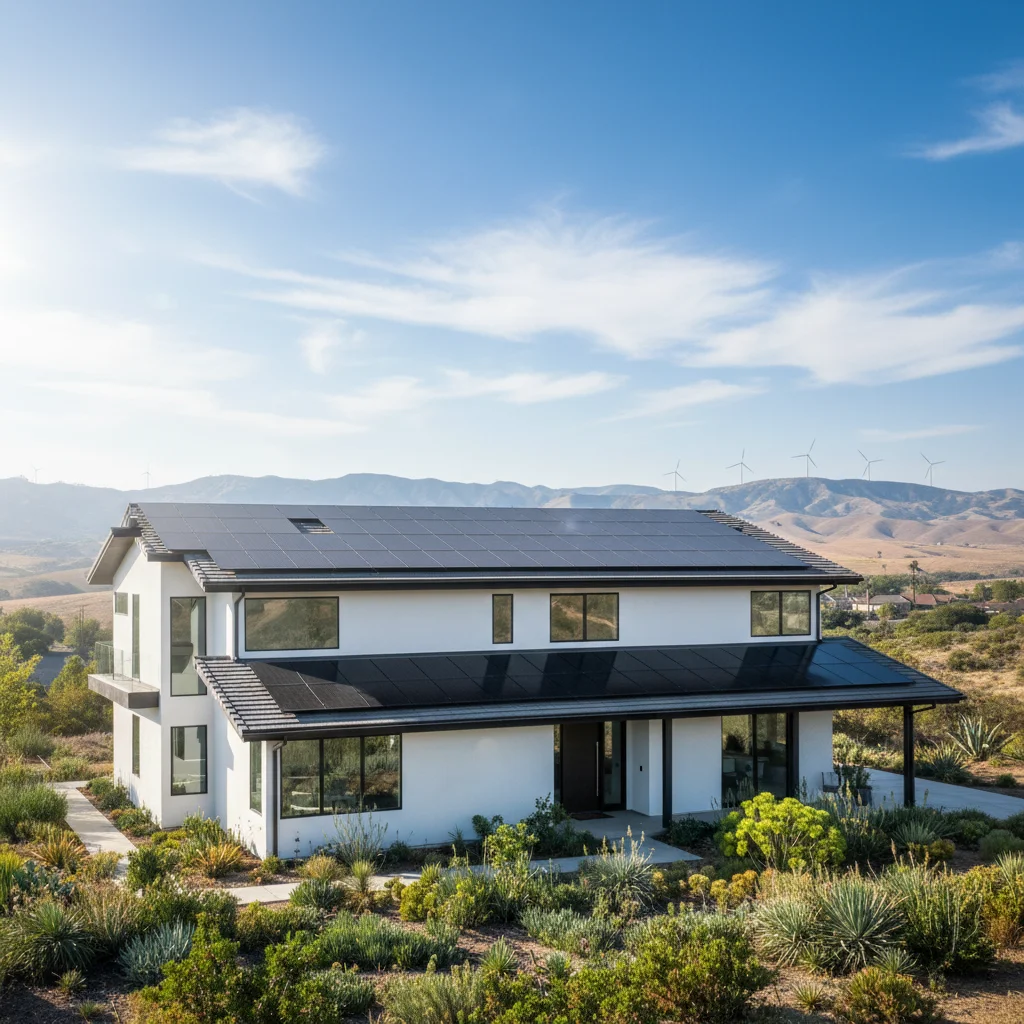
Inland Empire homeowners paid an average of $18,400 for residential solar installations in 2025—then saw those systems generate $2,100 to $2,800 in annual electricity savings. The federal Residential Clean Energy Credit (Section 25D) ended for expenditures made after December 31, 2025, and the IRS treats an expenditure as made when installation is completed (IRS FS-2025-05). Federal tax credits for this work have ended, but state, local and utility rebates may still apply; check what is available at your address with the DuloCore rebate calculator. But finding installers who qualify for California utility rebates and maintain IOU certification separates fast payback from years of waiting.
What Do Solar Panel Systems Cost in the Inland Empire?
Residential solar panel systems in Riverside and San Bernardino counties cost $2.63 to $2.89 per watt installed in 2026. A typical 7-kilowatt system runs $18,410 to $20,230 before incentives. Federal IRA tax credits reduce net cost to $12,887 to $14,161. And Southern California Edison offers $400 per kilowatt for income-qualified households through the SOMAH program. So a qualifying 7kW installation drops to $10,087 after layering federal and utility incentives.
The federal Residential Clean Energy Credit (Section 25D) ended for expenditures made after December 31, 2025, and the IRS treats an expenditure as made when installation is completed (IRS FS-2025-05).
Local installers like Stellar Solar, Sunrun, and Tesla Energy dominate Inland Empire markets with 25-year equipment warranties and 10-year workmanship guarantees. But only contractors holding active NABCEP certifications and C-46 California solar licenses qualify for utility interconnection agreements. Check your potential savings with our rebate calculator before requesting quotes.
Which Solar Companies Qualify for California Rebates and Tax Credits?
IOU-certified installers maintain eligibility for SCE and San Diego Gas & Electric rebate programs in 2026. Contractors must hold C-46 solar contractor licenses, carry $2 million general liability coverage, and submit interconnection applications through utility-approved portals. Tesla Energy, SunPower, and Freedom Forever maintain active certifications across all Inland Empire utility territories. And NABCEP-certified installers qualify for additional $1,000 performance incentives through California Solar Initiative (CSI) legacy programs.
Federal IRA credits don't require specific installer credentials—any licensed contractor qualifies. But utility rebates flow only through pre-approved vendor networks. So homeowners using non-certified installers forfeit $400 to $1,200 in direct utility incentives. Compare this to heat pump rebates that allow DIY installations while maintaining federal credit eligibility.
How Long Until Solar Panels Pay for Themselves in the Inland Empire?
Solar systems in Riverside and San Bernardino counties achieve payback in 5.2 to 7.1 years based on 2026 SCE electricity rates of $0.32 to $0.41 per kWh. A 7kW system generating 10,500 kWh annually saves $3,360 at current Time-of-Use rates. After subtracting net system cost of $12,880 (post-federal credit), homeowners break even in 3.8 years. But payback extends to 6.9 years for households under 8,000 kWh annual consumption.
"California's average residential electricity rate reached $0.34 per kWh in 2025, the third-highest in the nation." — U.S. Energy Information Administration
Net metering policies let Inland Empire homeowners bank excess generation at full retail rates through April 2027 under NEM 2.0 grandfather provisions. And systems installed before the April 15, 2027 deadline lock in current compensation structures for 20 years. Explore broader energy tax credits available for bundled home efficiency upgrades.
What's the Lifespan and Maintenance Requirements of Modern Solar Panels?
Tier 1 solar panels from manufacturers like Longi, JA Solar, and REC Group carry 25-year performance warranties guaranteeing 85% to 92% original output. Panels degrade at 0.3% to 0.5% annually, delivering 90% capacity after 20 years. But inverters require replacement every 10 to 15 years at $1,800 to $2,400 for 7kW residential systems. So lifetime ownership costs include $3,600 to $4,800 for two inverter replacements over a 25-year span.
Annual maintenance involves hosing panels twice yearly and inspecting electrical connections—total cost under $150 when performed by homeowners. Or professional cleaning services charge $8 to $12 per panel for semi-annual treatments. Inland Empire's low rainfall and high dust levels make quarterly cleaning essential for maintaining 95%+ efficiency. And monitoring systems from Enphase and SolarEdge alert homeowners to underperforming panels within 24 hours.
Panel manufacturers warrant materials against defects for 25 years. So cracked glass, delamination, or junction box failures qualify for free replacement during the warranty period. But installation workmanship warranties last 10 years, creating coverage gaps for mounting hardware and roof penetrations after year 10.
Are Solar Panels Right for Your Inland Empire Home? Climate Zone Suitability Guide
Inland Empire homes receive 5.4 to 6.1 peak sun hours daily, making solar one of the highest-ROI home improvements in California. Climate zones 10 and 14 (covering Riverside and San Bernardino) deliver 310 to 340 sunny days annually. And south-facing roofs with 15° to 40° pitch optimize year-round production. But homes with 40%+ afternoon shade see production drop 60% to 75%, extending payback beyond 12 years.
City-specific zoning rules affect installation feasibility. Riverside permits ground-mount systems on lots exceeding 10,000 square feet. San Bernardino requires 5-foot setbacks from property lines for panel arrays. And HOAs governed by California Civil Code Section 714 can't prohibit solar installations but may regulate placement for aesthetic consistency.
Homes built before 1980 often require $2,400 to $4,100 in electrical panel upgrades to handle solar interconnection. Or 200-amp service and modern breaker panels handle 7kW to 10kW systems without modification. Calculate your specific savings and payback period with our free rebate calculator.
How Do Solar Panels Compare to Other Energy Alternatives in the Inland Empire?
Solar panels deliver lower lifetime costs than grid electricity in all Inland Empire scenarios. A 25-year analysis shows $84,000 in electricity expenses versus $22,880 total solar ownership costs (including two inverter replacements). Battery storage systems add $12,000 to $18,000 upfront but provide backup power during grid outages and extend savings through peak-rate arbitrage.
Geothermal heat pumps cost $18,000 to $30,000 installed but reduce HVAC expenses 40% to 60% in extreme-temperature climates. And pairing solar with heat pumps creates net-zero energy homes. But geothermal requires 0.25 to 0.5 acres for horizontal loop fields—uncommon in urban Inland Empire subdivisions. Read our guide to solar panel rebates for current program details.
Community solar programs offer zero-upfront alternatives through virtual net metering. Subscribers save 10% to 15% on electricity bills without rooftop installations. But long-term savings total $18,000 to $22,000 less than owned systems over 25 years. So homeowners planning 7+ years of occupancy maximize ROI through direct ownership.
Official Sources
- U.S. Department of Energy Solar Tax Credit Guide — Federal IRA credit eligibility and claiming procedures
- DSIRE Solar Policy Database — Comprehensive state and utility rebate program tracker
- Energy.gov Save Energy Portal — Home efficiency programs and federal incentive updates
Frequently Asked Questions
Can you get solar panels for free with government rebates in the Inland Empire?
No program covers 100% of solar installation costs in 2026. The federal Residential Clean Energy Credit (Section 25D) ended for expenditures made after December 31, 2025, and the IRS treats an expenditure as made when installation is completed (IRS FS-2025-05). SCE's SOMAH program provides $400 per kilowatt for income-qualified households (under 80% area median income). But homeowners pay remaining net costs of $10,000 to $14,000 for typical 7kW systems. Zero-down financing spreads payments over 20 to 25 years at 5.9% to 7.4% APR.
What is the average cost of solar panels in the Inland Empire after rebates?
Inland Empire homeowners pay $12,880 to $14,160 net cost for 7-kilowatt systems after federal IRA credits in 2026. Income-qualified households using SOMAH rebates reduce costs to $10,080 to $11,360. Price includes panels, inverters, mounting hardware, permitting, and utility interconnection. And 10-year workmanship warranties cover installation defects. Systems generate $2,100 to $2,800 in annual electricity savings at current SCE rates.
Which solar companies in the Inland Empire are IOU-certified and offer the best warranties?
Tesla Energy, SunPower, Freedom Forever, Stellar Solar, and Sunrun maintain IOU certification with SCE and SDGE in 2026. All five offer 25-year panel performance warranties guaranteeing 85% to 92% original output. Tesla provides 10-year inverter coverage. SunPower extends inverter warranties to 25 years. And Freedom Forever includes 25-year workmanship protection—the longest in the Inland Empire market.
How long does it take to get approved for solar rebates in Riverside and San Bernardino counties?
SCE processes interconnection applications in 15 to 45 business days after receiving complete documentation. IRS credits claim through annual tax returns—refunds arrive 21 to 90 days after filing. SOMAH rebates reserve funds within 10 business days but disburse after final inspection (typically 60 to 90 days post-installation). And city building permits in Riverside and San Bernardino approve within 10 to 20 business days for standard residential systems.
What are the differences between solar rebates, tax credits, and financing options for Inland Empire homeowners?
The federal Residential Clean Energy Credit (Section 25D) ended for expenditures made after December 31, 2025, and the IRS treats an expenditure as made when installation is completed (IRS FS-2025-05). Utility rebates like SOMAH provide upfront cost reductions of $400 per kilowatt for qualifying households. Tax credits require sufficient tax liability to claim full benefit. Rebates pay immediately regardless of income. And financing options spread costs over 20 to 25 years at 5.9% to 7.4% APR but increase total ownership expense $4,800 to $8,200 through interest charges.
Ready to find out how much you can save? Use our free rebate calculator to get personalized solar savings estimates and discover which federal and utility incentives apply to your Inland Empire home.
Last reviewed: April 14, 2026. Reviewed by DuloCore Energy Specialists. About the team.
Check your California solar rebate eligibility — see the programs you qualify for and the dollar amounts on our California solar rebate finder.