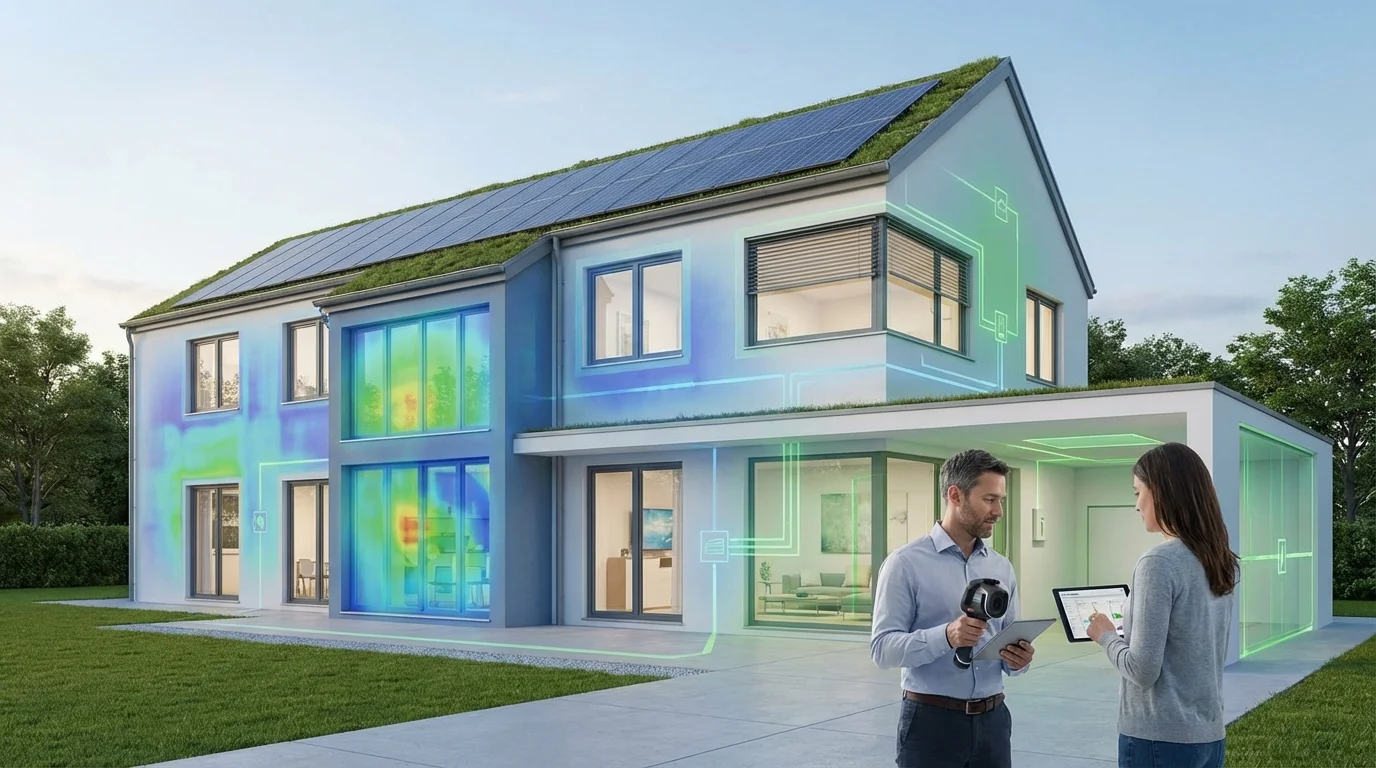
Commercial buildings in the United States waste up to 30% of the energy they consume, a loss that directly impacts operating budgets and profitability every single month. This isn't a minor leak; it's a constant drain on resources that goes unnoticed until a formal assessment quantifies the exact financial cost of inefficient HVAC, lighting, and building envelope performance. And with 2026 utility rates projected to increase by 4-6%, ignoring this energy waste is no longer a viable business strategy.
What Are the Different ASHRAE Energy Audit Levels (Level 1, 2, and 3) Explained?
ASHRAE energy audits are a three-tiered system for evaluating building energy use, with each level increasing in complexity and detail for 2026. Level 1 is a basic walk-through, Level 2 provides a detailed energy analysis with cost-benefit calculations, and Level 3 offers an in-depth engineering analysis for capital-intensive projects.
So why does this matter? For building owners, the difference between these levels dictates the pathway to unlocking thousands in utility rebates. A Level 1 audit identifies low-cost operational changes, but a Level 2 audit is the key that unlocks funding for equipment upgrades. According to the Department of Energy, a Level 2 audit typically identifies energy-saving opportunities that reduce a building's energy consumption by 15-25%. This directly translates into lower operating costs and a faster ROI on improvements like new HVAC systems or lighting retrofits, which are often subsidized by state programs. Failing to choose the right audit level means leaving rebate money on the table.
A Level 1 audit, or Walk-Through Analysis, is the preliminary step in identifying energy efficiency measures. It involves a brief on-site survey of the building to review operating and maintenance procedures and analyze utility bills. And this process identifies no-cost or low-cost improvements, like adjusting thermostat settings or fixing obvious air leaks. But it doesn't include detailed engineering calculations. So the final report provides a basic list of potential upgrades and a qualitative analysis of their benefits. This level is ideal for smaller buildings or as a first step before committing to a more comprehensive home energy audit. A Level 2 audit, or Energy Survey and Analysis, provides a more detailed building survey and energy analysis. It breaks down energy use by end-use (e.g., lighting, HVAC) and includes a thorough financial analysis of proposed measures.
What Financial Incentives and Rebate Amounts Are Available for ASHRAE Energy Audits in Your State or Utility Area?
Financial incentives for ASHRAE audits are typically utility-sponsored programs that offer cost-sharing or fixed rebates for commercial properties in 2026. These programs cover 50-75% of the audit cost, with maximum rebate amounts often capped between $5,000 and $15,000, depending on the utility provider and building size.
These rebate programs are designed to lower the barrier to entry for identifying and implementing energy efficiency projects. For instance, a utility may offer a 50% cost-share for a Level 2 audit, up to a maximum of $10,000. So if the audit costs $15,000, the building owner receives a $7,500 rebate, reducing their net cost by half. These funds make it financially feasible to get the detailed analysis needed to justify projects like upgrading to high-efficiency heat pump rebates. And the audit itself often becomes the required first step to qualify for further equipment rebates. But program funding is limited and often allocated on a first-come, first-served basis, making timely application critical. Use our free rebate calculator to find 2026 program amounts in your area.
Do You Qualify? Understanding Income Limits and Eligible Equipment for ASHRAE Audit Funding.
Qualification for ASHRAE audit rebates in 2026 primarily depends on the building's location, utility provider, and size, not on income limits. Most programs target commercial and industrial customers with a minimum annual energy spend, often around $20,000, ensuring the audit's potential savings justify the program's investment.
Eligibility is defined by the utility's specific program rules. And commercial, industrial, institutional, and multifamily buildings are typically eligible. But single-family homes do not qualify for these specific commercial programs. The primary requirement is being a customer in good standing with the sponsoring utility. So the focus is on the building's energy consumption profile rather than the owner's financial status.
"Energy audits are a key first step to understanding how your business or organization uses energy and for identifying opportunities to cut energy waste and save money." — U.S. Department of Energy
Eligible equipment for post-audit rebates covers a wide range, including high-efficiency HVAC systems, LED lighting retrofits, variable frequency drives (VFDs), and building automation systems. So the audit serves as a gateway to accessing these deeper energy tax credits.
How Do You Apply for ASHRAE Energy Audit Rebates, What is the Application Process, and What Are the Key Deadlines?
The application process for ASHRAE audit rebates in 2026 involves pre-approval from the utility before the audit begins. Applicants must submit a formal application, often with a proposal from a qualified energy auditor, and wait for a notice to proceed. Key deadlines are typically tied to program funding cycles, which often close by Q4.
The process starts with identifying the correct program through your electric or gas utility. And applicants usually need to select a pre-approved or certified energy engineering firm from a list provided by the utility. The application package requires details about the building, its annual energy consumption (often 12-24 months of utility bills), and the scope of the proposed audit. But incomplete applications are a common reason for delays or rejection. So ensuring all documentation is accurate is critical. Once pre-approved, the audit is conducted. After completion, the final audit report is submitted to the utility along with an invoice to trigger the rebate payment. Deadlines are strict; many programs have rolling application periods but a firm end-of-year cutoff for project completion and fund disbursement.
Rebate Program Comparison (2026)
| Program / Utility | Audit Level Covered | Rebate Amount / Structure | Typical Deadline |
|---|---|---|---|
| Con Edison (NY) | Level 2 & 3 | 50% cost-share up to $12,000 | November 30, 2026 |
| PG&E (CA) | Level 2 | Up to 75% of cost, max $7,500 | October 31, 2026 |
| Xcel Energy (CO) | Level 1 & 2 | Fixed rates based on sq. ft. | December 15, 2026 |
Can You Combine ASHRAE Audit Funding? Understanding Stacking Rules, Contractor Requirements, and Program Funding Status.
Stacking ASHRAE audit rebates with other incentives is generally not permitted for the audit itself, as utilities typically limit funding to a single source. However, the energy efficiency measures identified in the audit report are often eligible for multiple stacked rebates and federal tax credits available in 2026.
Contractor requirements are stringent. And utilities maintain a list of pre-qualified, certified energy service companies (ESCOs) or engineering firms authorized to perform rebate-eligible audits. So building owners cannot simply hire any engineer; the firm must meet the utility's standards, which often include holding certifications like Certified Energy Manager (CEM). The funding status of these programs is a critical factor.
"Many state and local governments offer tax incentives for energy efficiency improvements. These incentives include personal and corporate tax credits, deductions, and exemptions..." — DSIRE
Budgets are set annually and can be exhausted before the official program deadline. And it's common for popular programs to be fully subscribed by the third quarter. So early application is essential. While the audit rebate itself can't be stacked, the resulting projects can combine utility rebates with IRA tax credits for maximum financial return.
Official Sources
- ENERGY STAR for Buildings — A U.S. Environmental Protection Agency (EPA) program providing tools and resources for energy efficiency in commercial buildings.
- DSIRE Database — A comprehensive source of information on state, local, utility, and federal incentives and policies that promote renewable energy and energy efficiency.
Frequently Asked Questions
What are the three ASHRAE energy audit levels?
The three ASHRAE energy audit levels are Level 1 (Walk-Through Analysis), Level 2 (Energy Survey and Analysis), and Level 3 (Detailed Analysis of Capital-Intensive Modifications). These levels provide a tiered approach to building energy assessment, starting with a basic overview in Level 1 and progressing to a highly detailed, investment-grade analysis in Level 3 that often requires 100+ hours of engineering analysis.
How do ASHRAE Level 1, 2, and 3 audits differ in scope and detail?
Level 1 is a basic walk-through identifying low-cost operational fixes. A Level 2 audit involves detailed energy calculations, an end-use breakdown of energy consumption (e.g., 40% for HVAC), and financial analysis of recommended measures. And a Level 3 audit builds on Level 2 with extensive data collection and rigorous engineering analysis, often using computer simulations to model the effects of major capital projects before the investment of over $100,000 is made.
Which ASHRAE audit level is typically required for commercial energy efficiency rebates?
An ASHRAE Level 2 audit is the most common prerequisite for securing commercial energy efficiency rebates from utility programs. Its detailed financial analysis and breakdown of energy conservation measures provide the justification utilities need to approve funding for equipment upgrades. While a Level 1 audit is a good start, it typically lacks the financial data required to unlock rebates of $5,000 or more.
What is included in an ASHRAE Level 2 energy audit report?
An ASHRAE Level 2 report includes a breakdown of the building's energy consumption by end-use, a list of recommended energy conservation measures (ECMs), and a detailed financial analysis for each measure. This includes implementation costs, projected annual savings, simple payback period, and return on investment (ROI). The report typically provides enough detail—over 50 pages—to justify capital expenditures for upgrades.
When should a property owner opt for an ASHRAE Level 3 audit?
A property owner opts for an ASHRAE Level 3 audit when considering complex, capital-intensive projects with high financial risk, such as a complete HVAC system overhaul or the installation of a cogeneration plant costing over $250,000. This investment-grade audit provides the most accurate savings projections through detailed modeling and data logging, giving stakeholders the confidence needed to approve projects with a 10+ year payback period.
Find and Calculate Your 2026 Rebates Instantly
Don't guess your potential savings. Use the DuloCore rebate calculator to see exactly which ASHRAE audit incentives and equipment rebates you qualify for in your area. Get started in just 60 seconds.
Calculate Your Savings NowUpdated: April 14, 2026 — fact-checked by DuloCore Research. About our editorial process.