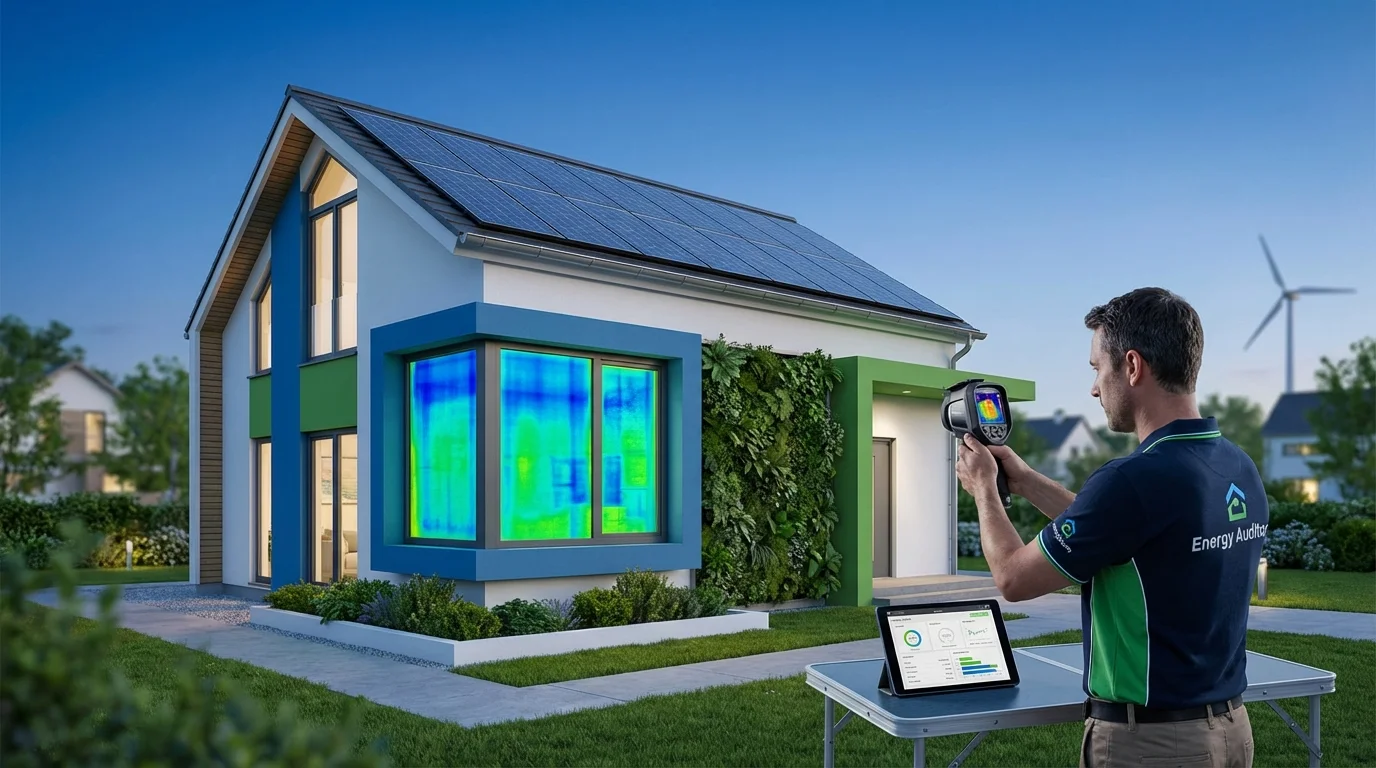
That draft you feel isn't just a change in temperature; it's your money escaping through hidden cracks and gaps. The U.S. Department of Energy estimates that air leaks can account for 10% to 20% of a home's heating and cooling costs, an invisible tax paid every month. So finding these leaks isn't just about comfort—it's about stopping a constant drain on your finances.
Where Are the Most Common Air Leaks in My Home?
Common home air leak locations include attics, basements, and crawl spaces, where structural joints meet. For 2026, windows, doors, electrical outlets, and plumbing penetrations remain primary culprits for energy loss. Professional energy audits identify these gaps, which account for up to a 20% increase in utility bills.
Finding and sealing these energy vampires is the first step toward a more efficient home. And the most common offenders are often out of sight. Gaps around recessed lighting, attic hatches, and plumbing vents create a chimney effect, pulling conditioned air out of your living space. But exterior walls are also a problem, especially behind electrical outlets and switch plates. So homeowners often focus on windows and doors, yet the U.S. Department of Energy reports that the biggest leaks are typically hidden in the attic and basement. A professional home energy audit uses tools like blower doors and infrared cameras to pinpoint these exact locations, providing a roadmap for sealing that qualifies for rebates. Sealing these leaks reduces drafts and lowers energy bills by up to $200 per year.
What State and Utility Rebates Are Available for Air Sealing, and How Much Can I Expect?
State and utility air sealing rebates in 2026 provide homeowners with point-of-sale discounts or post-project cash back, often covering 50-75% of the total cost. Available programs through local utilities offer rebates ranging from $100 to $750, contingent on achieving specific air leakage reduction targets verified by an audit.
The financial incentives for air sealing are structured to offset the initial cost of professional services and materials. And many 2026 utility programs offer tiered rebates; for example, a 15% reduction in air leakage earns a $250 rebate, while a 30% reduction unlocks a $500 rebate. But these programs are location-specific and subject to funding availability. Homeowners must check with their local electricity or gas provider to confirm current offers.
"Many state and local utilities offer rebates or other incentives for energy-efficient products and improvements, including air sealing and insulation." — U.S. Department of Energy
So, combining these local rebates with broader federal energy tax credits maximizes the financial return. These programs make a comprehensive home sealing project more accessible, with a typical payback period of 2-4 years.
Do I Qualify for Air Leakage Rebates Based on Income, and What Equipment is Eligible?
Air leakage rebate eligibility in 2026 often includes income-based tiers, with households at or below 80% of the Area Median Income (AMI) qualifying for enhanced rebates covering up to 100% of project costs. Eligible equipment includes caulk, spray foam, weatherstripping, and attic air sealing materials.
Many state-run programs are designed to assist low-to-moderate-income families with home energy improvements. And these enhanced rebates often remove the entire financial barrier to entry. For example, a family of four with an income under $75,000 in certain regions will qualify for a no-cost air sealing service through their utility. But standard-income households still qualify for rebates, typically covering up to $750 of the project cost. Eligible equipment isn't limited to just caulk; it extends to professional labor and materials like rigid foam board for attic hatches and fire-rated sealant for gaps around chimneys and flues. Use our free rebate calculator to find your exact savings. This ensures that the most effective and durable sealing methods are used, maximizing energy savings and rebate value.
What's the Application Process for Air Sealing Rebates, and What Are the Important Deadlines?
The 2026 air sealing rebate application process typically requires a pre-project energy audit, submission of a contractor's quote for pre-approval, and a post-project audit to verify leakage reduction. Most program deadlines are December 31, 2026, but funding is finite and often allocated on a first-come basis.
Navigating the application requires careful documentation. First, homeowners schedule a certified energy audit. And the auditor provides a report identifying key leakage points and a recommended scope of work. Next, this report and a quote from a program-approved contractor are submitted to the utility for pre-approval. But work completed before receiving this approval is often ineligible for reimbursement. After the sealing work is done, a final audit confirms the percentage of air leakage reduction, which determines the final rebate amount. So, while the official deadline is year-end, popular programs like Mass Save have historically exhausted their funds by Q3. It is critical to apply early in the year.
Can I Stack Air Sealing Rebates, What Are Contractor Requirements, and How Do I Check Funding Status?
Homeowners can stack federal tax credits with state and utility air sealing rebates in 2026, but not two utility rebates for the same project. Contractor requirements mandate professionals be licensed, insured, and often certified by the Building Performance Institute (BPI). Program funding status is available on utility websites.
Combining incentives is a key strategy for reducing project costs. For instance, a homeowner can claim the federal IRA tax credit, covering 30% of the cost up to $1,200 annually, and also receive a $500 rebate from their local utility for the same air sealing project. But utilities don't allow double-dipping from two different local programs. And hiring the right contractor is non-negotiable; most rebate programs maintain a list of pre-approved, BPI-certified professionals. Using a non-listed contractor will result in a denied application. So, before starting, homeowners must verify the contractor's credentials and check the program’s funding portal on the utility's website to ensure funds are still available for 2026. This also applies to other upgrades like heat pump rebates.
Air Sealing Rebate Program Comparison (2026)
| Program / Utility | Rebate Amount | Eligibility Highlights | Application Deadline |
|---|---|---|---|
| NYSERDA (NY) | Up to $1,000 | Must achieve 15% air leakage reduction | December 31, 2026 |
| Mass Save (MA) | 75-100% of cost | Income-based; no-cost for LMI households | Rolling, check funds |
| PG&E (CA) | Up to $500 | Requires pre- and post-project audit | December 31, 2026 |
Official Sources
- DSIRE — A comprehensive database of state and local energy-related policies and incentives.
- ENERGY STAR — Federal guidance on home sealing, insulation, and qualifying products.
- Department of Energy — Federal resource for energy-saving tips, rebates, and tax credits for homeowners. (note: the federal 25C and 25D credits ended for projects completed after December 31, 2025)
Frequently Asked Questions
Where are the most common locations for air leaks in a home that qualify for energy rebates?
The most common rebate-qualifying locations for air leaks are in the attic and basement. So specific spots include the attic hatch, gaps around plumbing vents and recessed lighting, and the sill plate where the foundation meets the home's frame. Sealing these areas typically delivers a 15-25% reduction in air leakage.
What is the typical rebate amount for sealing common air leak areas in older homes?
For older homes, typical air sealing rebates in 2026 range from $250 to $750 from state and utility programs. And some income-based programs cover 100% of the project cost, up to $2,000. The final amount is usually tied to achieving a specific air leakage reduction target, like 20%.
What steps should I take to identify major air leak points for a home energy rebate?
To identify leak points for a rebate, homeowners must schedule a professional energy audit with a BPI-certified technician. The audit uses a blower door test to depressurize the home, making leaks easy to find with tools like smoke pencils or infrared cameras. This audit report is a required document for most 2026 rebate applications.
Are there specific deadlines for applying for rebates after sealing common air leak sources?
Yes, most 2026 utility rebate programs have a deadline of December 31, 2026. However, funding is limited and often runs out before the end of the year. Homeowners should submit their application within 60 days of project completion and are encouraged to apply early in the calendar year to ensure fund availability.
How do air sealing improvements at common leak sites compare to other energy upgrades for rebate value?
Air sealing offers one of the highest returns on investment. While a new HVAC system rebate is $1,000-$2,000, the project cost is over $8,000. Air sealing costs $500-$1,500 but can receive rebates covering 50-75% of that cost and reduce overall energy bills by up to 20%, making its payback period just 2-3 years.
Stop Paying for Leaky Air
Find out exactly how much you can save on sealing your home. Our free tool instantly finds all available 2026 rebates and tax credits in your area.
Calculate Your Savings NowUpdated: April 14, 2026 — fact-checked by DuloCore Research. About our editorial process.