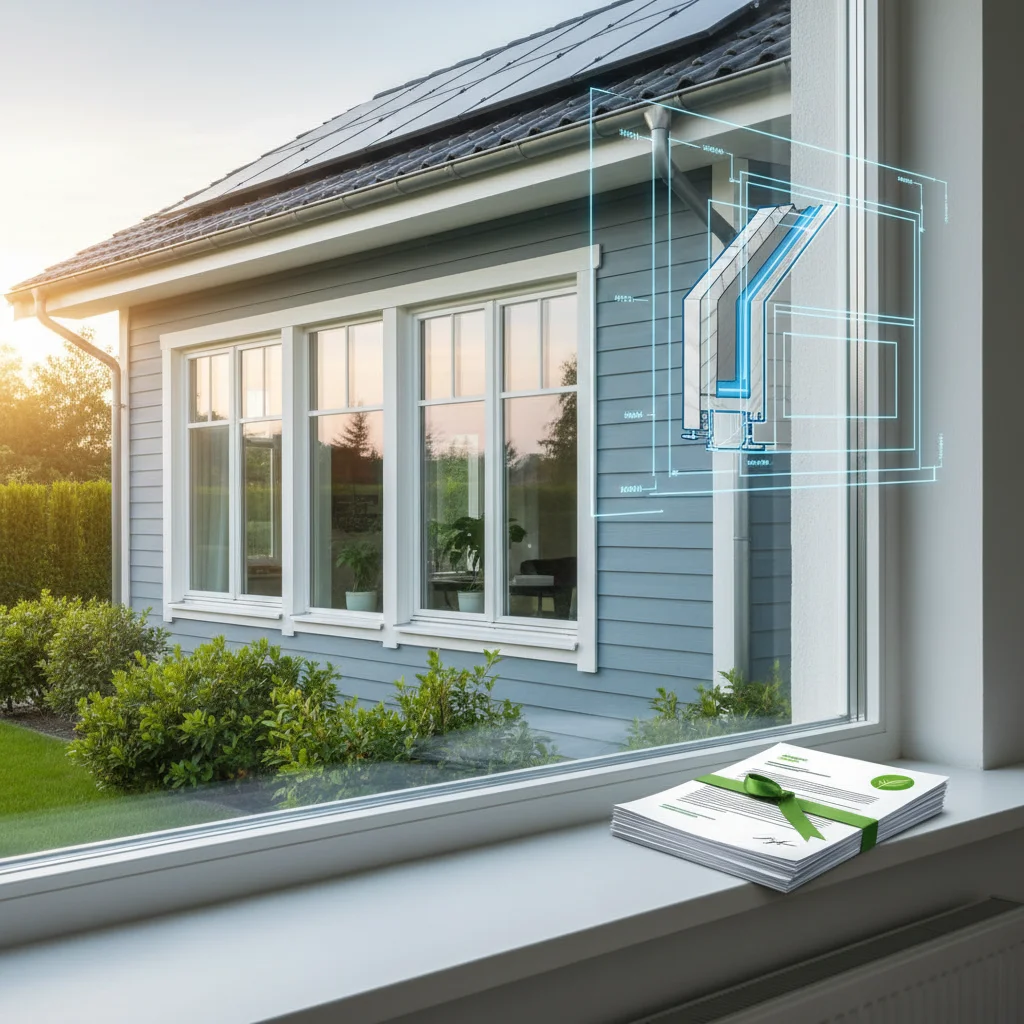
Failing to secure a proper building permit for a window replacement can result in fines of up to $2,500 per violation and a stop-work order from your local municipality. So this seemingly simple home upgrade carries financial risks that extend far beyond the initial installation cost. And homeowners often overlook this critical step, assuming a "like-for-like" replacement doesn't require municipal approval. But regulations in over 70% of U.S. jurisdictions now mandate permits for any project that alters a building's envelope, including window installations.
What are the typical permit requirements and associated fees for window replacement projects?
Window replacement permits in 2026 typically require detailed project plans, proof of a licensed contractor, and compliance with local energy codes, with fees ranging from $50 to $400. Municipalities mandate documentation showing the new windows' U-factor and Solar Heat Gain Coefficient (SHGC) ratings meet regional standards.
So what's the real issue? Navigating the bureaucratic process of permit applications feels daunting, leading many to skip it entirely. But unpermitted work creates a 100% liability for the homeowner, which can void homeowners insurance claims related to water damage or structural failure originating from the installation. And when selling the home, unpermitted work must be disclosed, often resulting in a 5-10% reduction in the final sale price or a requirement to retroactively permit the work, which is more expensive. This turns a project intended to add value into a financial liability.
"Many states and local climate action plans have specific requirements for home construction and renovation. These actions often include adopting the latest building energy codes, which set minimum energy efficiency levels for new and renovated buildings, including for windows." — U.S. Department ofEnergy
How do window efficiency ratings and specific brands influence permit approval and rebate eligibility?
Window efficiency ratings are central to permit approval and rebate qualification, with most 2026 programs requiring a U-factor of 0.27 or lower and specific SHGC values based on climate zone. Brands like Pella, Andersen, and Marvin consistently offer product lines that meet these stringent ENERGY STAR criteria.
Permit offices verify that chosen windows meet local building and energy codes, which often align with federal ENERGY STAR standards. So selecting a qualifying brand and model is the first step. For example, a Pella Lifestyle Series window with a 0.24 U-factor satisfies requirements in colder climates and simultaneously qualifies for federal energy tax credits. And utility companies offer additional rebates, often between $50 and $150 per window, but only for installations that are fully permitted and documented. But failing to provide proof of an approved permit automatically disqualifies the project from these valuable incentives, increasing the net cost by 15% or more.
What are the total installation costs for permitted window replacements, and what's the ROI payback period?
The total installation cost for a permitted window replacement in 2026 averages $850 per window, including labor, materials, and permit fees of $50-$400. The return on investment (ROI) payback period for these projects is typically between 8 and 12 years, driven by energy savings.
A standard vinyl double-hung window costs between $600 and $1,200 installed. So the permit fee itself adds a small fraction, around 3-5%, to the total project cost. And the ROI is calculated based on annual energy savings, which the Department of Energy estimates at $125 to $465 per year when replacing single-pane windows. But this payback period shortens to 5-7 years when homeowners secure all available window replacement rebates. For instance, a $300 federal tax credit and a $100 utility rebate per window reduce the upfront cost, directly accelerating the break-even point.
How does your climate zone suitability impact window choices and permit considerations compared to alternative solutions?
Climate zone suitability dictates the required window specifications for permit approval, with cold zones mandating low U-factors (≤0.27) and hot zones requiring low SHGC (≤0.25). These specs ensure optimal thermal performance, directly impacting energy bills and rebate eligibility compared to less efficient alternatives.
For example, homeowners in Climate Zone 5 (e.g., Chicago) must install windows with a low U-factor to prevent heat loss. So a permit application there will be rejected if the windows have a U-factor of 0.35. In contrast, a homeowner in Climate Zone 2 (e.g., Phoenix) needs a low SHGC to block solar heat gain. And these requirements differ from those for other upgrades; installing a new HVAC system via heat pump rebates has its own set of efficiency standards (SEER2, HSPF2) that are not tied to the building envelope's thermal properties. So window permits are uniquely focused on static insulation values.
What lifespan and maintenance expectations come with properly permitted window installations?
Properly permitted and professionally installed vinyl or fiberglass windows have a functional lifespan of 20 to 40 years, with minimal maintenance requirements. The permit process ensures installations meet manufacturer specifications and local building codes, which directly contributes to longevity and performance.
A permitted installation guarantees correct flashing, sealing, and structural support, preventing common issues like water intrusion and air leaks that degrade window frames and surrounding walls. So this verification process is critical for long-term durability. And maintenance for modern windows typically involves annual cleaning of tracks and weatherstripping, and checking sealant for cracks, a task taking less than 15 minutes per window. But unpermitted work often uses substandard techniques, leading to seal failure in as little as 5-7 years, which requires a full replacement and negates any initial savings. Use our free rebate calculator to see how a proper installation saves money.
Window Program Comparison (2026)
| Feature | Federal IRA Credit | State/Utility Rebate | Unpermitted Installation |
|---|---|---|---|
| Typical Amount | 30% of cost, up to $600 | $50 - $250 per window | $0 |
| Permit Required? | Yes, for eligibility | Yes, mandatory | No |
| Efficiency Specs | ENERGY STAR Certified | Varies by program | None |
| Financial Risk | Low | Low | High (Fines, insurance denial) |
Official Sources
- ENERGY STAR Window Guidance — Official criteria for energy-efficient windows that qualify for federal tax credits. (note: the federal 25C and 25D credits ended for projects completed after December 31, 2025)
- Database of State Incentives for Renewables & Efficiency (DSIRE) — A comprehensive database of state and local energy efficiency rebate programs.
"Saving money on energy bills is one of the fastest ways to see a return on your investment. ENERGY STAR certified windows, doors, and skylights can reduce a home's energy bills by an average of 12 percent." — ENERGY STAR
Related Reading: Learn more about Window Replacement Grants For Homeowners.
Frequently Asked Questions
Do I need a permit to replace windows in my house?
Yes, in most jurisdictions, a permit is required for window replacement, especially if the project involves changing the size of the opening or altering the home's structure. Over 70% of U.S. municipalities mandate permits to ensure installations comply with current building and energy codes for safety and efficiency. So always check with your local building department before starting work.
What is the process for obtaining a window replacement permit?
The process typically involves submitting an application form, detailed project plans showing window specifications (like U-factor and SHGC), and proof of a licensed contractor to your local building department. And some municipalities offer online portals for submission. So after review, which takes 1-4 weeks, the department issues the permit, and inspections are scheduled during and after installation.
How much does a window replacement permit typically cost?
A window replacement permit typically costs between $50 and $400 in 2026. The exact fee depends on the number of windows being replaced and the specific fee schedule of your local municipality. For a project involving 10 windows, the permit fee often falls in the $150-$250 range, representing a small fraction of the total project cost.
What happens if you replace windows without a permit?
Replacing windows without a permit can lead to stop-work orders, fines ranging from $500 to $2,500, and difficulty selling your home. And unpermitted work may also void your homeowner's insurance coverage for related damages, such as water leaks. So you may be required to remove the windows and re-install them under a new, retroactively issued permit at a higher cost.
Are permits required for all types of window replacement projects?
Permits are almost always required for projects that change the size or location of a window opening, as this is a structural alteration. But for a simple "like-for-like" replacement (same size, same location), some jurisdictions may not require a permit. However, with modern energy codes, over 70% of cities now require permits even for direct replacements to verify energy efficiency compliance.
Maximize Your Window Replacement Savings
Don't leave money on the table. A permitted, energy-efficient window installation can qualify you for thousands in rebates and tax credits. Use the DuloCore Rebate Calculator to instantly find every incentive available for your project in 2026.
Calculate Your Savings NowLast updated: April 14, 2026. Reviewed by the DuloCore Editorial Team. About our authors.
Check your California insulation rebate eligibility — see the programs you qualify for and the dollar amounts on our California insulation rebate finder.