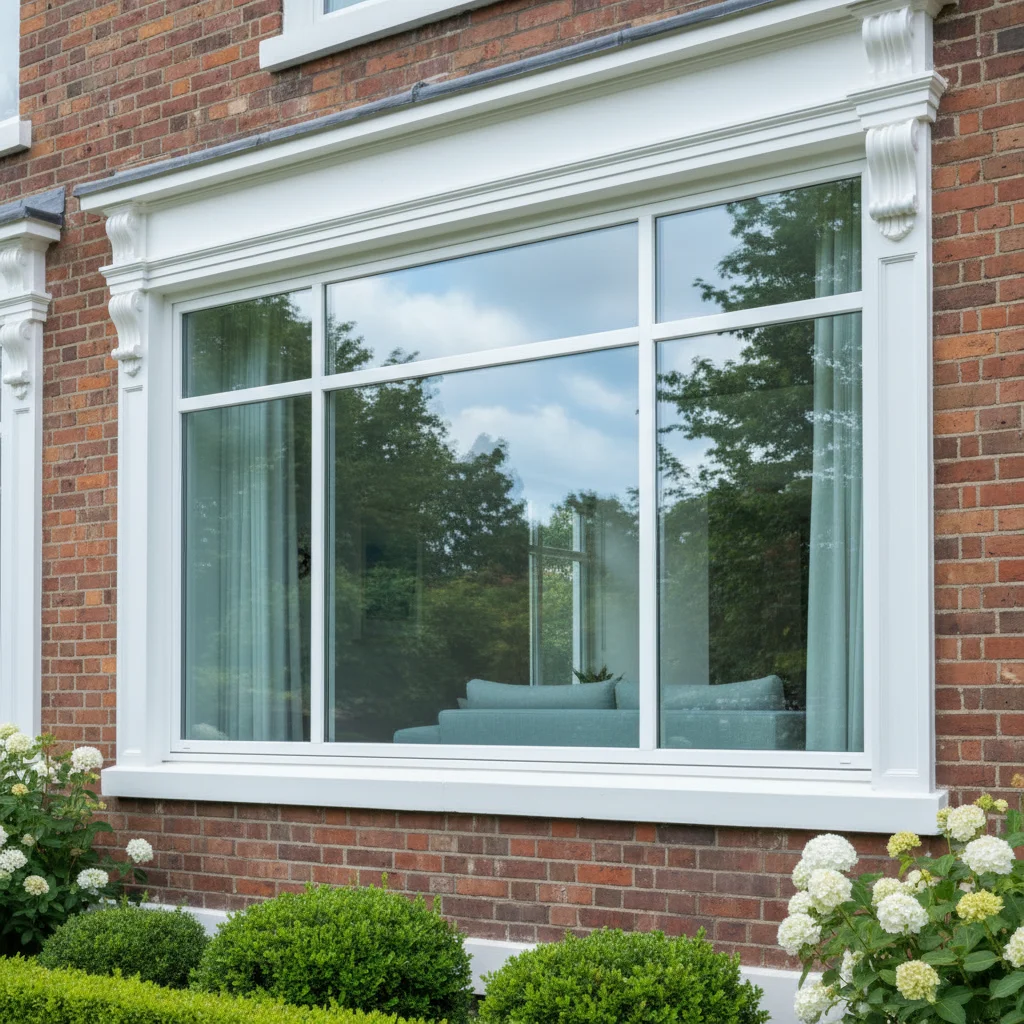
Up to 30% of a home's heating and cooling energy loss occurs through its windows and doors. For historic homes with original, single-pane windows, that figure climbs even higher, creating a constant drain on both comfort and finances. So replacing them isn't just an aesthetic choice; it’s a critical financial and structural decision with immediate consequences for your energy bills.
What is the average cost to replace windows in a historic home, including installation?
Historic window replacement is a specialized project with costs ranging from $2,000 to $4,000 per window, including installation, in 2026. These custom-fabricated units use historically accurate materials like wood or clad-wood, featuring true divided lites and specific profiles to meet preservation guidelines.
The price reflects the custom nature of the work. And unlike standard vinyl replacements, installation requires skilled artisans to preserve surrounding historic materials, often driving labor costs to 40% of the total project budget. So homeowners often encounter unforeseen expenses for repairing rotted sills or frames, which adds another $300 to $900 per window. But these costs are essential for maintaining the building's architectural integrity while achieving modern energy efficiency. These projects are a balance between preservation and performance, with costs reflecting that dual priority.
How can I qualify for rebates and incentives for historic window replacements?
Historic window replacement incentives for 2026 require meeting stringent local preservation commission standards and federal energy efficiency benchmarks. Qualification hinges on using approved materials and designs that match the home's original architectural period, alongside achieving specific U-factor and SHGC ratings set by ENERGY STAR.
To access these funds, homeowners must first get approval from their local Historic Preservation Office (HPO) or Architectural Review Board. And this often involves submitting detailed plans, material samples, and window specifications. Once the historical accuracy is approved, the project must also meet the technical requirements for programs like the federal Inflation Reduction Act (IRA) energy tax credits, which covers 30% of the cost up to a defined annual limit. But utility rebates add another layer, typically requiring a U-factor of 0.27 or lower. Use our free rebate calculator to find all incentives available in your zip code.
What is the ROI and payback period for investing in new historic windows?
The return on investment for historic window replacement averages 65-75% upon resale, with a typical energy savings payback period of 15 to 20 years. While the initial cost is 2-3 times higher than standard replacements, the value is recaptured through lower energy bills and increased property appraisal.
The financial return comes from multiple streams. And annual energy savings alone can reach $450 in colder climates, according to the Department of Energy. But the primary ROI is in preserving the home's character, which commands a 5-10% higher market value in designated historic districts. So the payback period is longer than for a standard home, but the investment prevents the value loss associated with inappropriate vinyl replacements, which can devalue a historic property by over $10,000. This makes the project a long-term asset protection strategy, not just an energy upgrade.
"When you are ready to replace your windows, look for the ENERGY STAR label. ENERGY STAR certified windows, doors, and skylights are designed to meet energy performance criteria for your climate." — ENERGY STAR
How do different window replacement options compare for historic homes?
Full replacement with historically accurate reproductions provides the best energy performance, but window restoration offers a lower-cost alternative that preserves original materials. Restoration combined with modern storm windows or inserts can achieve up to a 90% performance improvement over single-pane windows alone for about half the cost.
Full replacement involves custom-milled wood windows that replicate the original design but include modern features like insulated glass and low-E coatings. So this option offers the highest efficiency but costs over $2,000 per unit. And restoration, which costs $500 to $1,200 per window, repairs the original sash and frame and adds weatherstripping. But it doesn't address the inefficiency of single-pane glass. A third option, high-performance inserts, fit inside the existing frame, improving efficiency by 50% without altering the exterior appearance, making it a popular compromise for many preservation boards. Explore all of your window replacement rebates to see which options qualify.
Which window specifications are best suited for my historic home's climate zone?
For historic homes in cold climates (DOE Zones 5-7), windows must have a U-factor of 0.27 or lower to minimize heat loss. And in hot climates (Zones 1-3), the priority is a Solar Heat Gain Coefficient (SHGC) of 0.25 or lower to block radiant heat and reduce cooling costs.
These specifications are non-negotiable for qualifying for 2026 rebates. And homeowners in Northern states should select windows with argon or krypton gas fills and multiple low-E coatings to achieve the required low U-factor. But for Southern states, a low SHGC is the critical metric, often achieved with spectrally selective coatings that block infrared light while allowing visible light through. So choosing the right specifications based on your ENERGY STAR climate zone ensures you maximize energy savings and meet the technical requirements for federal and utility incentives, which can cover up to 30% of the project cost. This is also a key factor for qualifying for heat pump rebates.
2026 Historic Window Rebate & Grant Comparison
| Program Name | Typical Amount | Key Eligibility Requirements | 2026 Application Window |
|---|---|---|---|
| Federal IRA Tax Credit | Ended Dec 31, 2025 | — | Ended Dec 31, 2025 |
| State Historic Tax Credit | 20-25% of project cost | State historic register, pre-approval needed | Varies by state; often fiscal year |
| Utility Rebate Program | $50 - $150 per window | Specific U-factor & SHGC targets | Typically Jan 1 - Dec 31, 2026 |
Official Sources
- Database of State Incentives for Renewables & Efficiency (DSIRE) — A comprehensive database of state and local energy efficiency incentives.
- ENERGY STAR Window Guidance — Official criteria and climate zone maps for energy-efficient windows.
Frequently Asked Questions
What makes a historic home eligible for window replacement rebates?
Eligibility for 2026 rebates typically requires the property to be listed on a national, state, or local historic register or be located within a designated historic district. And the project must receive prior approval from the local preservation commission, ensuring the replacement windows match the original architectural style, material, and detailing.
How much can homeowners expect to receive in rebates for historic window replacement?
In 2026, homeowners can combine incentives to cover a significant portion of costs. The federal Energy Efficient Home Improvement Credit (Section 25C) ended for property placed in service after December 31, 2025 (IRS FS-2025-05). And state historic tax credits can cover an additional 20-25% of qualified rehabilitation expenses. So, with utility rebates of $50-$150 per window, total savings can reach several thousand dollars.
What is the application process for historic home window replacement rebates?
The process begins with submitting detailed project plans, including window specifications and material samples, to your local Historic Preservation Office for pre-approval. After approval, you complete the work and then file for rebates. Form 5695 only covers qualifying work completed by December 31, 2025 and claimed on a 2025 return; the federal 25C and 25D credits ended after that date (IRS FS-2025-05).
Are there specific deadlines for applying for historic window replacement rebate programs?
Yes, deadlines are critical. The federal IRA tax credit applies to windows installed by December 31, 2026. And state historic preservation tax credits often operate on a fiscal year calendar, with application windows that may close as early as Q2 2026. Utility rebates are typically first-come, first-served until annual funds are depleted.
Do replacement windows need to meet historical preservation standards to qualify for rebates?
Absolutely. This is a non-negotiable requirement for nearly all historic-specific grants and tax credits. The windows must be "in-kind" replacements, meaning they replicate the original's material (e.g., wood), muntin profile, and operational type. Using unapproved materials like vinyl will disqualify the project from preservation-based incentives.
Preserve Your Home's Past, Protect Its Future
Replacing windows in a historic home is complex. Find out exactly how much you can save with federal, state, and utility incentives.
Calculate Your Savings NowUpdated on April 14, 2026. Fact-checked by DuloCore Editors. About our research team.
Check your California insulation rebate eligibility — see the programs you qualify for and the dollar amounts on our California insulation rebate finder.