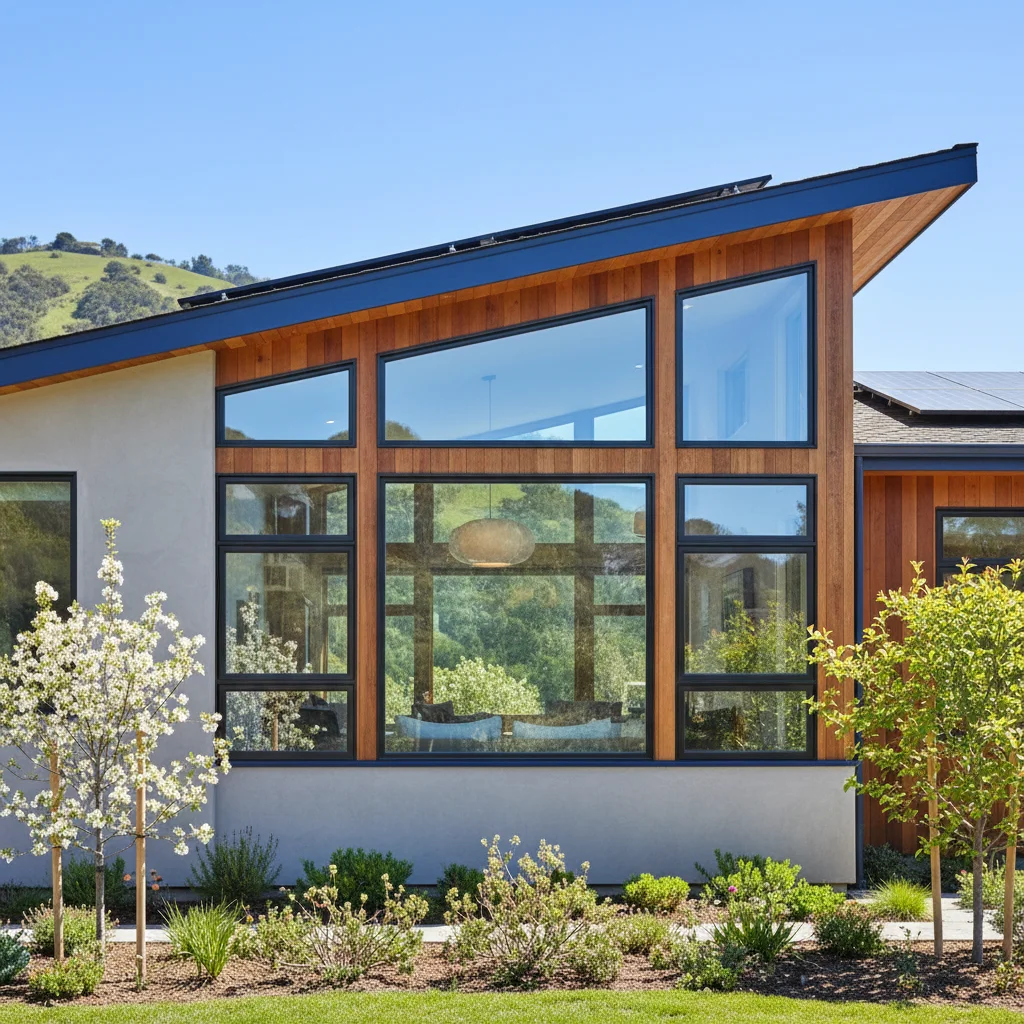
Bay Area homeowners replacing single-pane windows with Energy Star-certified models saved an average of $465 annually on heating and cooling bills in 2025, according to the U.S. Department of Energy. And that number climbs to $680 per year when replacing old double-pane units with triple-pane, low-E glass. But the upfront cost—ranging from $12,000 to $28,000 for a typical 2,000-square-foot home—stops most homeowners from upgrading. So understanding which window specifications qualify for California utility rebates becomes critical to reducing that initial investment.
What Are the Current Window Replacement Costs in the Bay Area?
Window replacement costs in the Bay Area range from $600 to $1,400 per window installed, depending on frame material, glass specifications, and labor rates. Vinyl windows average $650-$850 per unit. Fiberglass and composite frames run $800-$1,200. Wood and aluminum-clad wood windows reach $1,100-$1,400 per window. And labor accounts for 25-35% of total project costs across all material types.
A full-home replacement for a 2,000-square-foot Bay Area house with 15 windows typically costs $12,000-$21,000 for vinyl or fiberglass, and $18,000-$28,000 for wood or composite frames. These figures reflect 2026 pricing from regional contractors in San Francisco, Oakland, San Jose, and surrounding counties. So a homeowner choosing mid-range vinyl windows with low-E glass and argon fill pays approximately $15,000 installed for 15 windows.
But Bay Area labor rates run 18-22% higher than the California state average due to permit costs, union wages, and disposal fees. A single window installation in Sacramento costs $550-$750, while the same window in San Francisco costs $700-$950. And multi-story homes requiring scaffolding or specialized access equipment add $1,200-$3,500 to total project costs.
"Replacing single-pane windows with ENERGY STAR certified windows lowers household energy bills by an average of 12 percent nationwide." — U.S. Department of Energy
Which Window Specifications Qualify for Rebates?
Windows must meet Energy Star Most Efficient 2026 criteria to qualify for California utility rebates. That means a U-factor of 0.20 or lower and a Solar Heat Gain Coefficient (SHGC) of 0.25 or lower for Northern Climate Zone installations. Energy Star certification alone does not guarantee rebate eligibility—windows must achieve the higher "Most Efficient" threshold. The federal Energy Efficient Home Improvement Credit (Section 25C) ended for property placed in service after December 31, 2025 (IRS FS-2025-05). Federal tax credits for this work have ended, but state, local and utility rebates may still apply; check what is available at your address with the DuloCore rebate calculator.
Triple-pane windows with low-E coatings and argon or krypton gas fills consistently meet these thresholds. Double-pane windows with advanced low-E coatings and krypton fill qualify in most cases. But standard double-pane windows with basic low-E glass rarely achieve U-factors below 0.25. So homeowners targeting maximum rebates should verify U-factor and SHGC ratings on the National Fenestration Rating Council (NFRC) label before purchase.
California utility companies—including PG&E, SCE, and SDG&E—offer rebates ranging from $50 to $150 per window for Energy Star Most Efficient models installed in 2026. And some Bay Area cities provide additional municipal incentives: San Jose's Green Building Incentive Program adds $75 per window for homes built before 1990. So a homeowner replacing 15 windows could stack $1,875 utility rebate + $1,125 city incentive, totaling $3,000 in combined savings.
Check current eligibility requirements using our rebate calculator to confirm your specific window model qualifies for all available programs.
How Long Do Replacement Windows Last and What's the Warranty Coverage?
Vinyl windows carry manufacturer warranties of 20-30 years and regularly last 25-40 years in Bay Area climates with minimal maintenance. Fiberglass windows last 30-50 years with warranties of 20-40 years. Wood windows require repainting every 3-7 years but last 30-40 years when properly maintained. And aluminum frames corrode in coastal microclimates, reducing lifespan to 15-25 years despite 10-20 year warranties.
Glass unit warranties cover seal failure and argon gas loss for 10-20 years on mid-range models and 20-25 years on premium lines. But hardware warranties—locks, hinges, balances—typically run only 5-10 years. So a window with a "lifetime" frame warranty might still require $150-$300 hardware replacement after 12-15 years of use.
Bay Area coastal fog accelerates deterioration of painted wood frames and aluminum cladding. Homeowners within 5 miles of the Pacific Ocean see wood window lifespans decrease by 15-20% compared to inland Contra Costa or Santa Clara County locations. And UV exposure in south-facing installations degrades low-E coatings 8-12% faster than north-facing windows, reducing energy performance over 20+ year periods.
"ENERGY STAR certified windows are, on average, 35% more energy efficient than non-certified products." — ENERGY STAR
Premium manufacturers like Marvin, Pella Architect Series, and Milgard Ultra offer transferable lifetime warranties covering frame, sash, and glass units. But installation quality matters more than warranty length—improper flashing or air sealing voids most manufacturer warranties within 3-5 years.
What's the ROI and Payback Period for Window Replacement Investments?
Window replacement delivers 6-8% annual ROI through energy savings and generates a 12-18 year payback period for Bay Area homeowners using natural gas heating and electric cooling. A $15,000 investment in 15 vinyl windows saves $465-$680 annually in reduced HVAC costs. After applying $3,000 in combined utility and city rebates, net investment drops to $12,000—yielding a 17.6-year payback at $680 annual savings.
But resale value impact exceeds energy savings for most homeowners. Remodeling Magazine's 2026 Cost vs. Value Report shows vinyl window replacement recoups 68% of costs at resale in the San Francisco market, while wood window replacement recoups 72%. So a $20,000 wood window project adds approximately $14,400 to home value, independent of energy savings.
And payback accelerates in homes with single-pane windows or failed double-pane seals. Replacing single-pane windows in a 1950s San Francisco Victorian generates $850-$1,100 annual savings due to baseline inefficiency. That reduces payback to 9-11 years even without rebates. So older housing stock sees faster ROI than homes built after 2000 with code-compliant double-pane windows.
Homes in microclimates with extreme temperature swings—like Walnut Creek, Livermore, and San Ramon—save 15-20% more annually than moderate coastal areas. A Livermore homeowner replacing 15 windows saves $780/year versus $580/year in Daly City due to hotter summers and colder winters driving higher HVAC loads.
The federal Energy Efficient Home Improvement Credit (Section 25C) ended for property placed in service after December 31, 2025 (IRS FS-2025-05).
Bay Area Window Replacement: Cost Comparison by Material and Brand
| Material | Cost Per Window (Installed) | Lifespan (Years) | Warranty | U-Factor Range |
|---|---|---|---|---|
| Vinyl (Milgard, Anlin) | $650-$850 | 25-40 | 20-30 years | 0.20-0.28 |
| Fiberglass (Marvin, Integrity) | $900-$1,200 | 30-50 | 20-40 years | 0.18-0.25 |
| Wood (Pella Architect, Andersen) | $1,100-$1,400 | 30-40 | 10-20 years | 0.20-0.27 |
| Aluminum-Clad Wood (Marvin Ultimate) | $1,200-$1,600 | 30-40 | 20-30 years | 0.19-0.26 |
Vinyl dominates Bay Area installations due to low maintenance and competitive pricing. Milgard Tuscany and Anlin Del Mar models meet Energy Star Most Efficient thresholds at $700-$800 installed. Fiberglass options from Marvin Integrity and Milgard Ultra cost 20-30% more but offer superior strength and narrower sightlines. And wood windows remain popular in historic districts where design review boards restrict vinyl installations.
Premium brands like Marvin Ultimate and Pella Architect Series command $1,300-$1,600 per window but include lifetime transferable warranties and custom color matching. Mid-tier brands like Milgard, Simonton, and Jeld-Wen deliver Energy Star Most Efficient performance at $750-$950 installed. Budget vinyl from regional manufacturers costs $600-$700 but rarely achieves U-factors below 0.25.
Compare window rebates with other efficiency upgrades like heat pump rebates to prioritize your home improvement investments.
What Financial Incentives and Rebate Deadlines Should Bay Area Homeowners Know About?
The federal Energy Efficient Home Improvement Credit (Section 25C) ended for property placed in service after December 31, 2025 (IRS FS-2025-05). Form 5695 only covers qualifying work completed by December 31, 2025 and claimed on a 2025 return; the federal 25C and 25D credits ended after that date (IRS FS-2025-05).
California utility rebates for 2026 require installation by December 31, 2026, and submission within 90 days of project completion. PG&E offers $100-$150 per window for Energy Star Most Efficient models in Climate Zones 1-3. SCE provides $75-$125 per window in Climate Zones 6-10. And SDG&E rebates range from $50-$100 per window. But funding is first-come, first-served—PG&E's 2025 window rebate program depleted its $4.2 million budget by October 15.
Bay Area municipal programs operate on fiscal year cycles (July 1-June 30). San Jose's Green Building Incentive Program allocated $850,000 for 2025-26 window rebates, supporting approximately 5,600 windows across 370 homes. And Oakland's Energy Upgrade California program offers 0% financing for qualifying income levels, stacking with utility rebates.
Income-qualified households earning below 80% Area Median Income (AMI) access enhanced rebates through California's TECH Clean California program: $200-$300 per window plus free energy assessments. For a family of four in San Francisco, 80% AMI equals $115,200 annual household income in 2026.
Calculate your total savings potential with our rebate calculator to see which programs apply to your specific home and income level.
Official Sources
- U.S. Department of Energy - Energy Saver — Federal guidance on energy-efficient windows and home improvement tax credits (note: the federal 25C and 25D credits ended for projects completed after December 31, 2025)
- ENERGY STAR Windows and Doors — Certification criteria and qualified product directory
- DSIRE USA — Comprehensive database of state and utility rebate programs
Frequently Asked Questions
How much does window replacement cost in the Bay Area?
Window replacement costs $600-$1,400 per window installed in the Bay Area, depending on frame material and glass specifications. Vinyl windows average $650-$850 per unit. Fiberglass frames run $800-$1,200. Wood and aluminum-clad wood windows cost $1,100-$1,400. A full-home project for 15 windows ranges from $12,000 to $28,000 installed, with labor accounting for 25-35% of total costs.
What rebates are available for window replacement in California?
California utility companies offer $50-$150 per window for Energy Star Most Efficient models installed in 2026. PG&E provides $100-$150 per window. SCE offers $75-$125. SDG&E rebates range from $50-$100. The federal Energy Efficient Home Improvement Credit (Section 25C) ended for property placed in service after December 31, 2025 (IRS FS-2025-05).
Are there income limits for window replacement rebates?
Standard utility rebates don't have income limits. But income-qualified households below 80% Area Median Income access enhanced rebates through TECH Clean California: $200-$300 per window versus $50-$150 standard rates. For a family of four in San Francisco, 80% AMI equals $115,200 annual income in 2026.
How long does the window replacement rebate process take?
California utility rebates require submission within 90 days of installation and pay within 6-10 weeks of approval. PG&E averages 8 weeks. SCE and SDG&E average 6-7 weeks. And municipal programs like San Jose's Green Building Incentive pay within 45-60 days.
What is the difference between 25C and 25D tax credits for windows?
Neither credit applies to windows installed in 2026, and no replacement federal credit exists. The federal Energy Efficient Home Improvement Credit (Section 25C) ended for property placed in service after December 31, 2025 (IRS FS-2025-05). The federal Residential Clean Energy Credit (Section 25D) ended for expenditures made after December 31, 2025, and the IRS treats an expenditure as made when installation is completed (IRS FS-2025-05).
Ready to find out how much you can save? Use our free rebate calculator to estimate your total incentives based on your home's location, income level, and project scope. Get your personalized rebate breakdown in under 60 seconds.
Updated: April 14, 2026 — fact-checked by DuloCore Research. About our editorial process.
Check your California insulation rebate eligibility — see the programs you qualify for and the dollar amounts on our California insulation rebate finder.