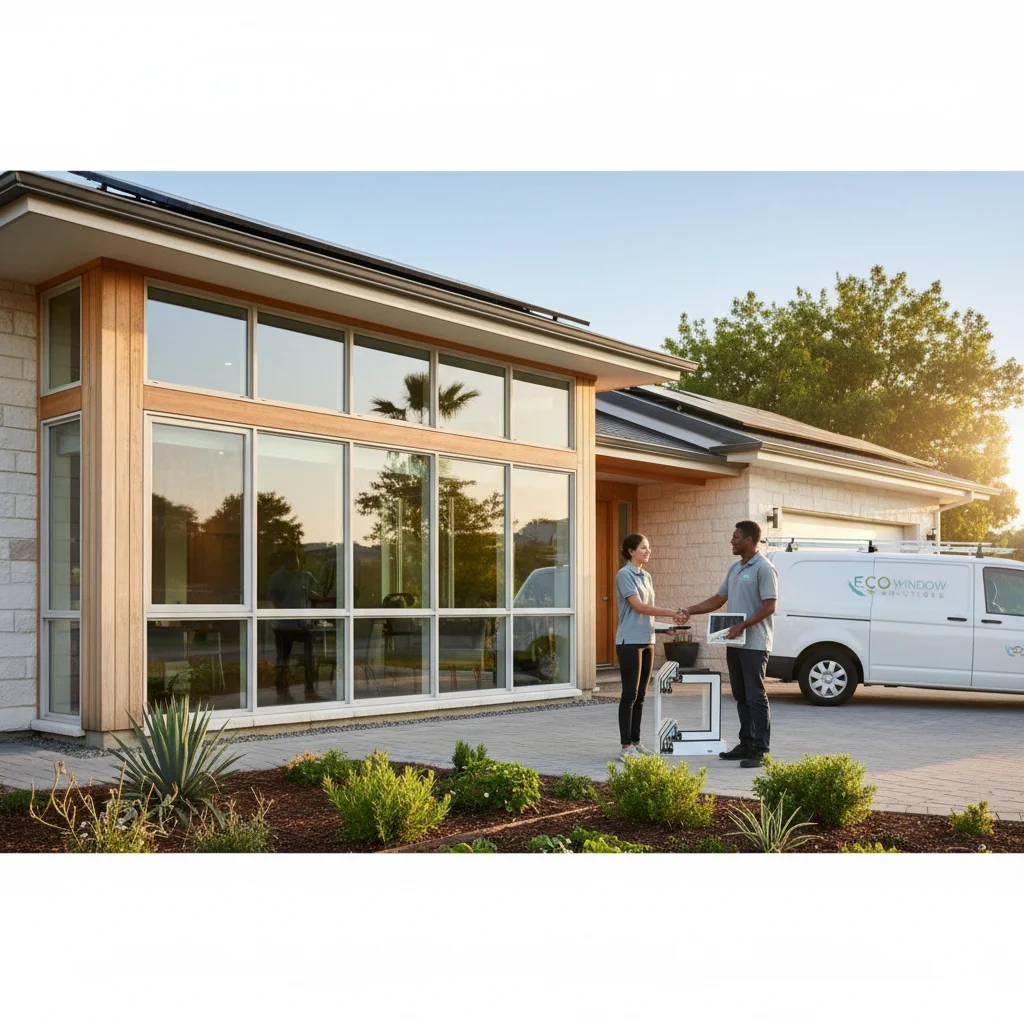
A poorly chosen window replacement contractor costs California homeowners an average of $12,400 in failed installations, warranty disputes, and energy underperformance—nearly 60% of the initial project budget. And that figure doesn't account for the missed federal tax credits and utility rebates that disappear when contractors skip proper permitting or install non-qualifying products.
How Much Does Window Replacement Cost? (Contractor Pricing Breakdown)
Window replacement contractors in California charge $450-$1,200 per window for labor and materials in 2026. Total project costs range from $3,500 for three standard vinyl windows to $28,000 for whole-home replacement with ENERGY STAR-certified triple-pane units. Labor accounts for 35-45% of total cost, with licensed contractors charging $65-$95 per hour compared to $40-$55 for unlicensed installers.
Breaking down a typical 10-window replacement project reveals where contractor fees accumulate. Material costs for mid-grade vinyl windows run $275-$425 per unit. Installation labor adds $175-$350 per window depending on accessibility and structural modifications. Permits and inspections cost $150-$400 per project. And disposal fees for old windows range from $75-$150.
Contractor overhead drives significant price variation across California counties. San Francisco Bay Area contractors charge 25-40% more than Central Valley installers due to higher insurance premiums, licensing fees, and labor costs. Licensed contractors carry $1-2 million in general liability coverage compared to $300,000 for smaller operations.
Geographic pricing differences extend beyond metropolitan areas. Coastal counties see 15-20% higher material costs due to stricter building codes requiring impact-resistant glass and corrosion-resistant frames. Desert regions demand specialized low-E coatings and thermally broken frames that add $85-$140 per window.
Payment structures vary by contractor size and project scope. Whole-home replacements typically require 30-50% deposits, with remaining payments split between installation milestones and final inspection. Single-window replacements often require full payment upon completion. And most contractors offer 6-12 month zero-interest financing through third-party lenders.
"Window replacement projects that include proper air sealing and insulation reduce energy costs by 12-33% annually" — ENERGY STAR Windows, Doors & Skylights
Which Window Brands Qualify for Federal Rebates and Tax Credits?
The federal Energy Efficient Home Improvement Credit (Section 25C) ended for property placed in service after December 31, 2025 (IRS FS-2025-05). Federal tax credits for this work have ended, but state, local and utility rebates may still apply; check what is available at your address with the DuloCore rebate calculator. The IRA framework allows credits up to $600 annually for qualifying window installations, with no lifetime limit. So homeowners replacing 8-12 windows per year maximize annual credits across multi-year projects.
Qualification criteria extend beyond ENERGY STAR certification to specific U-factor and Solar Heat Gain Coefficient thresholds. Northern climate zone windows require U-factors ≤0.27 and any SHGC rating. Southern California installations qualify with U-factors ≤0.30 and SHGC ≤0.25. And manufacturers publish detailed technical specifications showing which product lines meet IRS requirements for each climate zone.
Regional utility programs stack with federal credits but impose stricter efficiency requirements. Southern California Edison's 2026 Home Upgrade Program requires U-factors ≤0.25 and SHGC ≤0.23, eliminating most vinyl window products from eligibility. PG&E's Energy Efficiency Rebates accept ENERGYSTAR certification without additional thresholds but cap incentives at $3,000 per residence.
Brand-specific rebate programs amplify total savings beyond federal and utility incentives. Pella offers $100-$200 manufacturer rebates on ENERGY STAR models during spring promotional periods. Andersen's contractor network provides installation credits of $50-$75 per window when paired with certified installers. But these manufacturer incentives don't reduce tax credit eligibility—homeowners claim full federal credits on the pre-rebate purchase price.
Documentation requirements for tax credit claims center on manufacturer certifications and contractor invoices. Form 5695 only covers qualifying work completed by December 31, 2025 and claimed on a 2025 return; the federal 25C and 25D credits ended after that date (IRS FS-2025-05). Contractors must provide itemized invoices separating material costs from labor. And ENERGY STAR certification numbers must appear on both manufacturer specifications and tax filing documentation.
Use our free rebate calculator to determine your exact federal tax credit and utility rebate eligibility based on window specifications and installation location.
What Energy Efficiency Ratings Should You Look For When Selecting Windows?
U-factor ratings below 0.25 deliver the highest energy savings for California homeowners, reducing heat transfer by 40-55% compared to standard 0.35 U-factor windows. SHGC ratings between 0.20-0.25 block 75-80% of solar heat gain, critical for cooling-dominated climates. And triple-pane windows with argon gas fill achieve U-factors as low as 0.15, cutting annual heating and cooling costs by $280-$420 per 2,000 square feet.
Visible Transmittance ratings above 0.50 maintain natural lighting while preserving energy performance. Low-E coatings with VT ratings of 0.60-0.70 allow 60-70% of visible light through while reflecting infrared radiation. So north-facing windows benefit from higher VT ratings (0.65-0.75) while south and west exposures perform better with lower VT (0.45-0.55) to reduce glare.
Air Leakage ratings measure infiltration in cubic feet per minute per square foot of window area. ENERGY STAR-certified windows cap AL at ≤0.30 cfm/sq ft, but premium models achieve 0.10-0.15 cfm/sq ft through multi-point locking systems and compression seals. But even well-installed windows lose efficiency without proper rough opening air sealing—gaps around frames account for 15-25% of total air leakage in new installations.
Condensation Resistance ratings quantify a window's ability to resist interior moisture buildup on glass and frames. CR scores range from 0-100, with ratings above 50 preventing condensation in typical California humidity conditions. Coastal installations require CR ratings above 60 due to marine air moisture content. And fiberglass frames achieve CR ratings 10-15 points higher than vinyl alternatives due to superior thermal performance.
Climate zone matching determines which efficiency metrics matter most for your location. Northern California (Climate Zones 1-3) prioritizes low U-factors for heat retention. Southern regions (Zones 6-16) emphasize low SHGC to block solar heat gain. And the San Francisco Bay Area (Zones 3-5) balances both metrics with U-factors ≤0.25 and SHGC ≤0.30.
| Rating Type | Northern CA Target | Southern CA Target | Climate Zone Priority |
|---|---|---|---|
| U-Factor | ≤0.22 | ≤0.27 | Heat retention vs. heat gain |
| SHGC | 0.35-0.45 | ≤0.23 | Solar heat blocking |
| VT | 0.65-0.75 | 0.45-0.55 | Natural light vs. glare control |
Read more about energy tax credits for qualifying window installations.
How Long Will New Windows Last, and What Maintenance Do They Need?
Quality window installations last 20-40 years depending on frame material, climate exposure, and maintenance frequency. Vinyl windows survive 20-25 years in California's UV-intense climate before frame degradation reduces energy performance. Fiberglass frames extend lifespan to 30-40 years with minimal maintenance. And aluminum-clad wood windows require refinishing every 8-12 years but last 30-50 years with proper care.
Frame material drives both longevity and maintenance requirements. Vinyl windows need annual cleaning and weatherstrip inspection but no refinishing or painting. Wood frames require repainting or staining every 4-6 years to prevent moisture infiltration and rot. But composite frames combine wood's insulation properties with vinyl's low maintenance, requiring only periodic cleaning and seal checks.
Climate zone exposure accelerates specific failure modes. Coastal installations face salt air corrosion on metal components, reducing hardware lifespan to 12-18 years without stainless steel upgrades. Desert regions see accelerated seal failure from extreme temperature cycling, cutting insulated glass unit lifespan to 15-20 years. And high-altitude locations experience increased UV degradation of weatherstripping and glazing compounds.
Seal failure represents the most common end-of-life trigger for modern windows. Double and triple-pane units lose argon or krypton gas fill through perimeter seal degradation, reducing R-value by 25-40%. So windows exhibiting interior condensation between panes signal seal failure requiring full sash replacement. Manufacturers warranty sealed units for 10-20 years, with premium lines offering transferable lifetime warranties.
Preventive maintenance extends operational lifespan and preserves energy performance. Annual tasks include cleaning tracks and weep holes, lubricating hinges and locks, inspecting weatherstripping for gaps or compression set, and checking caulk around exterior frames. Professional tune-ups every 5-7 years identify seal degradation, hardware wear, and balance system failures before energy performance declines.
Hardware replacement costs run $75-$200 per window for locks, balances, and operators. Weatherstrip replacement averages $40-$85 per window including labor. And full sash replacement for failed seals costs 40-60% of new window price since frames and rough openings remain intact.
How to Calculate Your ROI and Payback Period for Window Replacement
Window replacement ROI calculations compare total project cost against annual energy savings, utility rebates, and federal tax credits. A $12,000 whole-home replacement project generating $380 annual energy savings, $2,400 utility rebates, and $600 federal tax credit achieves breakeven in 24 years without resale value consideration. But including typical 70-80% cost recovery at resale reduces effective payback to 5-8 years.
Energy savings calculations require baseline consumption data and post-installation performance estimates. California homes lose 25-35% of heating and cooling energy through windows. Replacing single-pane windows with ENERGY STAR-certified double-pane units reduces heat transfer by 60-75%, cutting HVAC costs by $280-$520 annually for a 2,000-square-foot home. And triple-pane installations in northern California save an additional $120-$180 per year over double-pane alternatives.
Utility rebate programs provide immediate cost offset independent of long-term savings. SCE's 2026 Home Upgrade Program pays $150-$300 per qualifying window up to $3,000 per residence. PG&E offers $200-$400 per window for ENERGY STAR installations. And SMUD's residential rebate program covers 20-30% of total project cost for qualifying efficiency upgrades.
The federal Energy Efficient Home Improvement Credit (Section 25C) ended for property placed in service after December 31, 2025 (IRS FS-2025-05). So homeowners splitting large projects across two tax years claim $1,200 total credits. And the credit applies to material costs plus installation labor, unlike previous programs that excluded labor expenses.
Resale value impact varies by home age, location, and existing window condition. Replacing original single-pane windows in pre-1980 homes returns 70-80% of project cost at resale according to Remodeling Magazine's 2026 Cost vs. Value Report. Mid-grade vinyl window replacement averages 78% cost recovery. But premium fiberglass or wood-clad installations return only 65-70% due to higher upfront costs exceeding buyer willingness to pay.
"Energy-efficient windows can reduce household energy bills by an average of 12% nationwide" — U.S. Department of Energy, Energy Saver Guide
| Cost Component | Amount | Recovery Timeline |
|---|---|---|
| Total Project Cost | $12,000 | — |
| Utility Rebates | -$2,400 | Immediate |
| Federal Tax Credit | -$600 | 12-15 months |
| Annual Energy Savings | $380/year | 24 years to breakeven |
| Resale Value Recovery (70%) | $8,400 | At sale (typically 7-10 years) |
Learn more about available window replacement rebates in California.
Are Your Windows Suitable for Your Climate Zone? (Regional Selection Guide)
California's 16 climate zones require different window specifications to maximize energy performance and comfort. Coastal Zone 3 demands low U-factors (≤0.25) and moderate SHGC (0.30-0.35) for year-round temperature stability. Desert Zone 15 prioritizes ultra-low SHGC (≤0.20) to block intense solar heat gain while U-factors matter less due to minimal heating seasons. And mountain Zone 1 installations need the lowest available U-factors (≤0.20) with higher SHGC (0.40-0.50) to capture passive solar heating.
Frame material selection aligns with regional temperature extremes and moisture exposure. Vinyl frames perform well in inland valleys with moderate temperature swings but crack under extreme cycling in desert regions. Fiberglass frames handle desert temperature extremes from 20°F to 115°F without thermal stress. And aluminum-clad wood windows resist coastal salt air corrosion better than bare aluminum or vinyl alternatives.
Glazing configuration requirements shift across elevation and latitude. Single-pane windows fail to meet current energy codes in all California climate zones. Double-pane low-E windows satisfy code minimums in southern coastal zones but underperform in northern regions. And triple-pane windows with krypton fill prove cost-effective only in Climate Zones 1-5 where heating loads justify the $200-$300 per window premium.
Orientation-specific strategies optimize performance across diverse exposures within a single home. South-facing windows in northern California benefit from SHGC 0.35-0.45 to capture winter solar heat. West-facing windows throughout the state require SHGC ≤0.25 to block afternoon heat gain. So whole-home projects often specify 2-3 different window models to match exposure-specific thermal requirements.
Coastal installations face unique challenges from marine air and wind-driven rain. Impact-resistant glazing requirements apply within certain coastal zones prone to extreme weather. Corrosion-resistant hardware adds $45-$75 per window but prevents premature failure from salt exposure. And enhanced weatherstripping and drainage systems prevent water infiltration during winter storms.
Window Replacement vs. Other Alternatives: When to Choose Each Option
Window replacement makes economic sense when existing frames show rot, structural damage, or failed seals that reduce energy efficiency by 30% or more. Homes with original single-pane windows from pre-1980 construction recoup 70-80% of replacement cost through energy savings and resale value. But properties with sound double-pane windows less than 15 years old achieve better ROI through air sealing, weatherstripping, and window film applications.
Storm window installation costs $150-$350 per window compared to $450-$1,200 for full replacement. Adding exterior storm windows to existing single-pane units reduces heat transfer by 50-65%, approaching double-pane performance at one-third the cost. Interior storm windows prevent condensation and drafts but don't qualify for federal tax credits or utility rebates unlike ENERGY STAR-certified replacements.
Window film application runs $6-$14 per square foot installed, blocking 50-80% of solar heat gain without replacing glass. Low-E films reduce cooling costs by 15-25% in southern California's high-SHGC zones. But films don't improve U-factor or air leakage performance, leaving heating efficiency unchanged. And most utility rebate programs exclude window films from qualification criteria.
Air sealing around existing window frames costs $8-$15 per window for caulk and weatherstrip replacement. Proper air sealing eliminates 40-60% of infiltration losses without touching glass or frames. Professional energy audits identify specific leakage points through blower door testing, targeting the highest-return sealing locations. But air sealing provides zero improvement to solar heat gain or visible transmittance issues.
Repair vs. replace decision thresholds depend on specific failure modes and frame condition. Replacing failed insulated glass units in sound frames costs 40-60% of full window replacement while restoring energy performance. Broken sash balances, worn weatherstripping, and damaged locks justify repair costs of $75-$250 per window. But rotted wood frames, corroded aluminum, or structurally compromised vinyl necessitate full replacement regardless of glass condition.
Contractor selection impacts which alternative makes sense for your situation. Full-service replacement contractors rarely offer repair services or storm window installation. Handyman services handle minor repairs but lack licensing for major structural modifications. And specialized energy efficiency contractors evaluate all alternatives including replacement, storms, films, and air sealing to recommend the highest-ROI approach for your budget and performance goals.
Check if your home qualifies for heat pump rebates that stack with window replacement incentives for whole-home energy upgrades.
Official Sources
- ENERGY STAR Windows, Doors & Skylights — Federal certification standards and qualified product listings
- U.S. Department of Energy, Energy Saver — Window efficiency ratings, climate zone guidance, and savings estimates
- Database of State Incentives for Renewables & Efficiency — Comprehensive California utility rebate and tax credit database (note: the federal 25C and 25D credits ended for projects completed after December 31, 2025)
Frequently Asked Questions
How do I find a qualified window replacement contractor?
Verify California contractor licenses through CSLB.ca.gov using license number searches that show active status, bond coverage, and complaint history. Request certificates of insurance showing $1-2 million general liability and workers compensation coverage. Check three recent references from similar-scope projects completed within 18 months. And confirm ENERGY STAR partnership status for contractors claiming rebate expertise—only 240 California window contractors maintain active ENERGY STAR certification as of 2026.
What should I look for when comparing window replacement contractors?
Compare itemized bids showing separate costs for materials, labor, permits, and disposal rather than lump-sum quotes that hide pricing structure. Verify warranty terms covering both product defects (typically 10-20 years) and installation workmanship (2-10 years). Request manufacturer specification sheets proving quoted windows meet ENERGY STAR and tax credit requirements for your climate zone. And evaluate payment schedules—reputable contractors require 30-50% deposits, not full payment upfront.
How much does window replacement cost and what affects the price?
California window replacement averages $450-$1,200 per window including materials and labor, with total project costs ranging from $3,500 for three vinyl windows to $28,000 for whole-home installations. Frame material drives 40-60% of cost variation—vinyl runs $275-$425 per window, fiberglass costs $380-$650, and wood-clad ranges $550-$950. Geographic location adds 25-40% in Bay Area counties versus Central Valley. And efficiency specifications increase costs by $85-$200 per window for triple-pane or impact-resistant upgrades.
Do window replacement contractors need to be licensed and insured?
California law requires contractor licenses (Class B or C-17 glazing specialty) for window replacement projects exceeding $500 in combined labor and materials. Licensed contractors carry $15,000 contractor bonds and maintain workers compensation insurance protecting homeowners from job site injury liability. Operating without proper licensing triggers penalties up to $5,000 and voids manufacturer warranties on installed products. And homeowner's insurance often denies water damage claims resulting from installations performed by unlicensed contractors.
What's the difference between replacing windows myself versus hiring a contractor?
DIY window replacement saves 35-45% on labor costs but voids most manufacturer warranties requiring professional installation by certified contractors. Improper installation causes 60-75% of premature window failures according to ENERGY STAR data, with air leakage, water infiltration, and structural issues appearing within 2-5 years. Licensed contractors provide installation warranties covering workmanship defects for 2-10 years beyond product warranties. And permit compliance matters—unpermitted DIY installations complicate future home sales and may disqualify federal tax credits requiring contractor documentation.
Ready to calculate your potential savings? Use our free rebate calculator to find every available federal tax credit, utility rebate, and state incentive for your window replacement project. Get your personalized estimate in under 2 minutes.
Updated on April 14, 2026. Fact-checked by DuloCore Editors. About our research team.
Check your California insulation rebate eligibility — see the programs you qualify for and the dollar amounts on our California insulation rebate finder.