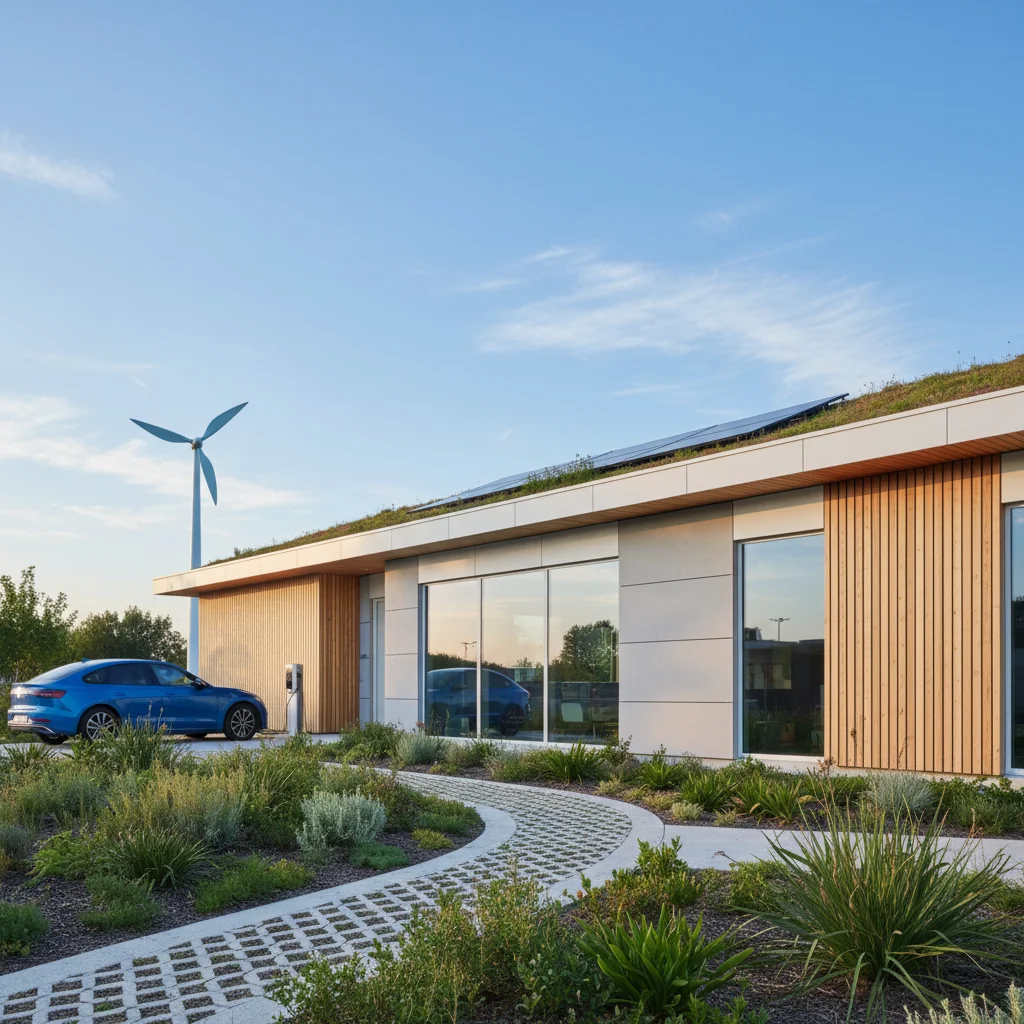
Over 6 million American households received free home weatherization through the federal Weatherization Assistance Program between 1976 and 2024, cutting their heating bills by an average of $283 per year. And in 2026, the program received $3.5 billion in new funding through the Bipartisan Infrastructure Law, creating the largest expansion in WAP history.
What Is the WAP Program and How Much Can You Save?
The Weatherization Assistance Program provides no-cost energy efficiency upgrades to low-income households through state-administered grants funded by the U.S. Department of Energy. WAP covers $3,000 to $8,000 in improvements per home, including insulation, air sealing, furnace repair, and window replacement. Households save an average of $283 annually on heating and cooling costs after weatherization, with payback periods of 10-15 years funded entirely by federal dollars rather than homeowner investment.
But the program doesn't operate like a traditional rebate. You can't apply online and wait for a check. Instead, state agencies prioritize elderly residents, families with children, and people with disabilities, then dispatch certified contractors to perform audits and installations at zero cost to the homeowner.
So households earning below 200% of the federal poverty line—$60,000 for a family of four in 2026—qualify for the program. And the improvements belong to the home permanently, even if the resident moves.
"WAP has weatherized more than 8 million homes since 1976, helping low-income families reduce energy costs while improving health and safety." — U.S. Department of Energy
Who Qualifies for WAP Assistance and What Are the Income Limits?
Households earning at or below 200% of the federal poverty guideline qualify for WAP in most states. For 2026, that means $30,120 for individuals, $60,000 for a family of four, and $89,880 for a household of eight. But states set their own thresholds within federal caps, and 12 states use lower limits of 150% or 175% of poverty. Priority goes to seniors over 60, families with children under 6, and residents with documented disabilities. Renters qualify if the landlord signs a weatherization agreement preventing rent increases for one year post-installation.
And homeowners don't need perfect credit or home equity. The program serves mobile homes, multifamily buildings, and rental properties. But households already receiving LIHEAP energy assistance often move to the front of the waitlist, shaving months off processing time.
| Household Size | 200% Federal Poverty (2026) | 150% Federal Poverty (2026) |
|---|---|---|
| 1 person | $30,120 | $22,590 |
| 2 people | $40,880 | $30,660 |
| 4 people | $60,000 | $45,000 |
| 8 people | $89,880 | $67,410 |
So families receiving SNAP, Medicaid, or SSI automatically meet income requirements in 38 states. But verification still requires pay stubs, tax returns, or benefit award letters covering the prior 12 months.
What Equipment and Improvements Does WAP Cover?
WAP funds insulation in attics, walls, and crawl spaces, air sealing around doors and windows, duct repair, furnace cleaning and tune-ups, refrigerator replacement, LED lighting, and water heater insulation. The program covers repairs but not full HVAC replacements unless safety inspections reveal carbon monoxide risks or combustion failures. And contractors must verify at least $1 in energy savings for every $1 spent, prioritizing improvements with the shortest payback periods based on blower door tests and thermal imaging.
But the program excludes cosmetic upgrades. You won't get new siding, repainted trim, or decorative windows. WAP targets measurable energy reduction, not curb appeal. So contractors install fiberglass batts rated R-38 or higher, seal leaks producing 1,500+ CFM50 air changes per hour, and replace natural draft water heaters with power-vented units that cut standby losses by 40%.
And some states add health and safety repairs beyond DOE minimums. California fixes leaking roofs before installing attic insulation. Michigan replaces knob-and-tube wiring. Minnesota repairs broken stairs and railings to ensure contractor access.
"Weatherization reduces energy consumption by an average of 15% to 35%, delivering both cost savings and environmental benefits." — DSIRE USA
Check your state's weatherization assistance program for local equipment lists and upgrade priorities.
How Do You Apply for WAP and What's the Application Timeline?
Applicants submit income documentation, utility bills, and proof of homeownership or rental agreements to their state or local weatherization agency. Processing takes 4 to 18 months depending on funding availability and waitlist length, with high-priority households—seniors, families with young children, and people with disabilities—moving to expedited tracks. And contractors schedule home energy audits within 30 to 90 days of approval, then complete installations 2 to 6 weeks after audit completion.
But you can't apply through a national portal. Each state runs its own intake system. Montana uses paper applications mailed to county offices. Oregon accepts online forms through Community Action agencies. Texas requires in-person appointments. So start at the DOE State Weatherization Contacts directory to find your local administrator.
And waitlists vary wildly. Vermont processed applications in 4 months during 2025. Louisiana took 24 months. But the 2026 Infrastructure Law funding reduced average wait times to 8 months nationally, down from 14 months in 2024.
Use our free rebate calculator to estimate total savings from WAP plus other federal and state programs.
What Are the Current Funding Status and Availability in Your State?
WAP received $3.5 billion in Infrastructure Investment and Jobs Act funding allocated through 2026, supplementing the program's annual $380 million appropriation. But states exhaust grants at different rates based on contractor capacity and application volume. As of March 2026, California, New York, and Illinois maintain 6- to 12-month waitlists, while Wyoming, Montana, and the Dakotas process applications within 90 days. And agencies must spend Infrastructure Law dollars by September 2031 or return unused funds to the federal government.
So funding isn't unlimited. States receive formula grants based on heating and cooling degree days, poverty rates, and residential energy costs. Texas got $287 million. Alaska received $31 million. But high-demand states hire more contractors and expand certification programs to accelerate installations.
And COVID-19 created a backlog that persists through 2026. Many agencies suspended in-home work for 18 months, then faced supply chain delays for insulation and HVAC parts. But the Infrastructure Law's tripled funding cleared most backlogs by early 2026.
Can You Stack WAP with Other Rebates and Utility Programs?
WAP operates as a stand-alone grant and doesn't reduce eligibility for federal energy tax credits or state rebates. Households can receive WAP weatherization at no cost, then claim the 30% federal tax credit on additional heat pump or solar (these federal credits ended for projects completed after December 31, 2025) installations paid out-of-pocket. And utility companies offer separate rebates for high-efficiency appliances even if WAP already upgraded insulation and air sealing, creating combined savings of $5,000 to $12,000 for comprehensive retrofits. (Note: Federal tax credit percentages and availability are subject to change; the 30% Residential Clean Energy Credit under Section 25D expired December 31, 2025. Verify current incentives at energy.gov.)
But WAP prohibits duplicate funding for the same improvement. If the program installs attic insulation, you can't claim a utility rebate for that identical work. You can claim rebates for separate upgrades like a heat pump or smart thermostat. So coordination matters.
And some states integrate WAP with low-income heat pump rebates through the High-Efficiency Electric Home Rebate Act (HEEHRA). Massachusetts launched a pilot in 2025 allowing WAP-eligible households to receive free heat pumps alongside weatherization, stacking $14,000 in HEEHRA funding with $7,000 in WAP improvements for total packages worth $21,000.
How to Find and Work with WAP-Approved Contractors
WAP requires state-certified contractors who complete DOE-approved energy auditor training and pass building science exams. Homeowners don't hire contractors directly—state agencies assign certified crews based on waitlist order and geographic service areas. And all work follows the WAP Field Guide for quality control, with mandatory blower door testing before and after installation to verify at least 15% reduction in air leakage. Contractors must warranty labor for one year and correct defects identified in post-installation inspections within 30 days at no cost to the homeowner.
But residents can request specific agencies if multiple providers serve their county. Community Action agencies handle 80% of WAP installations nationwide. Nonprofits and tribal housing authorities manage the remaining 20%. So you choose the administrator during application, not the individual contractor.
And inspections happen twice: pre-work energy audits using blower doors and infrared cameras, then post-installation verifications measuring energy savings. If contractors miss the $1-saved-per-$1-spent threshold, they redo work until performance targets hit.
Official Sources
- DOE Weatherization Assistance Program — Federal program overview, state contacts, and funding updates
- DSIRE USA — Comprehensive database of state and federal energy incentives and rebates
Frequently Asked Questions
What is the WAP program and who is eligible to apply?
The Weatherization Assistance Program provides free energy efficiency upgrades to households earning at or below 200% of the federal poverty guideline, which equals $60,000 for a family of four in 2026. Priority goes to seniors over 60, families with children under 6, and people with disabilities. Renters qualify if landlords agree not to raise rent for 12 months after weatherization.
How much does the WAP program cover for home weatherization?
WAP covers $3,000 to $8,000 in energy efficiency improvements per home, including insulation, air sealing, furnace repair, duct sealing, and appliance replacement. The federal government pays 100% of costs. Households save an average of $283 annually on heating and cooling bills after weatherization, with improvements lasting 15 to 20 years.
What is the application process for the WAP program?
Applicants submit income documentation, utility bills, and proof of residence to their state or local weatherization agency. Processing takes 4 to 18 months depending on waitlist length. High-priority households—seniors, families with young children, and people with disabilities—receive expedited processing. Contractors schedule energy audits within 30 to 90 days of approval, then complete installations 2 to 6 weeks later.
What is the income limit for WAP program eligibility?
The federal ceiling is 200% of the poverty guideline, but states can set lower thresholds. For 2026, limits are $30,120 for individuals, $40,880 for couples, and $60,000 for four-person households at the 200% level. Twelve states use 150% thresholds, reducing limits to $22,590 for individuals and $45,000 for families of four.
How long does it take to get approved for the WAP program?
Approval and installation timelines range from 4 to 18 months depending on state funding and waitlist volume. Vermont processed applications in 4 months during 2025. Louisiana took 24 months. The 2026 Infrastructure Law funding reduced average wait times to 8 months nationally. High-priority applicants—seniors, families with young children, and people with disabilities—often receive approvals 30% to 50% faster than standard applicants.
Ready to maximize your savings? Use our free rebate calculator to discover how much you can save by stacking WAP with federal tax credits, state rebates, and utility incentives. Get your personalized estimate in 60 seconds.
Updated on April 14, 2026. Fact-checked by DuloCore Editors. About our research team.