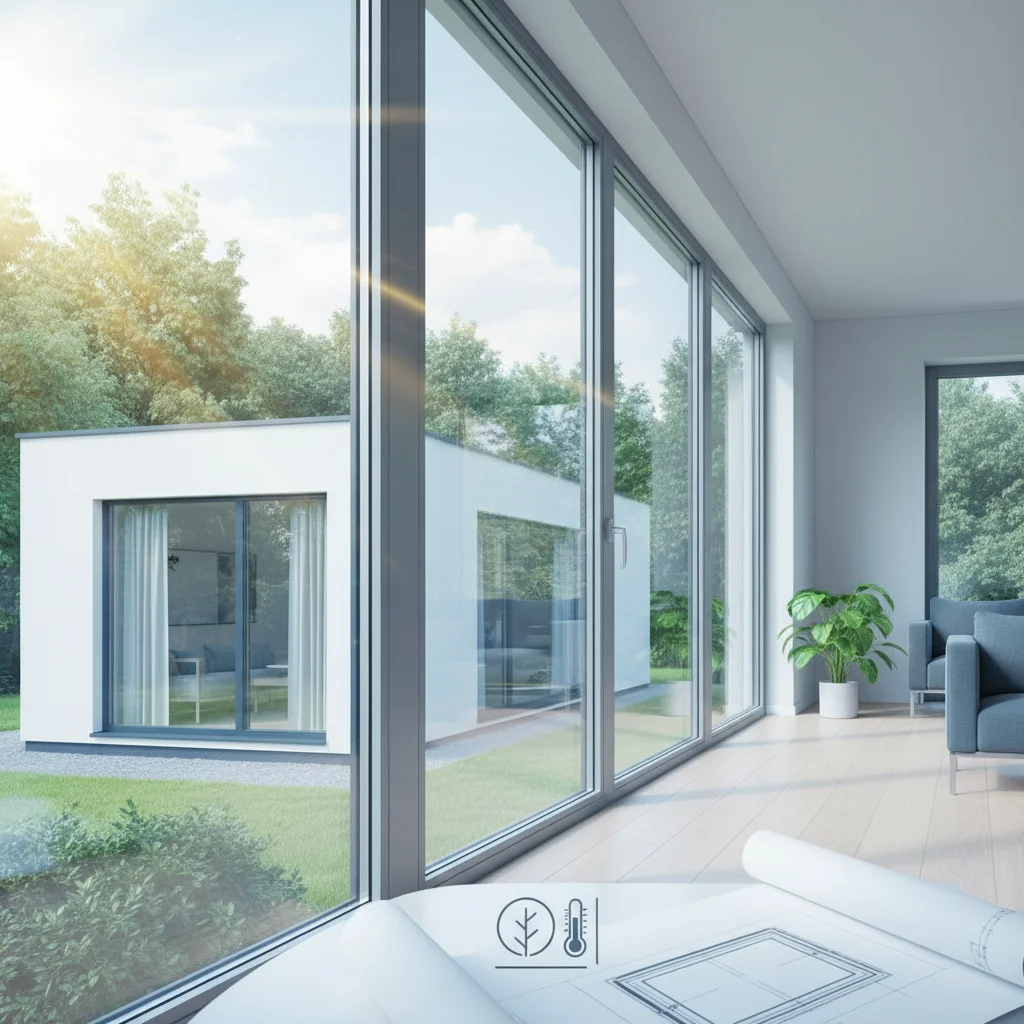
Heat loss and gain through windows are responsible for 25%–30% of residential heating and cooling energy use. So upgrading to modern, efficient windows directly impacts monthly utility bills far more than many other home improvements. And with new federal incentives available, the initial investment is lower than it has been in years.
What is the Total Cost of Low-E Window Replacement, Including Installation?
The total cost for a low-e window replacement in 2026, including professional installation, ranges from $650 to $1,800 per window. This price varies based on window type (e.g., double-hung vs. casement), frame material (vinyl, wood, fiberglass), and regional labor rates, with project totals often falling between $6,000 and $15,000.
Low-E (low-emissivity) window replacement costs break down into two main components: materials and labor. So the material cost for a standard vinyl double-hung low-e window is typically $450 to $900. But labor adds another $200 to $900 per window, depending on the complexity of the installation, such as work on upper floors or custom fittings. Frame materials also dictate price. For example, vinyl frames are the most affordable at $450-$650, while fiberglass ($600-$1,200) and wood ($800-$1,800) command higher prices due to material costs and installation requirements. The final project cost for a whole-home replacement of 10 windows averages $8,500. And homeowners can offset this expense with available window replacement rebates.
The financial stakes of inefficient windows are clear. The U.S. Department of Energy states that replacing single-pane windows with ENERGY STAR certified low-e windows saves homeowners between $126 and $465 per year on energy bills. So over the 20-year lifespan of the windows, that amounts to savings between $2,520 and $9,300, directly offsetting the initial installation expense.
What Efficiency Ratings and Climate Zones Are Best Suited for Low-E Windows?
ENERGY STAR certified low-e windows for 2026 must meet specific U-factor and Solar Heat Gain Coefficient (SHGC) ratings tailored to four distinct U.S. climate zones. These ratings ensure optimal performance, with U-factors below 0.27 and SHGC values adjusted for regional heating and cooling needs.
Efficiency ratings are critical for maximizing energy savings. The U-factor measures heat loss; a lower number indicates better insulation. So in the Northern Climate Zone, a U-factor of ≤0.22 is required to prevent heat from escaping during winter. But the Solar Heat Gain Coefficient (SHGC) measures how much solar radiation a window blocks. In the Southern Climate Zone, a lower SHGC (≤0.23) is essential to reduce air conditioning costs by blocking summer sun. And in mixed climates, a balance of U-factor and SHGC is necessary for year-round performance. The specific coatings, like soft-coat (sputtered) low-e, offer superior insulation with U-factors as low as 0.17.
"To be certified by ENERGY STAR, windows, doors, and skylights must be independently tested and certified by the National Fenestration Rating Council (NFRC) and their performance ratings must meet the U.S. Environmental Protection Agency’s (EPA) energy efficiency guidelines." — ENERGY STAR
How Can You Qualify for Rebates on Low-E Windows, and Which Brands Are Eligible?
Homeowners in 2026 qualify for federal energy tax credits and state rebates by installing ENERGY STAR certified low-e windows. The federal Energy Efficient Home Improvement Credit (Section 25C) ended for property placed in service after December 31, 2025 (IRS FS-2025-05). Federal tax credits for this work have ended, but state, local and utility rebates may still apply; check what is available at your address with the DuloCore rebate calculator.
To qualify for the $600 federal tax credit, windows installed in 2026 must meet the latest ENERGY STAR Most Efficient criteria. And this often means a U-factor of 0.20 or lower. So homeowners must retain the manufacturer's certification statement and purchase receipts for tax filing. Many leading brands like Andersen, Pella, and Marvin offer product lines that meet these stringent requirements. And beyond federal incentives, state and utility programs offer direct cash rebates, often ranging from $50 to $200 per window. So it's essential to check local program rules, as some require installation by a certified contractor. Use our free rebate calculator to find your exact savings.
| Program/Credit | Rebate/Credit Amount | Key Eligibility | 2026 Deadline |
|---|---|---|---|
| Federal IRA Tax Credit | Ended Dec 31, 2025 | — | Ended Dec 31, 2025 |
| State Rebate (Varies) | $50 - $200 per window | Meets state-specific U-factor/SHGC | Varies, check local utility |
| Utility Program (Varies) | $75 - $150 per window | Pre-approval often required | Varies, often first-come |
What is the Return on Investment (ROI) and Lifespan of Low-E Windows Compared to Alternatives?
Low-e windows provide a 60-70% return on investment (ROI) at home resale and have an average lifespan of 20-25 years. This ROI is superior to standard dual-pane windows (50-60% ROI) due to documented energy savings of 15-25% annually, accelerating the payback period.
The financial payback period for low-e windows is typically 8 to 12 years, driven by annual energy savings of $126 to $465. And compared to standard, non-coated dual-pane windows, low-e windows cost only 10-15% more upfront but deliver 25% better thermal performance. So this efficiency differential is the primary driver of their faster ROI. For example, a $10,000 investment in low-e windows returns approximately $7,000 in home value, plus an average of $6,000 in energy savings over 20 years. In contrast, less efficient alternatives like window films offer lower upfront costs but provide only a 5-10% reduction in energy transfer and have a shorter lifespan of 10-15 years. This makes full replacement a more durable investment, similar to the long-term savings seen with heat pump rebates.
What Maintenance Do Low-E Windows Require to Maximize Their Lifespan?
Low-e windows require minimal maintenance, primarily involving semi-annual cleaning and inspection, to achieve their full 20-25 year lifespan. The low-emissivity coating is sealed between glass panes, protecting it from physical damage and degradation, so no special surface care is needed for the coating itself.
Proper maintenance focuses on the frame and seals. So homeowners should clean the glass with a mild soap-and-water solution, avoiding abrasive cleaners or ammonia-based products that can damage frame finishes. And inspecting the weatherstripping and caulking around the window frame annually is crucial. But damaged or cracked seals compromise the window's insulating properties, allowing moisture to penetrate the insulated glass unit (IGU) and leading to fogging. For wood frames, periodic checks for rot or insect damage and repainting or resealing every 3-5 years will prevent decay. So vinyl and fiberglass frames require less upkeep, typically just cleaning. Following these simple steps ensures the window's airtight seal and thermal performance remain intact for decades.
Official Sources
- ENERGY STAR Windows, Doors, and Skylights — Official U.S. government resource for energy-efficient window specifications and climate zone requirements.
- DSIRE - Database of State Incentives for Renewables & Efficiency — A comprehensive database of state and local rebates, grants, and tax incentives for energy-efficient upgrades.
Related Reading: Learn more about High Impact Low Cost Energy Fixes and Low Income Weatherization Program.
Frequently Asked Questions
What is the average cost to replace windows with low-e glass?
The average cost to replace a standard-sized window with low-e glass in 2026 is between $650 and $1,800, including installation. A whole-home project involving 10 windows typically costs between $6,500 and $18,000, depending on frame material, window type, and local labor rates.
How much can I expect to save with rebates on low-e window replacement?
The federal Energy Efficient Home Improvement Credit (Section 25C) ended for property placed in service after December 31, 2025 (IRS FS-2025-05). Additionally, state and utility rebates often provide another $50 to $200 per window, potentially saving over $2,600 on a 10-window project when combined with the federal credit.
What are the eligibility requirements for low-e window rebates or tax credits?
To qualify for the 2026 federal tax credit, windows must be ENERGY STAR certified and meet the "Most Efficient" criteria for your specific climate zone. This typically requires a U-factor of 0.22 or lower. State and utility programs have their own efficiency requirements, so always verify local rules before purchasing.
Is the added cost of low-e windows worth it compared to standard windows?
Yes, the investment is worthwhile. Low-e windows cost about 10-15% more than standard dual-pane windows but reduce energy loss by 30-50%. This translates to annual energy savings of $126 to $465, allowing the initial cost premium to be paid back in 3-5 years through lower utility bills alone.
What is the deadline to apply for rebates on low-e window installations?
The federal tax credit for windows installed in 2026 must be claimed when filing 2026 federal income taxes, typically by April 15, 2027. State and utility rebate programs have varying deadlines, and many funds are limited, so it's best to apply within 30-90 days of installation.
Find Your Low-E Window Rebates Now
Don't miss out on thousands in savings. Use our free tool to instantly find every federal, state, and utility rebate available for your window replacement project.
Calculate Your SavingsLast updated: April 14, 2026. Reviewed by the DuloCore Editorial Team. About our authors.
Check your California insulation rebate eligibility — see the programs you qualify for and the dollar amounts on our California insulation rebate finder.