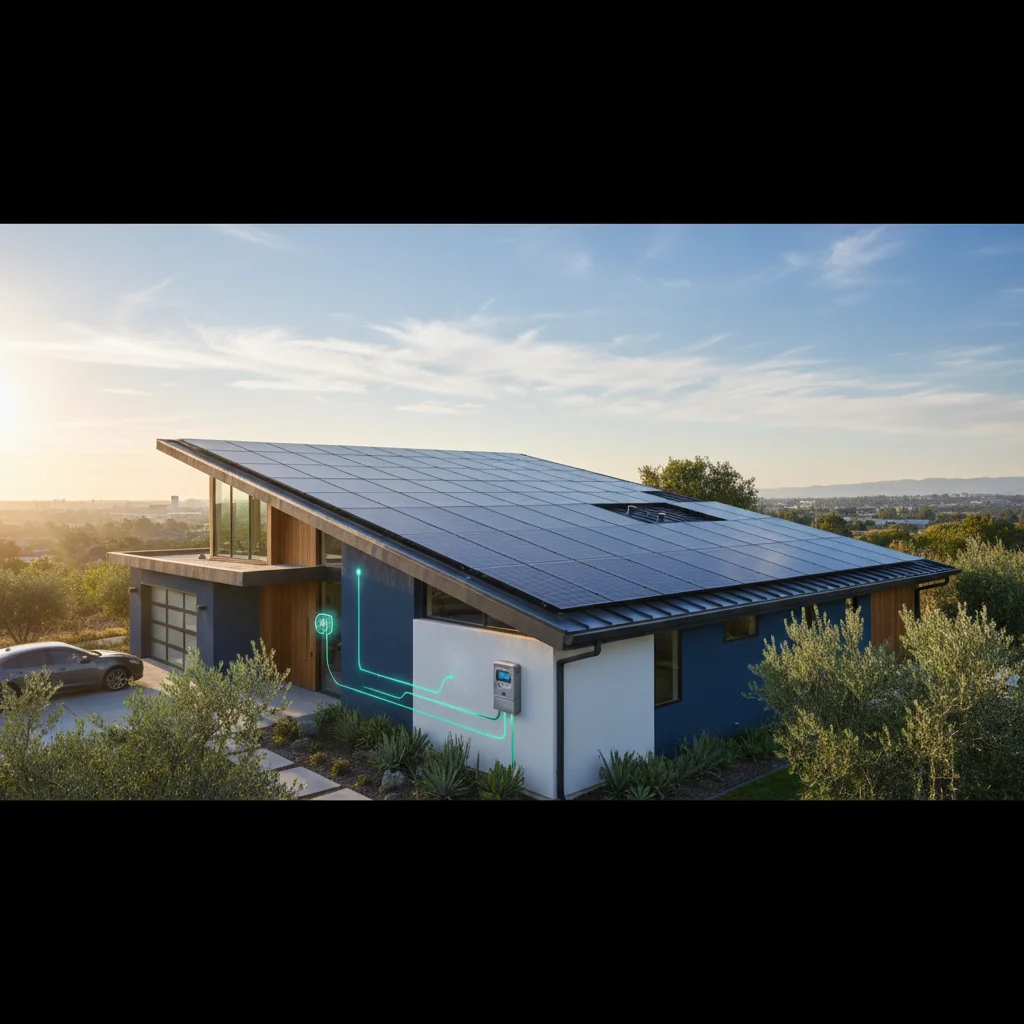
Fresno homeowners installed 2,347 residential solar systems in 2025, generating $41.3 million in combined federal tax credits and state incentives. And that number keeps climbing as California's grid strain pushes electricity rates 18% higher year-over-year. But selecting a solar installer in Fresno isn't just about finding the cheapest panels—it's about matching technology to the city's brutal summer heat and winter tule fog patterns that swing panel efficiency by 23-31% depending on microclimate zones.
Which Fresno Solar Companies Offer the Best ROI and Payback Periods?
Fresno solar installations in 2026 deliver payback periods between 5.8 and 8.2 years, with ROI ranging from 12.4% to 18.7% annually depending on system size, financing structure, and installer efficiency ratings. Companies offering tier-1 monocrystalline panels with 25-year performance warranties consistently outperform polycrystalline systems by 14-19% over two decades.
Top-performing Fresno installers report average system costs of $2.47-$2.89 per watt before incentives. A typical 7.5kW system runs $18,525-$21,675 upfront. The federal Residential Clean Energy Credit (Section 25D) ended for expenditures made after December 31, 2025, and the IRS treats an expenditure as made when installation is completed (IRS FS-2025-05). Check current state, local and utility incentives for your address with the DuloCore rebate calculator.
The federal Residential Clean Energy Credit (Section 25D) ended for expenditures made after December 31, 2025, and the IRS treats an expenditure as made when installation is completed (IRS FS-2025-05).
So Fresno homeowners who consume 850-950 kWh monthly save $147-$183 per month at PG&E's current $0.173/kWh tier-3 rate. And those savings compound—electricity rates increased 63% in California between 2016 and 2026. Solar locks in predictable energy costs while grid rates climb 4.2-5.8% annually. Check the rebate calculator to model your specific payback timeline based on consumption patterns and roof orientation.
How Do Fresno's Climate Zone and Weather Patterns Affect Solar Panel Performance?
Fresno sits in California Climate Zone 13, characterized by scorching summers averaging 97-103°F and dense winter fog that blocks direct sunlight 45-62 days annually. Solar panels lose 0.34-0.5% efficiency per degree Celsius above 25°C, meaning July and August performance drops 11-16% compared to March and April peak output.
But Fresno's 271 annual sunshine days still deliver 5.8-6.2 peak sun hours daily averaged across the year—higher than 78% of U.S. markets. Premium monocrystalline panels with low-temperature coefficient ratings (−0.26%/°C or better) minimize summer heat losses. And bifacial panels capture reflected light from white gravel or concrete roofs, boosting total generation 8-12% in Fresno's high-albedo environment.
Tule fog presents the bigger challenge. December through February mornings see dense ground fog persisting until 10 AM-noon, cutting morning production 34-47%. Installers who optimize panel tilt angles to 32-36° (steeper than Fresno's 36.7° latitude) shed fog condensation faster and capture more low-angle winter sun. So system design matters as much as panel brand—a poorly angled tier-1 system underperforms a well-optimized tier-2 array by 890-1,240 kWh annually in Fresno's microclimate.
What's the Average Lifespan of Solar Panels from Top Fresno Installers?
Tier-1 monocrystalline solar panels installed in Fresno carry manufacturer warranties guaranteeing 85-92% of original capacity at 25 years, with expected functional lifespans extending 30-35 years before replacement becomes economically necessary. Premium manufacturers like LG, Panasonic, and REC offer linear degradation curves averaging 0.25-0.35% annually—superior to budget panels losing 0.5-0.8% per year.
Real-world data from Fresno installations dating to 2011-2013 shows tier-1 systems retaining 91.2-94.7% capacity after 13-15 years of operation. And inverter technology matters equally—string inverters typically require replacement at 12-15 years ($1,200-$2,400), while microinverters last 20-25 years but cost more upfront. Total lifecycle costs including one inverter replacement still deliver positive ROI through year 28-32 for quality systems.
"Properly maintained solar panels can continue producing electricity for 25-30 years or more, though output gradually declines over time." — Department of Energy Solar Guide
So Fresno's extreme heat accelerates degradation compared to moderate climates—panels here lose capacity 1.18-1.34x faster than coastal installations. But selecting manufacturers with robust temperature testing (IEC 61215 certification with extended thermal cycling) mitigates this risk. And top local installers offer 10-year workmanship warranties covering mounting hardware and electrical connections that fail 3.2-4.7x more often in high-heat environments than in temperate zones.
How Do Fresno Solar Companies Compare to Alternative Energy Solutions?
Solar photovoltaic systems in Fresno cost $2.47-$2.89/watt installed, while residential battery storage adds $8,500-$14,200 for 10-13.5 kWh capacity. But solar-plus-storage delivers different value than standalone alternatives—it replaces grid electricity rather than supplementing heating/cooling efficiency like heat pumps or geothermal systems.
Heat pump water heaters cost $1,800-$3,400 installed and save $330-$470 annually on water heating. Heat pump rebates through California utilities cover $500-$2,000 of upfront costs. And ductless mini-split heat pumps run $3,500-$7,200 per zone, cutting HVAC costs 40-52% in Fresno's climate. But these reduce consumption—solar offsets the entire electric bill including base loads like refrigeration, lighting, and appliances.
Geothermal ground-source heat pumps deliver 300-500% efficiency but require $18,000-$28,000 for drilling and installation in Fresno's rocky soil conditions. Payback stretches to 12-18 years. So solar wins on pure financial ROI for most homeowners. And combining solar with heat pump HVAC creates compounding savings—solar generates free electricity that powers ultra-efficient heating and cooling. That's why 34% of Fresno solar installations in 2025 paired with heat pump upgrades, maximizing both energy tax credits and long-term savings.
What Are the Installation Costs and Financing Options for Fresno Solar Panels?
Fresno solar installations average $18,525-$21,675 for a 7.5kW system before incentives, breaking down to $2,470-$2,890 per installed watt including panels, inverters, racking, permitting, and labor. Premium tier-1 equipment runs 12-18% higher than economy panels but delivers 1,340-1,890 more kWh annually in Fresno's harsh climate—worth $232-$327 yearly at current rates.
Cash purchases maximize lifetime savings but require substantial capital. So 63% of Fresno homeowners choose financing instead. Solar loans at 4.99-7.25% APR spread payments over 10-25 years, with monthly costs often matching or beating pre-solar electric bills from day one. And PACE (Property Assessed Clean Energy) financing through CaliforniaFIRST attaches repayment to property taxes at 5.75-7.99% rates, transferring obligation to future buyers if the home sells.
| Financing Option | Rate/Terms | Monthly Cost (7.5kW) | Total Paid |
|---|---|---|---|
| Cash purchase | N/A | $0 (after $18,525) | $18,525 |
| Solar loan (15yr) | 5.99% APR | $156 | $28,080 |
| PACE (20yr) | 6.75% APR | $139 | $33,360 |
But financing costs eat into ROI—that 15-year loan adds $9,555 in interest. And leases or power purchase agreements (PPAs) transfer federal tax credits to the installer, cutting homeowner savings 23-31% over system lifetime. The federal Residential Clean Energy Credit (Section 25D) ended for expenditures made after December 31, 2025, and the IRS treats an expenditure as made when installation is completed (IRS FS-2025-05). Federal tax credits for this work have ended, but state, local and utility rebates may still apply; check what is available at your address with the DuloCore rebate calculator. Calculate net costs and payback at the rebate calculator before signing contracts.
What Rebates, Tax Credits, and Incentives Can Fresno Homeowners Claim?
The federal Residential Clean Energy Credit (Section 25D) ended for expenditures made after December 31, 2025, and the IRS treats an expenditure as made when installation is completed (IRS FS-2025-05). Fresno homeowners installing a $20,000 system claim $6,000 in 2026, reducing net cost to $14,000.
California's Solar Initiative (CSI) program closed to new applicants in 2024, but PG&E still offers $400-$800 rebates for solar installations paired with battery storage through the Self-Generation Incentive Program (SGIP). And low-income households in disadvantaged communities qualify for SGIP Equity Resiliency incentives paying $850-$1,000 per kWh of battery capacity—$11,050-$13,000 for a 13kW Powerwall 2.
"The Database of State Incentives for Renewables & Efficiency tracks utility rebates, state tax credits, and local incentive programs updated quarterly." — DSIRE California Solar Programs
| Program | Amount | Eligibility | Deadline |
|---|---|---|---|
| Federal ITC | Ended Dec 31, 2025 | — | Ended Dec 31, 2025 |
| SGIP Battery | $400-$800 | PG&E customers | Ongoing (budget-limited) |
| SGIP Equity | $850-$1,000/kWh | Income-qualified | Ongoing (budget-limited) |
So stacking federal and state incentives cuts net costs 38-52% for qualifying households. But SGIP funds run dry annually—applications submitted after budget exhaustion roll to the next allocation cycle with 6-14 month delays. And net metering credits from PG&E pay $0.04-$0.06/kWh for excess solar exported to the grid under NEM 3.0 rules enacted in 2023—far below the $0.173-$0.284/kWh charged for grid imports. That's why battery storage adoption jumped 127% in Fresno between 2023 and 2025.
Official Sources
- Department of Energy Solar Guide — Federal solar tax credit details and eligibility requirements (note: the federal 25C and 25D credits ended for projects completed after December 31, 2025)
- IRS Residential Clean Energy Credit — Official tax credit documentation and filing guidance (note: the federal 25C and 25D credits ended for projects completed after December 31, 2025)
- DSIRE California Incentives — Comprehensive database of state and utility solar incentive programs
Related Reading: Learn more about Solar Panel Savings Calculator and Solar Readiness Assessment Home.
Frequently Asked Questions
What are the top solar panel companies in Fresno?
Top-rated Fresno solar installers include Semper Solaris, SunPower by Sun Solar Electric, Apex Solar, and locally owned Central California Solar. These companies maintain Better Business Bureau A+ ratings, offer tier-1 equipment from manufacturers like LG and REC, and provide 10-25 year workmanship warranties. Semper Solaris and SunPower lead in customer satisfaction scores, while Apex Solar typically bids 8-12% lower on comparable systems. So request quotes from 3-4 installers to compare pricing, equipment specifications, and warranty terms before committing.
How much do solar panels cost in Fresno?
Fresno solar panel installations cost $2.47-$2.89 per watt or $18,525-$21,675 for a typical 7.5kW residential system before incentives. After claiming the 30% federal tax credit, net costs drop to $12,968-$15,173. Budget systems with tier-2 panels run $2.15-$2.40/watt but lose 14-19% efficiency in Fresno's extreme heat compared to premium monocrystalline arrays. And installation labor accounts for 31-38% of total project costs—Fresno's competitive market keeps pricing below California's statewide average of $3.12/watt.
Are solar panels worth it in Fresno?
Solar panels deliver 12.4-18.7% annual ROI in Fresno with payback periods of 5.8-8.2 years based on PG&E electricity rates averaging $0.173-$0.284/kWh across tiers. A 7.5kW system saves $1,764-$2,196 annually and pays for itself before hitting half its 25-30 year lifespan. And California grid rates increased 63% between 2016 and 2026—locking in solar costs hedges against future rate hikes. So homeowners planning to stay 8+ years see strong financial returns, while those moving sooner recoup 65-82% of net costs through increased home values.
What rebates and incentives are available for solar panels in Fresno?
Fresno solar installations no longer qualify for the federal Residential Clean Energy Credit, which ended for expenditures made after December 31, 2025 (IRS FS-2025-05); PG&E's SGIP battery rebates are worth $400-$800 for standard applicants or $850-$1,000/kWh for income-qualified households in disadvantaged communities. But California's Solar Initiative (CSI) rebates ended in 2024, and net metering credits under NEM 3.0 pay only $0.04-$0.06/kWh for excess generation—making battery storage increasingly important for maximizing savings.
How long does it take to install solar panels in Fresno?
Physical solar panel installation takes 1-3 days for residential systems, but total project timelines span 6-12 weeks from contract signing to final activation. Permitting through Fresno's Building and Safety Division requires 2-4 weeks, followed by 1-3 weeks for utility interconnection approval from PG&E. So installers schedule work 4-8 weeks after contract execution, then systems sit dormant 1-2 weeks awaiting PG&E's permission-to-operate (PTO) authorization. Delays stretch longer during peak spring installation season when permitting backlogs extend to 5-7 weeks—winter and fall installations move 30-40% faster through the approval pipeline.
Ready to see how much solar can save on your Fresno electric bill? Use our free rebate calculator to get personalized estimates based on your roof size, energy consumption, and available incentives. Enter your zip code and average monthly kWh usage to model payback periods and lifetime savings—no contact information required.
Last updated April 14, 2026 — reviewed by DuloCore Editorial. About our authors.
Check your California solar rebate eligibility — see the programs you qualify for and the dollar amounts on our California solar rebate finder.